
Fredericella sultana
Fredericella sultana
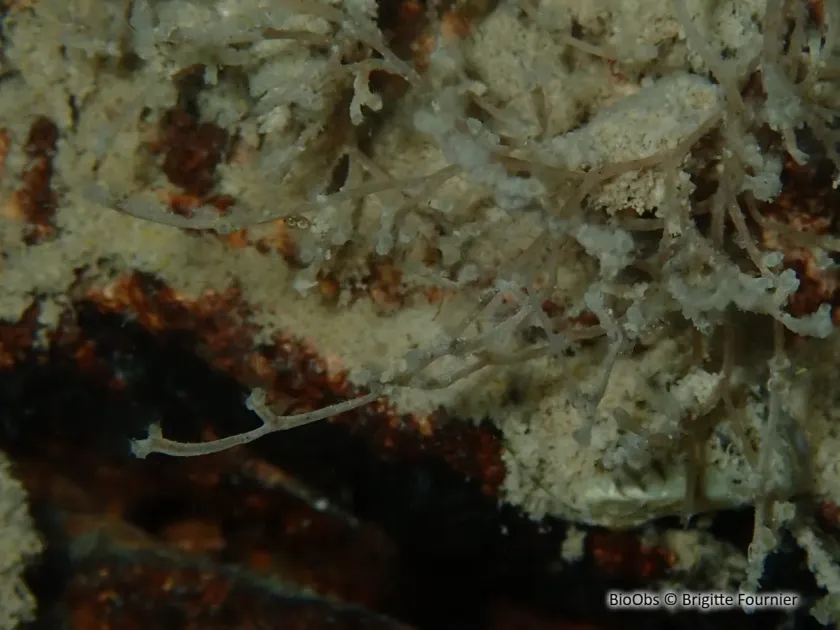
Description
How to identify
Fredericella sultana is a colonial freshwater organism belonging to the phylum Bryozoa, specifically the class Phylactolaemata.
These organisms form branched, tube-like colonies that anchor themselves firmly to hard surfaces within freshwater environments.
The individual organisms, known as zooids, are encased in protective chitinous tubes, which protect them from environmental stress.
Visually, they manifest as tangled, moss-like mats or delicate branching structures attached to the interior walls of pipes or hydraulic structures.
Microscopic identification is often required to distinguish them from other similar bryozoan species based on their specific growth morphology.
What it damages
Fredericella sultana primarily impacts agriculture by causing biofouling within irrigation networks and water supply infrastructure.
The colonies grow inside pipes, significantly reducing the internal diameter and causing severe friction losses in the water flow.
This obstruction results in decreased pressure, leading to uneven water distribution across crop fields and inefficient irrigation performance.
Decaying organic matter from dead colonies can clog small nozzles and drippers, requiring frequent maintenance and parts replacement.
The accumulation of these organisms creates an environment that can promote the growth of other bacteria and aquatic pathogens within the system.
When it appears
Growth usually initiates in the spring as water temperatures rise, typically exceeding 10-12 degrees Celsius.
The peak season for colonization and biomass expansion occurs during the warm summer months when nutrient levels are also elevated.
The species reproduces through both sexual means and the formation of statoblasts, which are survival structures capable of overwintering.
Metabolic activity decreases significantly during autumn and winter as the organisms enter a period of dormancy.
In managed systems such as deep wells or temperature-controlled reservoirs, the colonies may remain active for extended periods throughout the year.
Signs of infestation
A noticeable and progressive drop in hydraulic pressure in irrigation lines is a primary indicator of heavy internal fouling.
Frequent clogging of spray nozzles and filter screens with organic debris suggests the presence of bryozoan colonies upstream.
Visual inspection of pipes reveals crusty, branched deposits that do not easily flake off under simple water flow.
Water quality degradation, evidenced by unpleasant odors or discolored flow, often points to the decomposition of large colony mats.
Increased frequency of pump maintenance due to sediment buildup is a common symptom of severe infestation.
Control measures
Mechanical cleaning of pipelines and system flushing are essential practices to remove established colonies after the growing season.
Chemical treatments, such as controlled chlorination or specialized algaecides, can effectively inhibit the growth of new colonies.
Installing high-grade water filtration systems at the intake point prevents the introduction of statoblasts into the irrigation lines.
Draining and drying out irrigation systems during the off-season is highly effective as the colonies are susceptible to desiccation.
Implementing ultrasonic cleaning technology in storage tanks helps to prevent the initial attachment of bryozoan larvae to internal surfaces.
Taxonomy
- Latin name
- Fredericella sultana
- Family
- Fredericellidae
- EPPO code
- FREDSU
Discussion
No discussions yet — be the first.