
Western flower thrips
Frankliniella zucchini
Description
How to identify
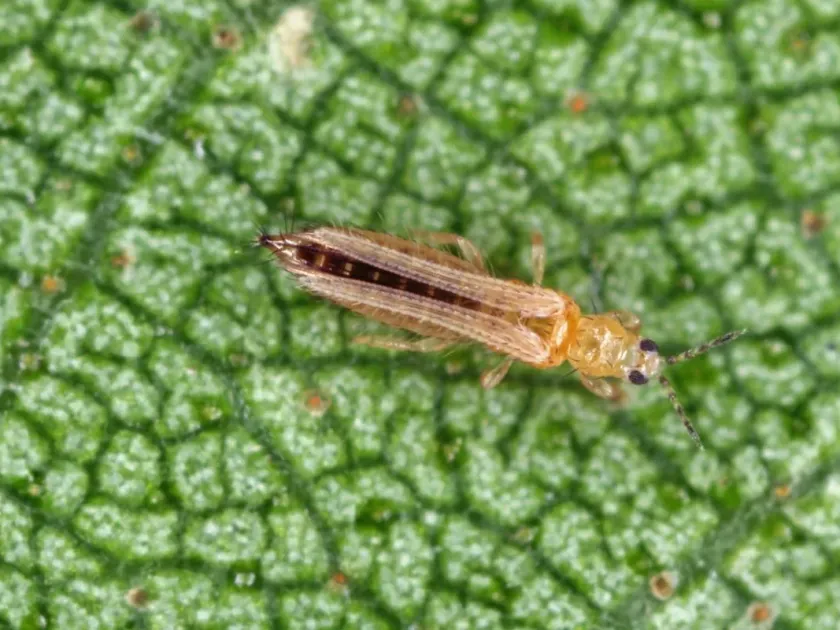
The Western flower thrips, Frankliniella occidentalis, is a tiny insect of the family Thripidae. Adults are approximately 1–2 mm long, ranging in color from pale yellow to dark brown, depending on environmental temperature and development conditions.
The life cycle encompasses eggs, two larval stages, prepupa, pupa, and adult. Larvae are wingless and much paler, often blending in with the plant tissue, which makes early detection challenging for growers.
Due to its high reproductive rate, the pest can complete its entire development cycle in as little as 10 to 15 days under optimal conditions (25–30°C), leading to multiple overlapping generations per season.
These insects are elusive, usually hiding in tightly folded leaves, flower buds, and deep within blossom structures, which provides them with natural protection against direct contact insecticides.
The species is a notorious invasive pest, capable of thriving in both greenhouse environments and open-field agriculture across various climate zones globally.
What it damages
This species is an extreme polyphagous pest, known to feed on hundreds of plant species including important vegetables like tomatoes, cucumbers, peppers, and various ornamental flowers.
The damage is caused by the insect's piercing-sucking mouthparts. By extracting cell contents, they cause localized tissue death, leading to silvering, necrotic spots, and severe deformation of foliage.
The primary concern for farmers is its role as a vector for Tospoviruses, including the Tomato Spotted Wilt Virus (TSWV). This virus is responsible for devastating crop losses and often cannot be treated once established.
Direct damage to reproductive structures often results in flower abortion, leading to a significant reduction in fruit set and overall yield, especially in greenhouse-grown vegetable production.
In ornamental plants, the feeding activity results in unsightly scarring and discoloration of petals, rendering the flowers commercially unsellable and reducing the value of the crop.
When it appears
In greenhouse settings, Western flower thrips are active throughout the entire year, as controlled temperatures allow for continuous reproduction and population growth even during winter months.
In outdoor conditions, their population peaks during warm, dry periods. They are highly mobile and easily spread via wind or through the movement of infested plant material and nursery stock.
The pest survives unfavorable cold weather by entering a protected state within plant debris, soil, or within the structural crevices of greenhouses, emerging as soon as conditions improve.
Hot and arid weather is particularly conducive to population explosions, as these conditions stress host plants, making them more susceptible to damage and colony establishment.
Monitoring throughout the spring and summer is critical, as early detection is the only way to prevent large-scale infestations that are extremely difficult to eradicate once they reach peak density.
Signs of infestation
The first visual sign of an infestation is the appearance of silvery or bronzed streaks on the upper leaf surface, caused by the destruction of epidermal cells and the subsequent presence of air pockets.
Small black spots, which are the excrement of the insects, are typically visible on the underside of leaves or near the feeding sites, serving as a reliable indicator of active thrips presence.
- Distorted, curled, or stunted leaf growth.
- Nectar or pollen spilling from damaged flowers.
- Stunted or deformed bud development.
- Dull, scarred, or mottled fruit surfaces.
- Overall plant wilting and loss of vitality in severe cases.
When infestation is suspected, tapping a flower over a white sheet of paper will typically dislodge the small, rapidly moving insects, making them easy to observe and identify.
Control measures
Effective management relies on an Integrated Pest Management (IPM) approach, combining biological, cultural, and chemical tactics to maintain low population thresholds.
Sanitation is paramount: removing weeds that serve as alternate hosts, clearing debris from greenhouses, and ensuring that new plant material is strictly quarantined before introduction.
Monitoring with blue or yellow sticky traps is essential. Blue traps are specifically preferred for detecting thrips, allowing growers to track population trends and time their interventions accurately.
Biological control agents, such as predatory mites (e.g., Amblyseius cucumeris) and minute pirate bugs (Orius species), are highly effective tools for managing populations in greenhouse environments.
If chemical control is necessary, always rotate products with different modes of action to prevent the development of insecticide resistance, which is common in this species due to its high reproductive frequency.
Taxonomy
- Latin name
- Frankliniella zucchini
- Order
- Thrips
- Family
- Thripidae
- EPPO code
- FRANZU
Discussion
No discussions yet — be the first.