
Pale thrips
Frankliniella pallida
Description
How to identify
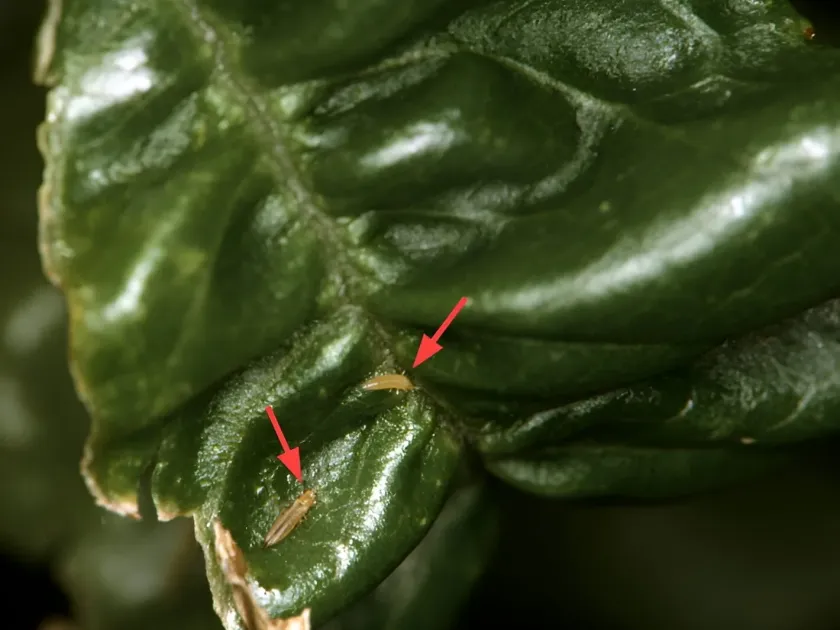
The Pale Thrips (scientific name: Frankliniella pallida) belongs to the order Thysanoptera and the family Thripidae. These are tiny, slender insects, typically measuring between 1 to 2 millimeters in length, characterized by a pale yellow or whitish body color.
Adults possess two pairs of narrow wings fringed with fine hairs, which enable them to fly and disperse effectively among host plants. The larvae resemble the adults but are wingless and have a more translucent, soft appearance, making them difficult to spot on light-colored leaves.
Their life cycle consists of the egg, larva, prepupa, pupa, and adult stages. Notably, the pupal stages often occur in the soil or protected crevices of the plant, which makes them highly resilient to foliar insecticide applications.
These insects thrive in warm, dry environments where their reproductive cycle can accelerate significantly. A single generation can complete its development in as little as two weeks under optimal temperature conditions, leading to rapid population explosions.
Because multiple thrips species look morphologically similar, positive identification of Frankliniella pallida often requires taxonomic examination using high-magnification microscopy or molecular techniques to distinguish it from other related species.
What it damages
This species is a generalist feeder (polyphage) that attacks a vast range of agricultural, horticultural, and ornamental plants. It is particularly problematic in greenhouses where the lack of natural predators allows its populations to grow unchecked.
The damage is caused by the insect's rasping-sucking mouthparts. They pierce the epidermal cells of leaves, buds, and flowers, injecting saliva that breaks down plant tissues before consuming the nutrient-rich sap.
High infestations result in severe physiological stress to the host. In flower crops, this causes blossom abortion and deformed petals, while in vegetable crops, it leads to stunted growth and significant reductions in overall marketable yield.
Pale Thrips are also recognized as potential vectors for various plant viruses. By feeding on infected plants and then moving to healthy ones, they can transmit pathogens that cause systemic infections, often leading to total crop failure.
The damage is exacerbated by the insect's preference for hiding in tightly closed spaces, such as inside flower buds or terminal leaf shoots, which shields them from environmental stress and makes them harder to control.
Signs of infestation
The primary symptom of infestation is the appearance of tiny, silvery or whitish stippling on the leaves. These spots are essentially empty cells that have been drained of their contents, often creating a reflective or shimmering appearance.
As the feeding continues, these spots coalesce into larger, chlorotic, and necrotic blotches. The leaves may curl, twist, or become brittle as the tissue dies, significantly reducing the plant's photosynthetic capacity.
Small, dark, tar-like spots — which are the insect's fecal deposits — are often visible on the underside of leaves or within the heart of the plant, providing clear evidence of an active thrips presence.
Floral and fruit damage is common, often presenting as discolored streaks, corky scars, or deformed, asymmetrical fruit shapes. These visual blemishes drastically lower the quality of the harvested produce.
During a heavy infestation, the presence of these insects can be confirmed by gently tapping the foliage or flower heads over a piece of white paper, which forces the tiny, fast-moving insects to fall and reveal themselves.
Control measures
Effective management of Frankliniella pallida requires an Integrated Pest Management (IPM) approach that balances cultural, biological, and chemical control measures to keep population levels below the economic injury threshold.
Cultural practices are essential, including the rigorous removal of weeds within and around the growing area, as these weeds serve as alternative hosts during the off-season or between crop cycles.
Monitoring is a critical first step in control. Growers should utilize blue or yellow sticky traps to detect the arrival and population density of the thrips, allowing for precise, timely interventions.
- Biological control: The release of predatory mites (e.g., Amblyseius species) and predatory bugs (e.g., Orius species) to manage larvae.
- Entomopathogenic fungi: Application of specific fungi strains that target thrips, especially in humid greenhouse conditions.
- Chemical control: Use of systemic insecticides applied as sprays or soil drenches, ensuring strict rotation of chemical classes to mitigate the risk of resistance.
Due to the insect's tendency to hide deep within plant structures, thorough coverage is mandatory when applying contact insecticides. The use of surfactants can improve the efficacy of these sprays by helping the active ingredients penetrate hidden areas.
Taxonomy
- Latin name
- Frankliniella pallida
- Order
- Thrips
- Family
- Thripidae
- EPPO code
- FRANPL
Discussion
No discussions yet — be the first.