
Western flower thrips
Frankliniella occidentalis
Description
How to identify
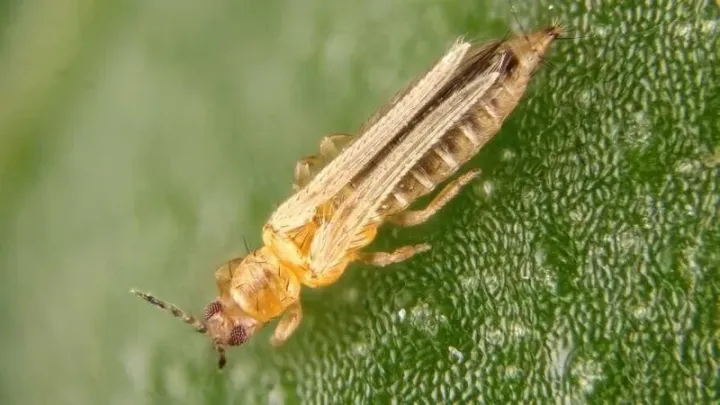
The Western flower thrips (Frankliniella occidentalis) is a member of the order Thysanoptera, family Thripidae. These tiny insects measure roughly 1–2 mm in length and display a coloration ranging from light yellow to reddish-brown.
Adults possess two pairs of narrow, fringed wings, which allow for efficient movement between plants. Larvae are similar in shape but lack wings and are generally lighter, often translucent, making them difficult to detect without careful inspection.
These pests lead a highly cryptic lifestyle, preferring to remain hidden within flower buds, leaf folds, or terminal growth points. This behavior is a survival strategy that helps them avoid both natural predators and direct contact with topical pesticides.
The life cycle encompasses egg, two larval stages, prepupa, pupa, and adult. Notably, the prepupal and pupal stages typically occur in the soil or growing medium, which adds significant complexity to monitoring and control efforts.
Given favorable temperatures (20–30°C), the lifecycle can be completed in as little as 12–15 days. This rapid reproductive rate allows populations to explode in a very short timeframe, particularly in controlled greenhouse environments.
What it damages
As a highly polyphagous pest, the Western flower thrips attacks a massive variety of hosts, including vegetable crops like tomatoes, cucumbers, and peppers, as well as ornamentals like roses, chrysanthemums, and orchids.
The primary damage is caused by the insect using its mouthparts to pierce individual plant cells and extract the sap. As it feeds, it injects saliva containing enzymes that kill cells, leading to localized tissue necrosis and overall plant stress.
A major threat posed by this species is its role as the primary vector for tospoviruses, most notably the Tomato Spotted Wilt Virus (TSWV). Even a small population can devastate an entire crop by spreading these systemic plant diseases.
Physical signs of damage include scarred, distorted fruit, curled leaves, and mottled flower petals. In severe cases, the plant may experience stunted growth, flower abortion, and a complete loss of marketable quality.
Managing this pest is exceptionally challenging due to its evolved resistance to many common insecticide classes, making an integrated pest management (IPM) approach vital for modern agriculture.
Signs of infestation
Early symptoms appear as tiny, pale, or silvery stippling on the leaves. Over time, these individual feeding spots coalesce, creating larger patches of necrotic or silvery tissue that become highly visible upon inspection.
Small black or dark brown spots, which are the insect's excrement, are often found on the undersides of leaves or inside petals. This is a classic diagnostic feature that confirms a thrips infestation rather than other pests.
Terminal growth often becomes distorted, twisted, or curled due to the feeding pressure of larvae on developing tissues. Plants may appear generally weak or struggle to produce healthy new foliage.
Flowers are a primary target; symptoms include petal discoloration, necrosis, and deformation. Buds often fail to open properly and may drop prematurely, causing significant yield losses in decorative plants.
To detect the presence of the pest before high populations are reached, blue sticky traps are recommended. The blue color is specifically attractive to Frankliniella occidentalis, serving as an effective early-warning monitoring tool.
Control measures
The first line of defense is rigorous phytosanitary inspection of all incoming plant materials. Ensuring that new additions to a greenhouse are free of eggs or adults is critical to preventing an initial outbreak.
Cultural practices are essential, including the removal of weeds and debris that serve as reservoirs for the pest. Soil disinfection between growing seasons can also help eliminate the pupal stages hiding in the substrate.
Chemical control must be executed with caution. If using insecticides, rotation between different modes of action is mandatory to prevent the development of resistance. Systemic products are often required for hidden populations.
Biological control is frequently highly successful in greenhouse settings. The introduction of predatory mites (Amblyseius cucumeris) and minute pirate bugs (Orius spp.) provides sustainable pressure on thrips populations without relying on harsh chemicals.
An integrated program combining regular monitoring with blue traps, the strategic release of biocontrol agents, and targeted pesticide applications is the gold standard for managing Western flower thrips effectively.
Taxonomy
- Latin name
- Frankliniella occidentalis
- Order
- Thrips
- Family
- Thripidae
- EPPO code
- FRANOC
Discussion
No discussions yet — be the first.