
Flower thrips
Frankliniella intonsa
Description
How to identify
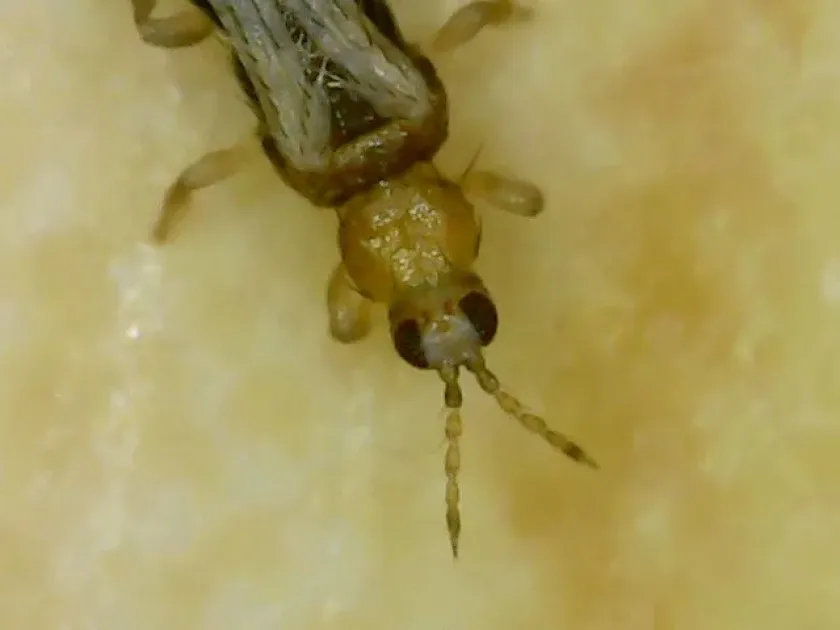
The flower thrips (Frankliniella intonsa) is a member of the Thysanoptera order and the Thripidae family. These insects are small, typically measuring between 1.2 and 1.7 mm in length, with a body color ranging from dark brown to black.
Adults are equipped with two pairs of narrow wings, each featuring a distinct fringe of long hairs. These wings allow them to move effectively between plants, especially in warm weather conditions.
The species undergoes a complex life cycle consisting of egg, two larval stages, pre-pupa, pupa, and adult. Many of these developmental stages take place either on the plant or hidden within the soil.
Females use a saw-like ovipositor to insert eggs into plant tissues, such as petals or young leaves. This internal placement of eggs provides protection from environmental factors and some contact pesticides.
Pupal stages generally occur in the soil, which is a critical detail for integrated pest management. The duration of the entire cycle depends significantly on temperature and humidity levels in the environment.
What it damages
Frankliniella intonsa is a highly polyphagous pest, meaning it feeds on a wide range of agricultural, ornamental, and wild plant species. Common hosts include cucumbers, peppers, tomatoes, and various ornamental flowers like roses.
The damage is caused by both adults and larvae feeding on the cell sap of the plant. By piercing the plant cells and sucking out the contents, they cause localized cell death and dehydration.
Beyond direct feeding damage, these thrips are notorious vectors for various plant viruses, particularly the Tomato Spotted Wilt Virus (TSWV). This makes them a major concern for greenhouse and field growers.
Infested plants often show stunted growth, deformed fruits, and severely damaged flowers. In ornamental plants, this leads to significant economic loss due to the loss of aesthetic value.
Heavy infestations can lead to the total failure of blossoms to open properly, or the production of fruits with significant skin blemishes. This significantly lowers the overall yield and market quality of the produce.
Signs of infestation
Visual identification usually begins with observing silver or white streaks on leaves and flower petals. These markings are caused by air entering the empty cells after the thrips have fed.
Black or dark brown dots of excrement on the leaf surface are another tell-tale sign of a thrips colony. If the infestation is severe, you may see tiny, slender insects moving rapidly in the flower heads.
Deformed buds that fail to bloom or open with brown, necrotic spots are indicators of thrips presence. Young leaves may become twisted or appear curled and brittle as they mature.
- Silverish or bleached patches on petals and leaves.
- Visible tiny black fecal spots on foliage.
- Deformation of flower buds and new shoot growth.
- Presence of slender larvae inside blossoms.
- Premature flower drop or wilting.
Blue sticky traps are highly recommended for monitoring the presence and population density of Frankliniella intonsa in greenhouses and gardens.
Control measures
Effective management requires a multi-faceted strategy. Cultural control, such as removing weeds and infected plant debris, is the first line of defense to reduce overwintering sites.
Biological control methods are increasingly effective, particularly in protected environments. Releasing natural predators like Orius bugs or Amblyseius mites can significantly keep populations under control.
If chemical intervention is necessary, growers should select systemic insecticides. It is vital to rotate different chemical classes to prevent the thrips from developing resistance, a common problem with this species.
Maintaining optimal moisture levels and avoiding excessively dry conditions can discourage thrips reproduction. High humidity often creates a less favorable environment for their rapid proliferation.
Regular scouting and monitoring should be conducted to ensure treatments are applied at the earliest sign of colonization. Proper sanitation of greenhouses between growing seasons is non-negotiable to break the cycle of infection.
Taxonomy
- Latin name
- Frankliniella intonsa
- Order
- Thrips
- Family
- Thripidae
- EPPO code
- FRANIT
Discussion
No discussions yet — be the first.