
West Indian flower thrips
Frankliniella insularis
Description
How to identify
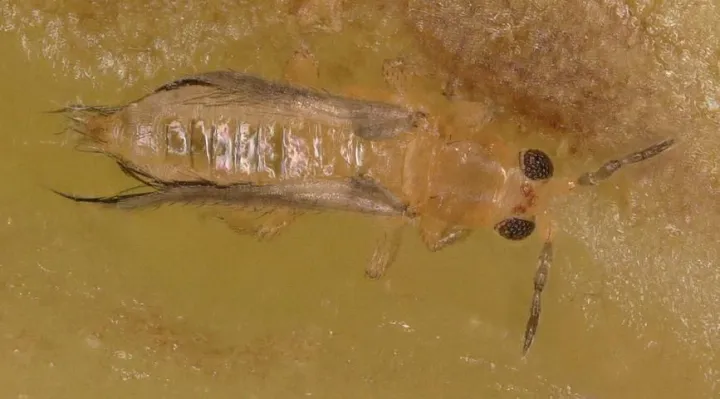
The West Indian flower thrips (Frankliniella insularis) is a member of the Thripidae family, order Thysanoptera. Adult insects are typically dark brown or black in color, which helps distinguish them from many lighter-colored thrips species often found on crops.
Identification typically requires microscopic examination of the pronotum setae and antennal segments. Adults are small, slender insects with fringed wings, which is a diagnostic feature of the suborder Terebrantia.
The life cycle consists of the egg, two larval instars, prepupa, pupa, and adult. The larval stages are generally pale or yellowish, making them difficult to detect without careful inspection of plant tissues.
This species is highly mobile and can colonize new plants rapidly. In greenhouses, they thrive under warm conditions and can complete multiple generations in a single growing season, leading to rapid population growth.
Correct identification is crucial, as Frankliniella insularis shares morphological similarities with other economically important thrips species. Proper diagnosis often involves using magnifying tools or sticky traps to confirm their presence.
What it damages
This pest feeds on a wide range of hosts, including various vegetables, ornamentals, and legumes. They use their rasping-sucking mouthparts to puncture plant cells and ingest the contents, causing significant physiological stress to the plant.
The feeding process results in the destruction of chlorophyll-containing tissues, leading to silvery or bleached patches on leaves. In severe infestations, these patches can coalesce, causing the leaf tissue to brown and eventually necroticize.
Beyond direct feeding, Frankliniella insularis is known to act as a vector for plant viruses. The introduction of viruses into a crop can be more devastating than the direct damage caused by the insects themselves.
Floral damage is common, as thrips prefer feeding on buds and blossoms. Infested flowers may show distorted petals, reduced size, and premature senescence, which significantly affects the market value of decorative plants and fruit set in certain crops.
Heavy infestations can lead to stunted plant growth, reduced vigor, and substantial yield loss. The presence of the pest often goes unnoticed until visible symptoms of tissue collapse or viral infection occur.
When it appears
The development of the West Indian flower thrips is highly dependent on environmental conditions, particularly temperature. Higher temperatures generally shorten the generation time, leading to population explosions during summer months.
In greenhouses, this pest can be active year-round if temperatures are maintained above the threshold for development. In field conditions, they are most prevalent during the warmer months when the climate is conducive to their reproductive cycle.
Adults overwinter in soil, debris, or on hardy weeds. As temperatures rise in spring, they migrate to emerging crops, where they begin to lay eggs within the plant tissue, effectively initiating the seasonal infestation cycle.
Dispersal is frequently facilitated by wind, which can carry adults over considerable distances. This makes local containment difficult, as populations can be re-introduced to fields from neighboring areas or wild host plants.
Monitoring should be proactive rather than reactive. By the time visual symptoms appear on foliage, the population is usually well-established, making management significantly more challenging.
Signs of infestation
Early signs of infestation include tiny white or silver flecks on the leaf surface. These are empty plant cells that have been drained of contents, which are a hallmark of thrips feeding activity.
Small, dark, tar-like spots of excrement on the underside of leaves or within blossoms are a definitive indicator of an active thrips colony. These spots distinguish thrips damage from other types of environmental stress.
Bud and flower distortion is a major symptom. Infested buds often fail to open properly or develop asymmetrical, necrotic petals. This is particularly problematic for crops where floral quality is the primary economic driver.
A general loss of plant color, shifting toward a pale or chlorotic appearance, may occur as the infestation grows. This yellowing is a sign of overall nutrient and water stress caused by the damage to the plant's vascular and photosynthetic systems.
If you suspect an infestation, gently tapping a blossom over a sheet of white paper will often cause the thrips to dislodge, making them clearly visible and allowing for an estimation of the current population density.
Control measures
Managing the West Indian flower thrips requires an integrated pest management (IPM) approach. Cultural controls, such as weed management, are vital to remove alternative hosts that harbor the pests between crop cycles.
Chemical control should be used judiciously, rotating different classes of insecticides to prevent the development of resistance. Systemic products are often effective because they reach the tissues where thrips feed.
- Utilize blue or yellow sticky traps to monitor adult flight and population trends.
- Remove and destroy infested plant debris immediately after harvest.
- Introduce natural enemies such as predatory mites (e.g., Amblyseius species).
- Practice crop rotation and spatial separation between susceptible crops.
- Ensure thorough spray coverage, focusing on buds and the undersides of leaves.
In greenhouses, maintaining appropriate humidity levels can sometimes discourage thrips, which generally prefer dry conditions. Biological control agents should be released early in the season before the pest population gains a foothold.
Regular scouting and early intervention are the cornerstones of successful control. Because the eggs are protected inside the plant tissue and pupae often reside in the soil, multiple applications may be necessary to target all life stages.
Taxonomy
- Latin name
- Frankliniella insularis
- Order
- Thrips
- Family
- Thripidae
- EPPO code
- FRANIS
Discussion
No discussions yet — be the first.