
Daylily thrips
Frankliniella hemerocallis
Description
How to identify
The Daylily thrips (Frankliniella hemerocallis) is a small insect belonging to the order Thysanoptera and the family Thripidae. These pests are barely visible to the naked eye, measuring about 1–2 mm in length.
Adult thrips are characterized by a slender, dark brown or black body and two pairs of wings fringed with fine hairs, which give them a characteristic appearance under magnification.
Larvae are typically paler, ranging from yellowish to translucent, and do not possess wings. They are highly active and tend to hide in concealed parts of the host plant to avoid predation and environmental stressors.
This species is a specialist pest, showing a strong host preference for the genus Hemerocallis. Their biological development involves several stages: egg, two larval instars, prepupa, pupa, and adult.
The lifecycle is highly temperature-dependent. In warm conditions, the entire cycle can be completed in as little as two to three weeks, allowing for multiple overlapping generations within a single growing season.
What it damages
Daylilies are the primary targets for this pest. The insects prefer feeding in protected areas such as tightly packed new leaves and developing flower buds, where they are shielded from external agents.
Feeding is performed by piercing plant cells and sucking out the sap. This causes localized tissue death and triggers a systemic reaction in the plant, often leading to severe stunting.
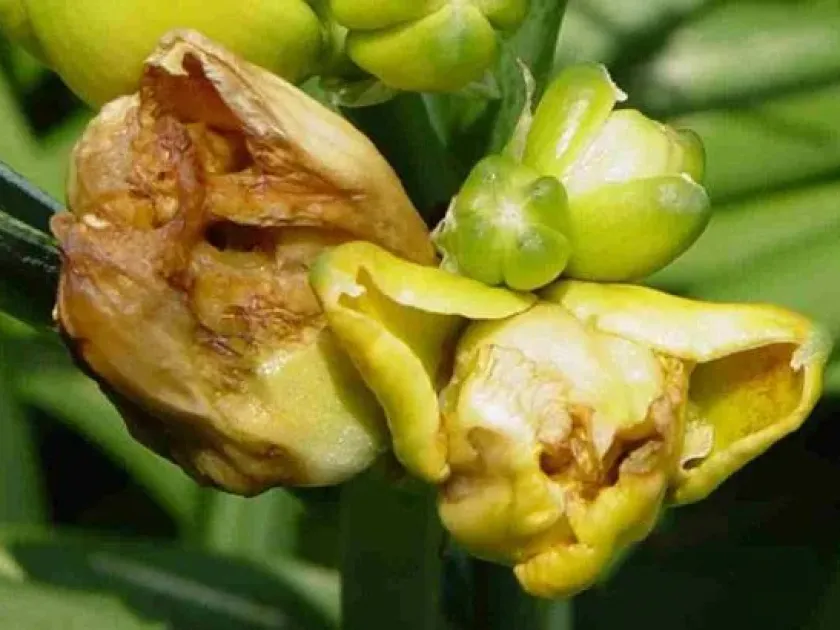
The damage is not limited to leaves; the floral parts are heavily impacted as well. Buds may fail to open correctly, or they may emerge with unsightly scarring and irregular discoloration.
As they feed, these thrips inject saliva into the plant, which can result in necrotic spotting and tissue chlorosis. This significantly degrades the aesthetic value of the ornamental flowers.
Beyond direct feeding, Frankliniella hemerocallis is considered a potential vector for plant viruses, making it a serious threat to the health and longevity of daylily cultivars.
Signs of infestation
The earliest signs of infestation are silver or white streaks appearing on the foliage, caused by the depletion of cell contents. Over time, these areas become brown, brittle, and necrotic.
Leaf distortion is a hallmark sign. The new growth may appear curled, crinkled, or twisted, as the insects continue to feed on the tender tissue within the leaf whorls.
Black, fecal deposits—tiny black dots—are frequently observed on the underside of leaves or within the folds of the foliage, indicating the presence of an active colony.
During the flowering stage, one might observe irregular spots on the petals or deformed blooms that fail to reach their full potential or show premature wilting.
Under heavy infestation, tapping an infested bud or leaf over a white sheet of paper will typically reveal the presence of the small, mobile, straw-colored larvae or dark-colored adults.
Control measures
Managing daylily thrips requires an integrated approach. Sanitation is the first step: remove and destroy severely infested foliage to reduce the population density in the garden.
Blue or yellow sticky cards are highly effective for monitoring adult populations. Placing these cards near the host plants helps in timing the application of control measures accurately.
Chemical control should rely on systemic insecticides, as these reach the insects hidden within the tightly folded plant tissue. Rotating products with different modes of action is essential to prevent resistance.
Cultural practices, such as maintaining healthy soil moisture and providing adequate nutrients, can improve plant vigor and help them withstand or recover from light infestations.
- Regular monitoring during the spring and summer months.
- Application of horticultural oils or soaps as a contact treatment.
- Use of systemic agents containing acetamiprid or similar active ingredients.
- Avoidance of overcrowding plants to reduce humidity pockets.
Taxonomy
- Latin name
- Frankliniella hemerocallis
- Order
- Thrips
- Family
- Thripidae
- EPPO code
- FRANHE
Discussion
No discussions yet — be the first.