
Western flower thrips
Frankliniella gemina
Description
How to identify
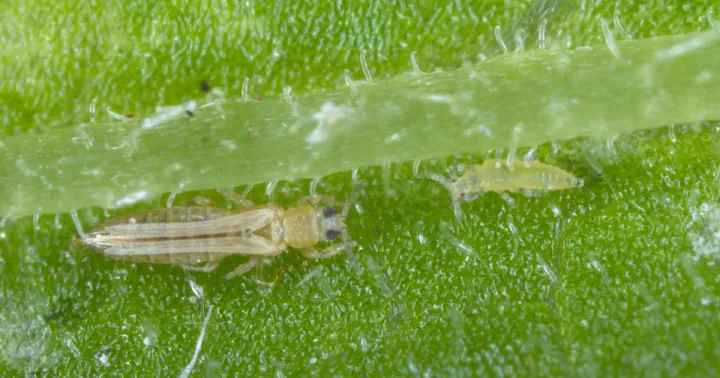
The Western flower thrips (Frankliniella occidentalis, and its close relative Frankliniella gemina) are members of the order Thysanoptera, family Thripidae. These are tiny insects, typically measuring between 1 to 2 mm, with elongated, slender bodies that range from light yellow to brown in color.
Adults possess two pairs of narrow wings fringed with hairs, which are characteristic of this order. Larvae resemble adults in shape but are smaller, lack wings, and have a pale, translucent, or yellowish appearance.
A key identifying feature is their secretive behavior. They prefer to inhabit concealed plant parts such as flower buds, leaf axils, and interior foliage, making them difficult to spot during initial inspections.
Because Frankliniella gemina is morphologically very similar to the Western flower thrips, precise identification often requires microscopic examination of structural features by an expert.
For effective monitoring in agricultural environments, growers should use blue or yellow sticky traps, which are highly attractive to these active insects and provide an early warning of infestation.
What it damages
This pest is a polyphagous insect that infests a vast range of host plants, including major vegetable crops like tomatoes, cucumbers, and peppers, as well as many ornamental flowering species.
They damage plants by piercing the epidermal tissue with their mouthparts and sucking the cell contents, which leads to tissue collapse and significant leaf or flower distortion.
Economic damage is most severe when they attack flowers and developing fruit, causing blossom drop, scarring on fruit surfaces, and overall yield reduction in greenhouse and field conditions.
Beyond direct feeding damage, these thrips are primary vectors for destructive plant viruses, such as the Tomato Spotted Wilt Virus (TSWV), which can decimate entire greenhouse crops.
The feeding sites create entry points for secondary pathogens, including bacteria and fungi, further exacerbating the stress and physical decline of the affected plants.
When it appears
The development of thrips is highly dependent on temperature. The optimal range for rapid reproduction is between 20 and 30 degrees Celsius, allowing them to thrive in various climates.
In greenhouse settings, these pests can reproduce year-round, completing their life cycle in as little as two weeks and generating up to 15 generations annually if left unmanaged.
The life cycle involves egg, larva, propupa, pupa, and adult stages. Notably, the pupal stages often occur in the soil, which makes them less susceptible to contact-based pesticide applications.
During the spring, the population begins to spread from weeds and surrounding vegetation onto emerging seedlings, quickly colonizing host plants as they are transplanted.
Peak population densities usually occur during warmer months, as higher temperatures significantly accelerate the developmental rate of each generation, leading to explosive population growth.
Signs of infestation
Early signs of infestation include the appearance of silvery or pale streaks on leaves, which gradually coalesce into large, bleached patches as plant tissue dies and desiccates.
Flowers often become stunted or deformed, with petals showing abnormal discoloration, spotting, or early wilting due to the constant drain of sap by the insect colonies.
Fruit may exhibit characteristic "scab" or "corky" surface scarring, which ruins the aesthetic appeal and marketability of the produce, especially in premium vegetable markets.
Close inspection of the undersides of leaves or the inside of buds will reveal the presence of small, active larvae and dark fecal spots, which are classic indicators of thrips activity.
General plant stunting, curling of the terminal leaves, and a failure of blossoms to set fruit are clear indicators that the plant is struggling with a heavy thrips infestation.
Control measures
Managing this pest requires an integrated pest management (IPM) approach that combines cultural, biological, and chemical strategies to achieve long-term success.
- Maintain strict hygiene, including weeding and disinfecting greenhouses to eliminate overwintering sites.
- Use clean, certified nursery stock to prevent the introduction of thrips into your growing area.
- Incorporate biological control agents such as predatory mites (Amblyseius) or pirate bugs (Orius) to suppress populations.
- Deploy monitoring traps early in the season to identify threshold levels for intervention.
- Apply systemic insecticides, rotating active ingredients to prevent the development of pesticide resistance in the pest population.
Taxonomy
- Latin name
- Frankliniella gemina
- Order
- Thrips
- Family
- Thripidae
- EPPO code
- FRANGE
Discussion
No discussions yet — be the first.