
South American thrips
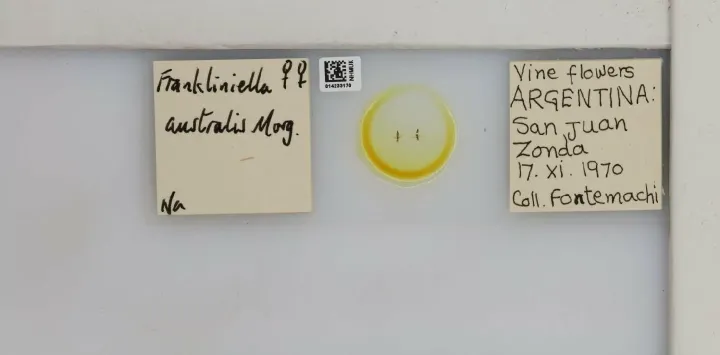
Frankliniella australis
Description
How to identify
The South American thrips (Frankliniella australis) belongs to the order Thysanoptera, family Thripidae, and is a tiny insect measuring approximately 1-1.5 mm in length.
Adults possess slender bodies ranging from pale yellow to brown, which allows them to effectively blend into the tissues of host plants during the day.
Their life cycle includes egg, two larval stages, propupa, pupa, and adult, with the speed of development highly dependent on ambient temperatures and humidity.
Larvae are typically smaller and paler than adults, often hiding in crevices of plant organs such as flower buds, where they are difficult to detect during early infestations.
This species is highly mobile and can quickly spread across fields or greenhouses, especially when high temperatures accelerate their reproductive cycles.
What it damages
Frankliniella australis is a polyphagous pest, meaning it attacks a wide variety of agricultural, horticultural, and ornamental crops globally.
By using their piercing-sucking mouthparts, both nymphs and adults extract vital cell contents from plant leaves, stems, and developing flower buds.
This feeding activity causes physical damage, leading to the collapse of cells and the disruption of photosynthesis, which severely weakens the host plant.
Beyond physical consumption, these insects are known to transmit various plant viruses, causing systemic infections that are often more damaging than the feeding itself.
Crop losses result from both yield reduction due to poor plant vigor and the loss of marketability caused by cosmetic damage to fruits and flowers.
Signs of infestation
Early symptoms appear as silvery, stippled areas on the foliage, which progress to brown or necrotic patches as the leaf tissue dies back.
The presence of small, dark fecal spots on the underside of leaves is a clear indicator of a thrips infestation rather than a nutrient deficiency.
Distorted, curled leaves and stunted growth are common signs that the infestation has reached the meristematic tissues or developing buds.
Flowers are particularly susceptible, showing deformities, irregular spotting on petals, and a tendency to drop prematurely or fail to open correctly.
Close inspection of the plant's terminal growth or flowers usually reveals the presence of the active insects moving rapidly among the damaged tissue.
Control measures
Cultural management includes rigorous weed control around the field or greenhouse, as weeds act as alternative hosts that maintain the population.
Effective monitoring involves placing blue or yellow sticky traps, which attract the adults and help farmers time their interventions accurately.
Chemical control should rely on the rotation of insecticides with different modes of action to prevent the rapid development of pesticide resistance.
Biological control agents, such as predatory mites (e.g., Amblyseius species) and minute pirate bugs, provide natural suppression of larvae in many cropping systems.
Integrated Pest Management (IPM) strategies, combining preventative cultural practices and targeted biological or chemical applications, are essential for successful control.
Taxonomy
- Latin name
- Frankliniella australis
- Order
- Thrips
- Family
- Thripidae
- EPPO code
- FRANCS
Discussion
No discussions yet — be the first.