
Faustinus cubae
Faustinus cubae
Description
How to identify
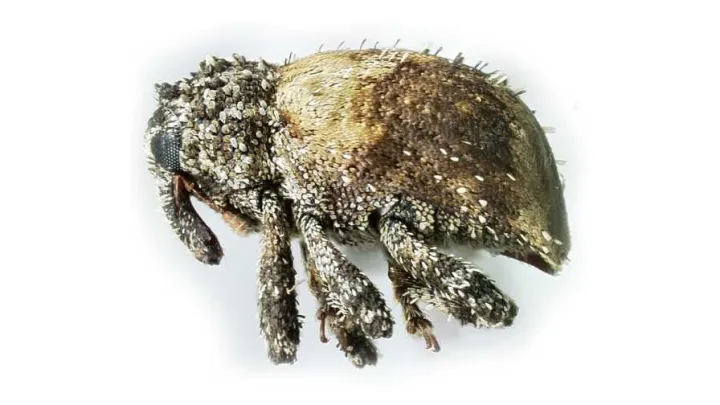
Faustinus cubae is a species of weevil belonging to the family Curculionidae (order Coleoptera). This insect is known as a specialized pest that primarily targets plants within the Convolvulaceae family.
The adult weevil possesses the typical morphology of the Curculionidae family, featuring a pronounced rostrum (snout) adapted for feeding and oviposition within the host plant tissue.
The biological cycle consists of complete metamorphosis, including egg, larva, pupa, and adult stages. Each stage is strictly adapted to the host plant environment, ensuring the insect's survival and reproduction.
Larvae are legless, grub-like, and cream-colored with a dark head capsule. They spend their entire development period inside the plant's stems, protected from the external environment and many natural predators.
Pupation occurs in specialized chambers excavated by the larvae within the plant stalk. This protected environment allows the insect to safely complete its transition to the adult stage before emerging to restart the cycle.
What it damages
The primary host plant for this species is the sweet potato (Ipomoea batatas). Infestations can lead to significant reductions in both the yield quantity and the overall quality of the tubers.
In addition to sweet potatoes, the weevil may infest other species in the Ipomoea genus, which can act as reservoirs for the pest, especially in areas where wild morning glory species are prevalent.
Damage is primarily caused by larval feeding, as they bore galleries through the stems. This disrupts the plant's vascular system, hindering the transport of water and nutrients throughout the vine.
When the infestation reaches the base of the plant, larvae can penetrate the developing tubers. This causes internal tunnels and damage, often rendering the harvested produce unmarketable and prone to rotting.
Weakened plants are highly susceptible to secondary pathogens, including various fungi and bacteria, which can exacerbate the decline of the crop and lead to total field loss in severe cases.
Signs of infestation
Early symptoms of an infestation include the wilting and chlorosis of leaves, particularly during the peak heat of the day, as the damaged stems can no longer provide adequate water to the foliage.
Careful examination of the stem base often reveals small entry holes and the presence of frass (larval excrement), which are clear indicators of internal larval activity.
- Stunted growth and yellowing of the vines.
- Exit or entry holes at the base of the stem.
- Deformation and brittleness of the plant stems.
- Hollowed-out stems filled with larval debris.
- Tuber surface damage or internal tunneling upon harvest.
A tell-tale sign is the softening of stem tissues near the soil line, which indicates that the plant's structural integrity has been compromised by the feeding larvae.
Upon harvest, tubers may show irregular tunnels or localized decay. Cutting into these tubers often reveals the larvae or the pupal cells, confirming the presence of Faustinus cubae.
Control measures
The most important control measure is the utilization of certified, pest-free planting material. Since the weevil can be transported within cuttings or tubers, strict nursery inspection is vital.
Implementing a rigorous crop rotation schedule is essential. Avoiding the planting of sweet potatoes in the same area for multiple consecutive years prevents the local population of weevils from building up.
Sanitation practices, such as the destruction of wild Ipomoea weeds and removing crop debris immediately after harvest, eliminate potential overwintering sites and reduce the pest population.
Chemical control involving systemic insecticides can be effective if applied during the active adult movement phase, although the hidden larval stage makes complete eradication challenging.
Promoting general plant health through proper fertilization and irrigation helps the sweet potato crop withstand moderate levels of pest pressure and minimizes the overall impact of the infestation.
Taxonomy
- Latin name
- Faustinus cubae
- Order
- Coleoptera (beetles)
- Family
- Curculionidae
- EPPO code
- FAUSCU
Discussion
No discussions yet — be the first.