
Fannia
Fannia
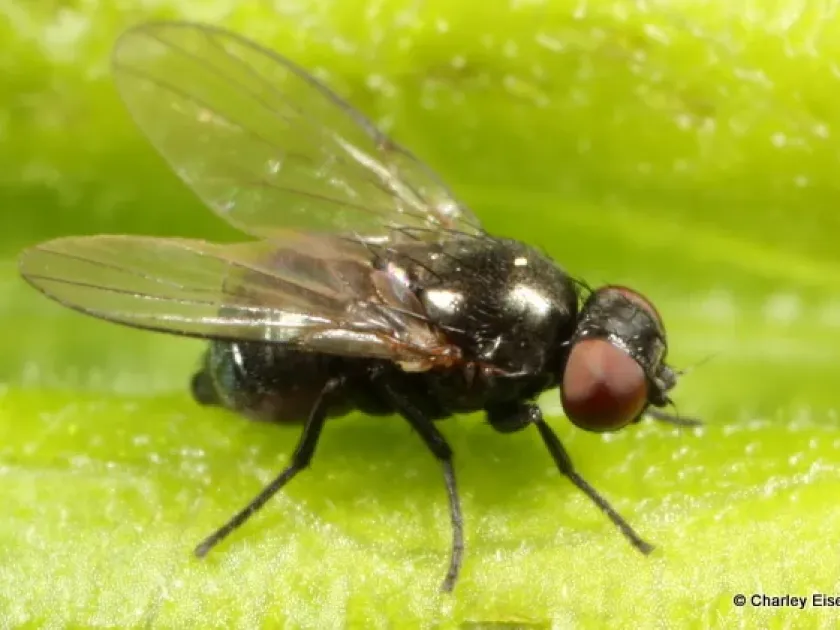
Description
How to identify
The genus Fannia belongs to the family Fanniidae within the order Diptera. These insects are commonly referred to as lesser house flies due to their appearance.
Adult flies are generally slender, measuring between 4 and 6 mm in length, and are known for their peculiar, hovering flight patterns near sources of organic material.
The larvae are highly distinct, characterized by a flattened body equipped with lateral fleshy protuberances or spines that look somewhat like small branches or leaves.
These larvae are primarily scavengers but can become pests when they occur in high densities around agricultural crops or stored produce.
The identification of adult species often relies on specific wing venation patterns and abdominal markings, which are vital for accurate agricultural monitoring.
What it damages
Larvae cause damage by feeding on the roots, bulbs, and stems of vegetable crops such as onions, potatoes, and various brassicas.
By tunneling into the plant tissues, they weaken the structure of the vegetable and disrupt the transport of nutrients and water from the soil.
This feeding activity often introduces opportunistic pathogens, including bacteria and fungi, leading to soft rots that can devastate an entire crop in a short time.
The economic impact is particularly severe in young seedlings where larval feeding can completely destroy the root system, causing plant death.
Infestations are frequently linked to high soil moisture and the presence of poorly decomposed organic matter in the immediate vicinity of the plants.
When it appears
Fannia flies are active from late spring through autumn, with peak population densities typically occurring during the warmer summer months.
The lifecycle is highly temperature-dependent, allowing for multiple overlapping generations per year under favorable conditions in both fields and greenhouses.
Overwintering usually occurs in the pupal stage, buried in the soil or protected within barns and agricultural structures where organic material is stored.
In spring, emerging adults actively search for suitable oviposition sites, specifically targeting decaying vegetation and manure heaps.
Greenhouse environments can host continuous breeding cycles if hygiene practices and moisture levels are not carefully managed throughout the off-season.
Signs of infestation
Symptoms of infestation often begin with stunted plant growth and chlorosis of the lower leaves due to compromised root integrity.
Visual inspection of the soil near the root zone will often reveal the presence of the characteristic spiky larvae associated with this genus.
Affected tubers or bulbs will show visible boreholes and darkened, decaying tissue, often accompanied by the presence of larval frass.
An increased number of adult flies hovering around damp soil or greenhouse benches is a strong indicator of an ongoing infestation cycle.
- wilting of plants during the heat of the day;
- visible damage to roots and bulbs upon excavation;
- foul odor emanating from rotted plant base tissue.
Control measures
Preventative cultural practices are the most effective management tools, starting with the use of fully composted organic matter instead of raw manure.
Deep cultivation of soil during late autumn or early spring helps to expose pupae to harsh weather conditions and natural predators.
In indoor environments, the installation of yellow sticky traps and fine-mesh netting can significantly reduce the number of adults and prevent egg-laying.
Biological controls, such as applications of entomopathogenic fungi to the soil, provide a targeted way to reduce larval populations without chemical residues.
When chemical intervention is necessary, insecticides should be applied based on economic thresholds and timed specifically to target the adult stage.
Taxonomy
- Latin name
- Fannia
- Order
- Diptera (flies)
- Family
- Fanniidae
- EPPO code
- FANNSP
Discussion
No discussions yet — be the first.