
Fallenia
Fallenia
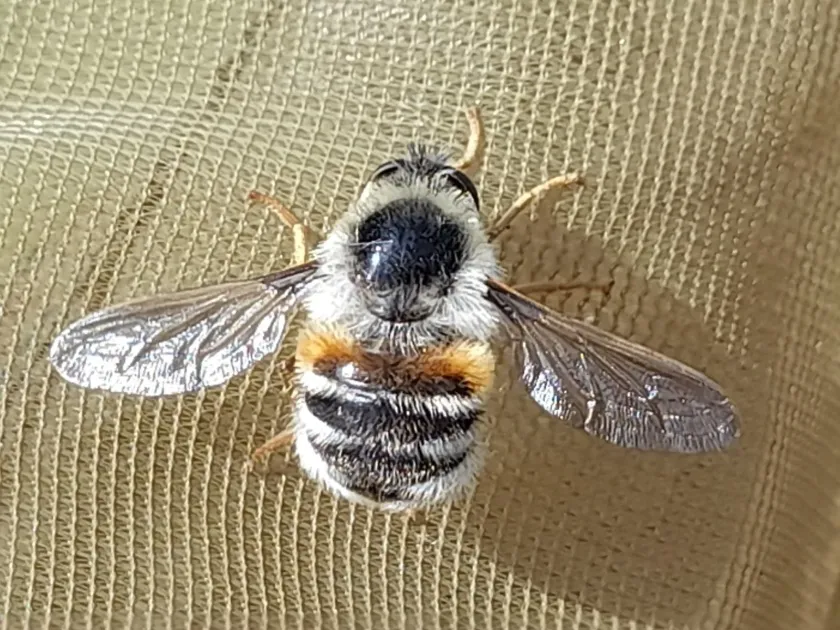
Description
How to identify
The genus Fallenia belongs to the order Diptera and the family Scenopinidae, commonly known as window flies. These are small insects that often remain unnoticed due to their secretive lifestyle.
Adults possess a characteristic body structure, often dark in color, sometimes with a metallic sheen. The wings are transparent or slightly smoky, with simplified venation, which is a key diagnostic feature of the family.
The larvae of Fallenia have an elongated, almost worm-like body consisting of clearly visible segments. They are characterized by high mobility within the substrate where they develop.
Precise species identification requires microscopic examination of the adult genitalia. In field conditions, specialists should focus on the type of substrate where the insect is found.
This genus is not considered a major agricultural pest, although under certain conditions, it can be found in agroecosystems associated with organic debris.
What it damages
Fallenia is not a specialized phytophage that feeds on living plant tissues. The primary damage is associated with the activity of their larvae in organic-rich environments.
Larvae of the Scenopinidae family are often predators or saprophages living in soil, rotting wood, or bird and mammal nests.
In agroecosystems, they may damage seeds or plant roots if the plant material is in a state of decay or if there is an excess of uncomposted organic fertilizer.
Direct economic damage from Fallenia is rarely recorded. In most cases, their presence serves as an indicator of excessive accumulation of plant debris in the soil.
Damage manifests as micro-injuries to the root system, which can later become entry points for secondary fungal and bacterial infections.
When it appears
The activity of adult Fallenia occurs during the warm season, typically from late spring to mid-summer. Population peaks coincide with the mass emergence of dipterans.
The insect's life cycle is closely linked to soil temperature. Optimal conditions for larvae are provided by moderate humidity and the presence of sufficient decaying organic matter.
Depending on the climatic zone and food availability in the soil, one or two generations may develop during the season.
Overwintering primarily occurs in the larval or pupal stage, hidden deep in the soil layers or within plant litter.
Early spring warming promotes rapid pupation of overwintered individuals, leading to the appearance of the first adult generation as early as May.
Signs of infestation
Visual detection of Fallenia is difficult due to the secretive habits of the larvae. The main indicator is the presence of cavities or erosion on the roots of plants that appear stunted.
When excavating the soil in the root zone, one can find characteristic segmented larvae that move quickly into the soil when disturbed.
An indirect sign is the presence of large amounts of rotting organic matter, which attracts females for egg-laying.
Above-ground signs of infestation include slowed growth, yellowing of lower leaves, and a general loss of plant turgor without any obvious cause.
In cases of significant substrate infestation, larvae may destroy seed sprouts, leading to thin crop stands and the potential need for reseeding.
Control measures
The primary control method is agrotechnical. It is essential to avoid applying uncomposted manure or compost immediately before planting crops.
Deep autumn plowing helps destroy a significant portion of the larval and pupal population overwintering in the topsoil.
Practicing crop rotation disrupts the pest's life cycle and reduces the likelihood of population buildup in the soil of a specific field.
Using high-quality, healthy seeds and growth stimulants helps plants pass through critical developmental phases more quickly, making them less vulnerable to damage.
- Optimization of soil moisture.
- Timely removal of post-harvest crop residues.
- Monitoring the purity of organic fertilizers.
Taxonomy
- Latin name
- Fallenia
- Order
- Diptera (flies)
- Family
- Nemestrinidae
- EPPO code
- FALLSP
Discussion
No discussions yet — be the first.