
Exophthalmus weevil
Exophthalmus
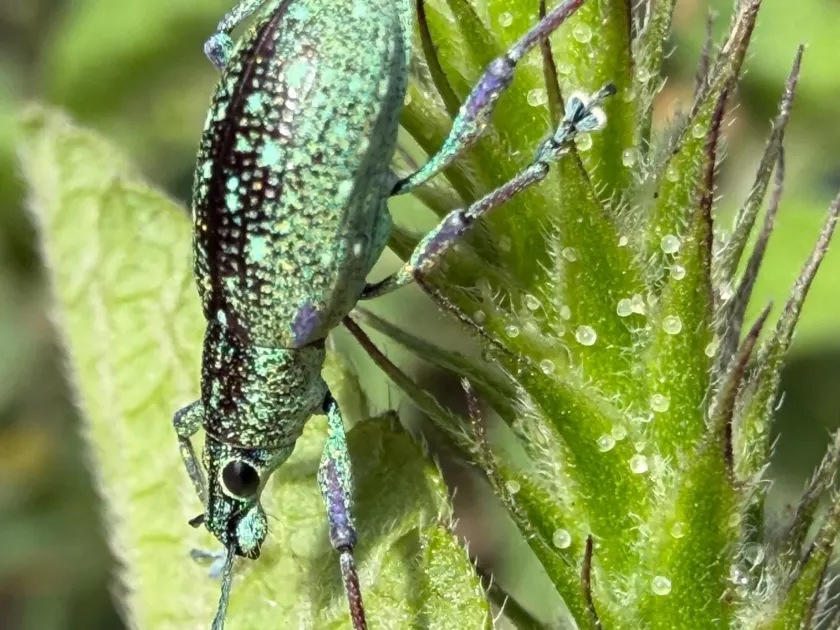
Description
How to identify
The Exophthalmus genus belongs to the Curculionidae family, within the order Coleoptera. These insects are well-known tropical root weevils that possess a characteristic elongated rostrum and a hard, protective exoskeleton.
Adult weevils are typically medium-sized, often showing cryptic coloration in shades of brown, gray, or green, which allows them to blend seamlessly with bark and foliage.
The larvae are legless, white to cream-colored grubs, specifically adapted for survival in the soil environment where they feed on the root systems of host plants.
Their life cycle includes complete metamorphosis: egg, larva, pupa, and adult, with each stage being dependent on the specific microclimate of the host plantation.
Morphology varies significantly among species within the genus, yet they all share the fundamental characteristics typical of the Entiminae subfamily of broad-nosed weevils.
What it damages
Primary host plants include citrus trees, coffee, cocoa, and various ornamental trees, making them significant pests in tropical and subtropical agriculture.
Adult weevils primarily damage the foliage, causing distinctive marginal leaf-notching, which reduces the surface area available for photosynthesis and weakens the tree.
Larval feeding on the roots is the most destructive phase, as it disrupts the tree's ability to transport water and essential nutrients from the soil to the canopy.
Young plants are particularly vulnerable, often showing stunted growth or dying outright if the root system is decimated by heavy larval infestation.
Economically, these pests reduce fruit yield and overall plant vigor, while the physical damage provides entry points for various soil-borne pathogens and fungi.
Signs of infestation
The most recognizable symptom of adult activity is the jagged, scalloped edge on leaves, often referred to by agronomists as "notching" or "leaf-eating."
General tree decline, characterized by chlorosis and yellowing of the leaves, is a strong indicator of extensive root damage caused by larval activity below the surface.
Presence of larvae can be confirmed by digging into the root zone of affected plants, where the grubs may be found feeding on roots and root hairs.
Premature wilting and shedding of leaves during periods of normal hydration are clear indicators that the root system has been compromised by pest feeding.
Observation of the adult insects is often most successful during evening or early morning hours, as they are primarily nocturnal or crepuscular in their behavior.
Control measures
Cultural control measures, such as frequent soil tillage in the root zone, are highly effective in disrupting the life cycle of the larvae and pupae.
Biological control agents, particularly entomopathogenic fungi or specialized nematodes, are recommended for suppressing larval populations in the soil.
Chemical control involving systemic or contact insecticides can be applied during peak adult emergence times, strictly following local agricultural safety guidelines.
Strict quarantine measures on nursery stock are vital to prevent the unintentional introduction of these weevils into new, uninfested growing regions.
- Monitoring adult populations using light or sticky traps.
- Ensuring optimal soil health to help plants withstand light infestation.
- Conducting routine root health assessments during seasonal field surveys.
Taxonomy
- Latin name
- Exophthalmus
- Order
- Coleoptera (beetles)
- Family
- Curculionidae
- EPPO code
- EXOHSP
Discussion
No discussions yet — be the first.