
Exartema leafroller
Exartema
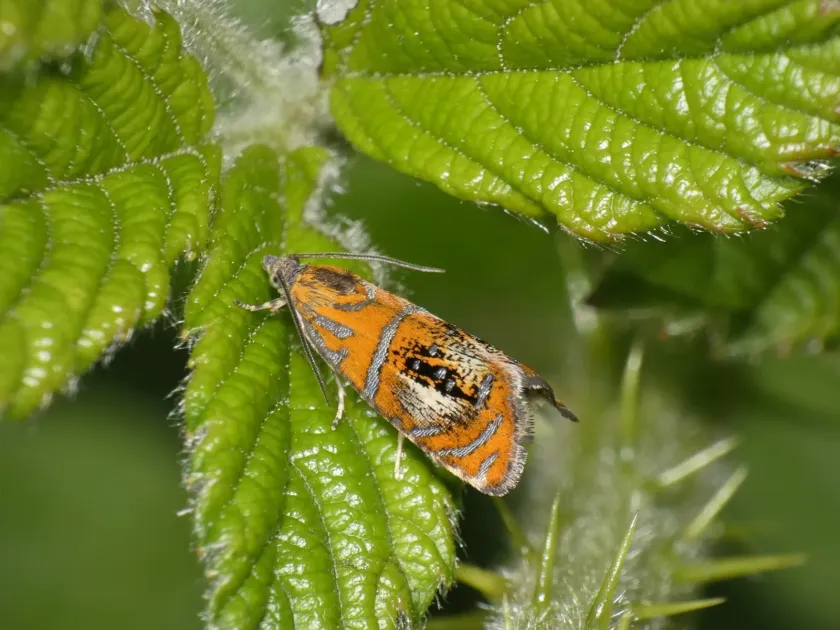
Description
How to identify
The genus Exartema belongs to the Tortricidae family, commonly known as leafrollers. These moths are characterized by a bell-like silhouette when at rest, which is a distinctive trait of this group of lepidopterans.
Adult moths typically have a wingspan ranging from 15 to 20 mm. Their forewings are adorned with intricate patterns, blending shades of brown, gray, and ochre, providing exceptional camouflage against tree bark.
The life cycle encompasses complete metamorphosis: egg, larva (caterpillar), pupa, and adult. The larval stage is responsible for the damage, while adults are primarily focused on reproduction.
These insects often overwinter as young larvae, tucked away in silk-lined hibernacula located in bark crevices or among fallen leaf litter, emerging in early spring as temperatures rise.
Pupation occurs within the foliage, where the larva creates a protected environment by rolling or folding leaves and securing them with silk threads.
What it damages
Exartema species primarily target fruit trees, especially those in the Rosaceae family. Common hosts include apple, pear, and various stone fruit species, as well as several wild shrubs.
Larvae feed on developing tissues, starting with buds and flowers before moving on to young leaves. This feeding behavior can lead to significant defoliation and growth retardation.
The caterpillars are known to skeletonize leaves, leaving behind only the veins, which impairs the plant's ability to undergo photosynthesis effectively.
Fruit damage is also common, as larvae may tunnel into developing fruitlets. This not only causes fruit drop but also invites secondary fungal infections, leading to rot.
Economic damage is most severe during high population years, where the cumulative impact on foliage and fruit can significantly reduce the overall orchard harvest yield.
Signs of infestation
The most visible sign of an Exartema infestation is the presence of rolled or folded leaves held together by fine, silky webbing, which serves as a protective nursery for the larva.
Evidence of feeding is apparent through irregular holes in leaf blades and dried-out patches of tissue that turn brown after the chlorophyll is destroyed by the caterpillar's activity.
Accumulation of larval frass (droppings) inside the rolled leaves is a sure indicator that the larvae are currently active and feeding within the shelter.
Early-season signs include damaged or hollowed-out flower buds, which fail to bloom or produce fruit, often resulting in stunted development of the affected branch.
Pupal cases, often found hidden within the folded leaf structures or tucked into crevices on the bark, indicate the successful completion of the larval development phase.
Control measures
Integrated Pest Management (IPM) is crucial. Cultural controls include removing and destroying infested leaves, as well as clearing away debris where larvae typically overwinter.
Monitoring using pheromone traps is highly recommended to track moth flight activity, allowing growers to target insecticide applications precisely when larvae are most vulnerable.
Biological control agents, such as beneficial wasps or bacteria-based sprays, can be used to manage populations effectively while preserving the natural balance of the ecosystem.
Chemical intervention should be reserved for periods when monitoring thresholds are exceeded, utilizing selective insecticides that minimize impact on non-target beneficial insects.
- Maintaining orchard sanitation by removing overwintering sites.
- Using pheromone-based mating disruption to suppress populations.
- Encouraging natural predators such as birds and parasitic wasps.
Taxonomy
- Latin name
- Exartema
- Order
- Lepidoptera (butterflies)
- Family
- Tortricidae
- EPPO code
- EXARSP
Discussion
No discussions yet — be the first.