
Pine shoot moths
Evetria
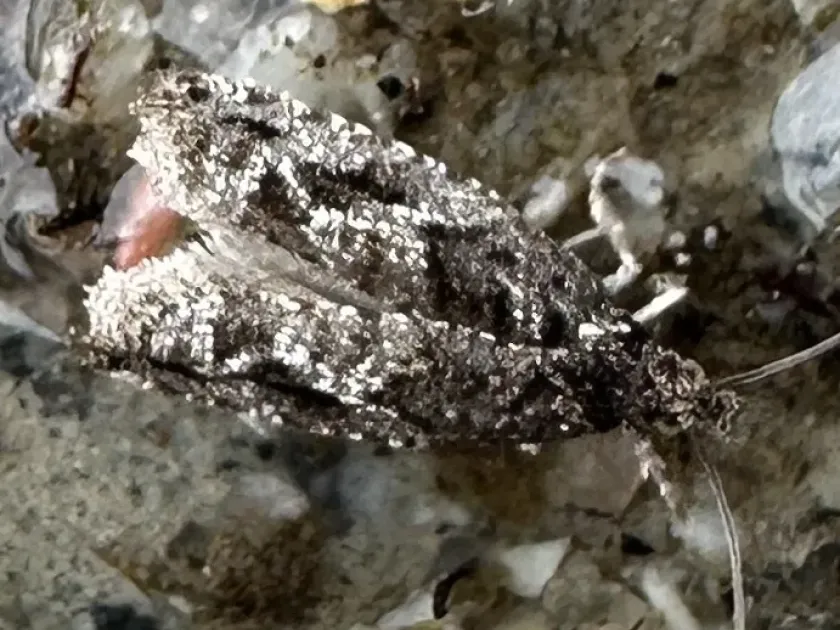
Description
How to identify
Pine shoot moths (Evetria) belong to the Tortricidae family and represent a significant group of pests affecting various coniferous species, particularly pines. Adult moths are relatively small with cryptic coloration that provides camouflage against tree bark.
The larvae are the primary damaging stage. They are typically reddish-brown with a dark head and develop inside the tissues of young shoots and buds, which hides them from most predators.
These insects are members of the order Lepidoptera. Their life cycle typically consists of four stages: egg, larva, pupa, and adult, with larvae being highly specialized to feed on conifers.
Correct identification often requires observing the moth's wing pattern or, more commonly, the distinct damage symptoms they cause on the growth of the current season.
Species of Evetria are widely distributed across temperate regions of the Northern Hemisphere, significantly impacting both commercial forestry and ornamental landscaping.
What it damages
The primary hosts are pine trees (Pinus genus), though other conifers can also be affected. Infestations are most severe in young, rapidly growing plantations and nurseries where the crop value is high.
Larvae bore into the apical and lateral buds, tunneling into the shoot axis. This feeding behavior disrupts the vascular system and often kills the terminal shoot.
In addition to shoots, these moths can infest developing cones, which limits seed production and reforestation efforts in managed forest stands.
Repeated attacks result in stunted growth, distorted tree shapes, and the loss of apical dominance, leading to multiple leaders in young trees that reduce timber quality.
Heavy infestations can lead to significant biomass loss and, in extreme cases, render a tree susceptible to secondary diseases or bark beetle colonization.
When it appears
Adult moths typically emerge in early to mid-summer, coinciding with the active growth flush of coniferous shoots. This provides an ideal substrate for egg-laying.
Larval feeding occurs throughout the summer months. As larvae mature, they move from initial feeding sites to overwintering locations inside buds or beneath bark scales.
Overwintering as larvae allows the species to survive harsh winter conditions. They remain in a dormant state until spring temperatures rise significantly.
In the spring, larvae resume feeding as soon as sap flow begins in the tree. This final feeding phase is often the most destructive to the tree's form.
Pupation occurs within the tunnels formed by the larvae in the shoots or buds, after which the new generation of adults emerges to start the cycle again.
Signs of infestation
One of the earliest signs is the appearance of resin exudation on young shoots. These resinous globules or blobs are located at the points where larvae have entered the plant tissue.
Affected shoots often wither, bend, or die back, leading to the characteristic "deformed" look of the terminal branches.
- Yellowing and browning of needles on damaged shoots.
- Presence of larval frass and webbing around buds.
- Distorted growth patterns (e.g., "shepherd's crook").
- Stunted height growth in young seedlings.
- Hollowed-out buds that crumble when touched.
Closer examination often reveals the entry hole at the base of the bud, which is usually partially covered by dry resin and larvae excrement.
Severe outbreaks are indicated by a high density of dead tips across the upper crown, which is easily visible from the ground during the mid-summer period.
Control measures
Mechanical control involves the pruning and destruction of infested shoots during winter or early spring before the moths emerge, which significantly reduces the local population.
Biological control agents, such as specialized wasps or applications of Bacillus thuringiensis, can be used to target larvae during their active feeding stages.
Chemical control is effective when timed correctly, usually targeting the period of egg hatching or early larval boring before they enter the protection of the shoot.
Pheromone traps are essential for monitoring flight patterns. This allows foresters to time their interventions precisely, ensuring maximum efficacy with minimal pesticide use.
Silvicultural practices, such as choosing site-appropriate species and maintaining diverse forest structures, can enhance tree resilience and limit the impact of moth outbreaks.
Taxonomy
- Latin name
- Evetria
- Order
- Lepidoptera (butterflies)
- Family
- Tortricidae
- EPPO code
- EVETSP
Discussion
No discussions yet — be the first.