
Euwallacea validus
Euwallacea validus
Description
How to identify
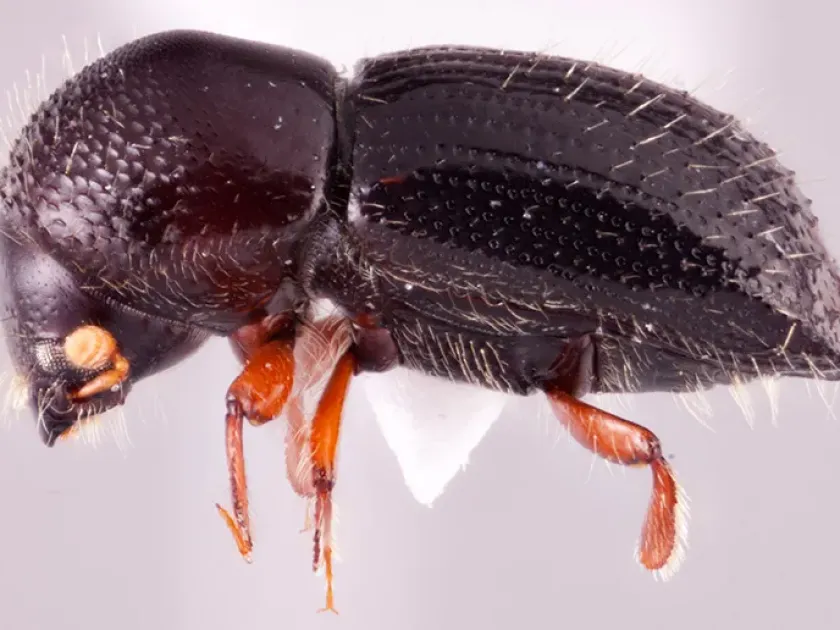
Euwallacea validus is a species of bark beetle belonging to the Curculionidae family, subfamily Scolytinae. These insects are small, typically ranging from 2.5 to 3.5 mm in length, and exhibit a cylindrical body shape.
The beetle typically displays a dark brown to black coloration. It is distinguished by its social behavior and its close relationship with symbiotic ambrosia fungi, which it transports in specialized organs known as mycangia.
These beetles are wood-boring insects. They create complex gallery systems inside the xylem of trees, where they cultivate fungal gardens that serve as the primary diet for both adults and developing larvae.
The sexual dimorphism in this species is notable, with females being the primary colonizers and excavators of the galleries, while males are often flightless and smaller in size.
Due to its ability to thrive in various wood types, this beetle has been identified as an invasive species in several parts of the world, often moving through international trade channels.
What it damages
Euwallacea validus is a highly polyphagous insect, meaning it can infest a wide range of host plants. It primarily targets hardwoods, including common species such as oak, maple, and beech.
While the beetle often colonizes stressed or weakened trees, high population densities allow it to attack healthy trees as well. This makes it a significant threat to both urban landscapes and natural forests.
The damage occurs when the beetles tunnel into the tree's sapwood. This action severs the vascular tissues responsible for moving water and nutrients, which can lead to rapid wilting and dieback.
A major component of the damage is the introduction of fungal pathogens during the boring process. These fungi colonize the vascular system, further weakening the tree and accelerating its death.
In agriculture, the beetle can impact orchards by targeting fruit-bearing trees, potentially leading to significant losses in yield and tree health within the plantation.
When it appears
The life cycle of Euwallacea validus is heavily influenced by ambient temperatures. Adult activity typically peaks during the spring and summer months when weather conditions are warm.
In regions with favorable climates, the beetle can complete multiple generations within a single growing season, leading to exponential population growth if not controlled.
During the winter months, the beetles hibernate inside their galleries within the wood, which provides them with insulation and protection against harsh environmental conditions.
Periods of peak flight activity are often observed during late spring, which coincides with the time when trees are most susceptible to initial colonization.
Monitoring efforts usually focus on the spring and early summer period, utilizing trapping methods to track population dynamics and determine the timing of beetle activity.
Signs of infestation
The most prominent sign of an Euwallacea validus infestation is the presence of tiny, circular entrance holes on the bark of the host tree, often only 1-2 mm in diameter.
Frass, which is a mixture of wood dust and beetle excrement, is frequently ejected from these holes and may accumulate on the bark surface or near the base of the trunk.
External symptoms on the tree may include flagging, where branches suddenly wilt and turn yellow or brown. In some cases, the entire crown of the tree may exhibit signs of decline.
Dark staining or moisture exudation may appear on the bark near the entry points, indicating the tree's physiological response to the infestation or the presence of fungal growth.
Upon removing the outer layer of bark, branching galleries can be seen inside the wood, often accompanied by dark or white fungal growth spreading throughout the excavated tunnels.
Control measures
The primary control strategy involves strict phytosanitary measures, particularly the inspection and treatment of wood products, to prevent the spread of the beetle to new regions.
Sanitation is key in infested areas. Removing and destroying heavily infested trees is essential to reduce the local beetle population and prevent further spread to healthy trees.
Maintaining tree vigor through proper irrigation, fertilization, and general forest health management increases the tree's natural defense mechanisms against colonization.
Chemical control options are generally limited and typically focus on preventive sprays during the beetle flight season rather than curative measures for trees already heavily infested.
- Regular forest and orchard monitoring for entrance holes.
- Utilization of pheromone-based traps to track and suppress local populations.
- Prompt removal of dead or declining host trees.
- Public awareness and reporting programs to stop the accidental transport of infested wood.
Taxonomy
- Latin name
- Euwallacea validus
- Order
- Coleoptera (beetles)
- Family
- Curculionidae
- EPPO code
- XYLBVA
Discussion
No discussions yet — be the first.