
Mango weevil
Eutyrhinus meditabundus
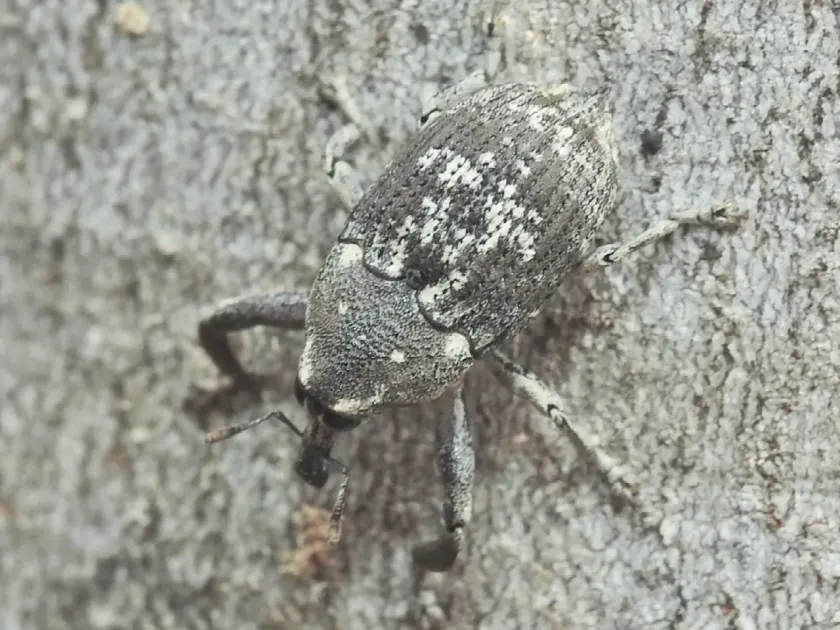
Description
How to identify
The Mango weevil, scientifically known as Eutyrhinus meditabundus, is a member of the Curculionidae family. These beetles are characterized by their robust bodies and long snouts, which are adapted for boring into tough plant materials.
Adult beetles typically measure between 10 and 15 mm in length. Their coloration is usually a dark brown or black, often with mottled patterns that provide excellent camouflage against the bark of host trees.
The larval stage is spent entirely inside the plant tissue. Larvae are legless, white, and fleshy, with a hardened, dark-colored head capsule that helps them chew through woody fibers within the branches and trunks.
Life cycles are continuous in warm climates, as the species relies on stable humidity and temperature to thrive. Adults are nocturnal, preferring to hide in crevices or under foliage during the hot daylight hours.
These pests possess functional wings, allowing them to disperse across orchards with relative ease, making the management of isolated patches challenging for plantation owners.
What it damages
While primary host trees include various Mango (Mangifera) species, the pest is also known to occasionally attack other tropical fruits like avocado, significantly impacting the structural health of the trees.
The most severe damage is caused by the larvae, which create extensive galleries throughout the wood. This boring activity severs the transport vessels of the tree, leading to severe nutritional deficiencies.
Adults contribute to the damage by feeding on young shoots, buds, and even leaves. While their consumption of foliage is less critical than the damage caused by larvae, it can stunt the growth of young trees.
The tunneling activity compromises the tree's structural integrity, making limbs prone to breaking under the weight of the fruit or during strong winds, which can lead to significant crop loss.
Over time, infested trees show clear symptoms of decline, characterized by reduced canopy density, smaller leaf size, and a general inability to produce high-quality yields consistently.
Signs of infestation
One of the most obvious signs is the appearance of small, circular exit holes in the bark of branches. These holes are created by adults emerging from the pupation chamber inside the wood.
Sap exuding from the trunk or branches (gummosis) is another common symptom, as the tree attempts to seal the wounds created by adult females depositing eggs or larvae boring into the tissue.
The flagging of individual branches, where leaves turn yellow or brown and wither prematurely, is a strong indicator that the vascular system at that specific point has been destroyed by larval feeding.
Observing the presence of 'frass'—a mix of wood dust and excrement—at the base of the tree is a diagnostic feature that confirms active boring is occurring somewhere above.
- round exit holes (2–4 mm);
- oozing sap on the stem;
- sudden wilting of healthy branches;
- premature fruit drop or fruit deformity;
- darkening of bark tissue around entry points.
Control measures
Sanitation is the most effective management strategy. Pruning and destroying infested limbs prevents the next generation of adults from emerging and restarting the life cycle within the orchard.
Systemic insecticides are often required when infestation levels become critical. These products are absorbed by the tree and reach the internal larvae, providing control where contact sprays fail.
Maintaining vigorous tree health through optimal fertilization and irrigation programs helps trees withstand minor attacks and promotes faster healing of damaged tissues.
Mechanical control, such as hand-picking adults at night using flashlights, can be highly effective in small-scale or home orchard settings to keep the population density under control.
Regular monitoring using traps or systematic field inspections is essential. Early intervention during the adult flight period can significantly reduce the number of eggs laid in the bark.
Taxonomy
- Latin name
- Eutyrhinus meditabundus
- Order
- Coleoptera (beetles)
- Family
- Curculionidae
- EPPO code
- EUTUME
Discussion
No discussions yet — be the first.