
Eutrombidium rostratum
Eutrombidium rostratum
Description
How to identify
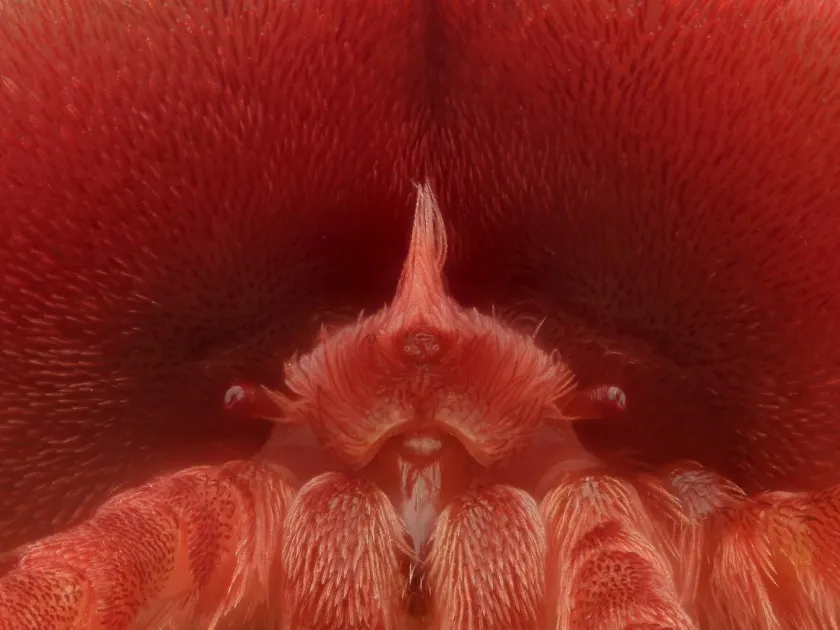
Eutrombidium rostratum is a species of mite belonging to the Microtrombiidae family. Adult mites are characterized by their vibrant red coloration and a velvety appearance due to specialized setae.
These mites are primarily soil-dwelling organisms, spending most of their life cycle in the upper horizons of the soil where they act as predators or parasites.
The morphology of adults includes a distinct division between the cephalothorax and abdomen, equipped with specialized mouthparts evolved for piercing and feeding.
Their life cycle consists of multiple developmental stages, including egg, pre-larva, larva, and various nymphal stages (proto-, deuto-, and tritonymph) before reaching maturity.
They are often observed moving on the soil surface during the spring, which makes them visible to farmers and researchers monitoring field conditions.
What it damages
While often recognized as natural enemies of locusts, Eutrombidium rostratum can cause damage to crops when their primary food sources are scarce or in high-density conditions.
The damage typically involves piercing the delicate tissues of young seedlings, leading to reduced nutrient uptake and potential stunting of the plant.
Necrotic spots may appear on the lower stems and leaves where the mites have fed, which can facilitate secondary infections by opportunistic soil pathogens.
Young cereal crops and various vegetable plants are most susceptible to this type of injury, particularly in the immediate post-germination phase.
Economic damage is usually localized rather than systemic, but early-season infestations can significantly reduce plant vigor and final stand establishment.
When it appears
The activity of these mites is highly dependent on temperature and soil moisture, with peak surface activity occurring during the warming spring months.
Throughout the growing season, they remain in the soil, where they continue their development and search for prey, particularly the egg pods of acridids.
Emergence from overwintering coincides with the initial stages of crop growth, making this a critical window for crop inspection.
As soil temperatures drop in the autumn, the mites retreat to deeper soil strata to seek protection and enter a period of dormancy during the winter.
Understanding the seasonal behavior is essential for implementing timely preventive measures to protect susceptible crop growth stages.
Signs of infestation
The primary sign of infestation is the observation of uneven patches in the field where seedlings exhibit stunted growth or wilting symptoms.
Closer examination of the plant base during early morning hours may reveal the presence of small, bright red mites actively moving on the soil surface.
Physical evidence of feeding, such as minute puncture marks or discolored lesions on the stem near the soil line, is a strong indicator of mite activity.
General plant decline without obvious disease symptoms often warrants an inspection of the root zone and surrounding soil for mite populations.
The presence of empty egg cases of locusts in the soil can serve as a predictor for higher mite concentrations, as these are a preferred host for the larval stages.
Control measures
Integrated pest management (IPM) strategies for Eutrombidium rostratum focus on disrupting their lifecycle through cultural and physical methods.
Deep tillage is an effective technique to disturb the soil environment, forcing the mites to move and exposing them to adverse conditions that limit their population density.
Maintaining diverse crop rotations helps prevent the buildup of specific prey species, thereby indirectly limiting the mite population growth in the field.
The use of broad-spectrum chemical insecticides should be avoided as it harms beneficial predatory fauna that helps keep mite populations in check naturally.
- Implement robust field monitoring programs in early spring.
- Enhance soil fertility to improve plant resilience against minor pest damage.
- Manage field weeds that may serve as alternative hosts or shelter for the mites.
Taxonomy
- Latin name
- Eutrombidium rostratum
- Order
- Mites
- Family
- Eutrombidiidae
- EPPO code
- EUTRRO
Discussion
No discussions yet — be the first.