
Pacific cockroach
Euthyrrhapha pacifica
Description
How to identify
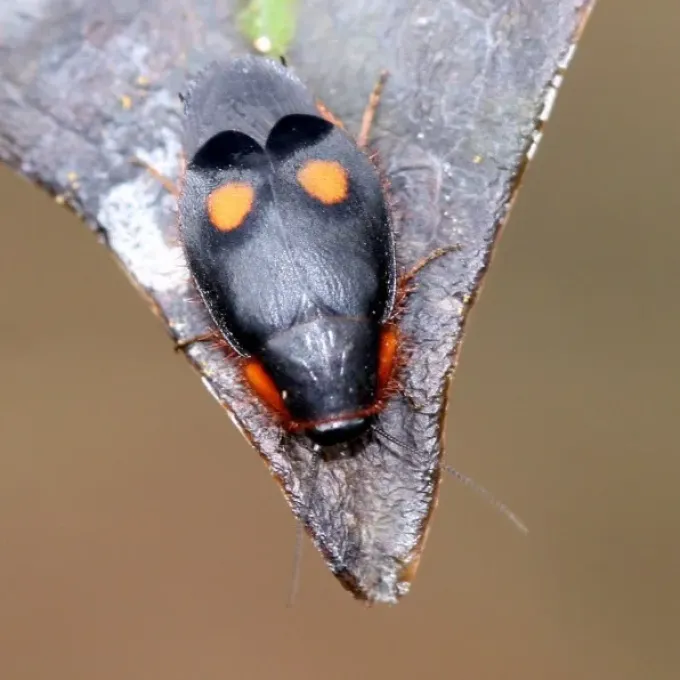
The Pacific cockroach (Euthyrrhapha pacifica) is a species of the order Blattodea and the family Corydiidae, known for its distinct appearance.
Adult individuals have well-developed wings and exhibit significant mobility, allowing them to spread quickly within greenhouse environments.
Their flattened body shape is an evolutionary adaptation that helps them hide in narrow cracks, under pots, and within moist substrate layers.
The life cycle encompasses egg, nymph, and adult stages, with development highly dependent on the warm and humid conditions of indoor habitats.
Unlike common domestic cockroaches, this species is typically found in specialized indoor ecosystems like conservatories and botanical gardens.
What it damages
This pest is highly polyphagous, capable of feeding on a diverse range of ornamental and vegetable crops cultivated in protected environments.
Adults and nymphs primarily damage foliage, stems, and flower buds by consuming plant tissues, causing significant aesthetic and structural injury.
Larval feeding on roots can severely stunt plant growth and, in cases of high infestation, lead to the eventual collapse of the plant.
The insects act as mechanical vectors for various pathogens, facilitating the spread of fungal and bacterial diseases throughout the greenhouse.
The presence of frass (excrement) on plants renders produce unsellable and diminishes the overall quality of ornamental plants.
Signs of infestation
Early warning signs include irregular holes in leaves and chewed margins, which indicate nocturnal feeding activity by the cockroaches.
The accumulation of dark, pellet-like frass on soil surfaces or leaves provides clear evidence of a population presence in the area.
Since these insects are nocturnal, they are best detected by inspection during dark hours using flashlights to spot them on plants.
Empty oothecae found in hidden corners, such as beneath benches or inside irrigation equipment, suggest active breeding grounds.
An unpleasant odor, typical of concentrated cockroach secretions, can be detected in confined greenhouse spaces with heavy infestations.
Control measures
Sanitation is the most critical factor in management, involving the immediate removal of decaying organic matter and plant debris.
Monitoring using sticky traps with lures is highly effective for identifying the initial stages of infestation and reducing the adult population.
Biological control agents, including entomopathogenic nematodes or fungi, can be applied to the substrate to target nymphs effectively.
When chemical interventions are necessary, targeted insecticide applications should be performed while adhering to safety guidelines for crops.
Exclusion strategies, such as screening vents and sealing cracks in the facility's structure, are vital to preventing re-infestation.
Taxonomy
- Latin name
- Euthyrrhapha pacifica
- Family
- Polyphagidae
- EPPO code
- EUTPPA
Discussion
No discussions yet — be the first.