
Eutetranychus
Eutetranychus
Description
How to identify
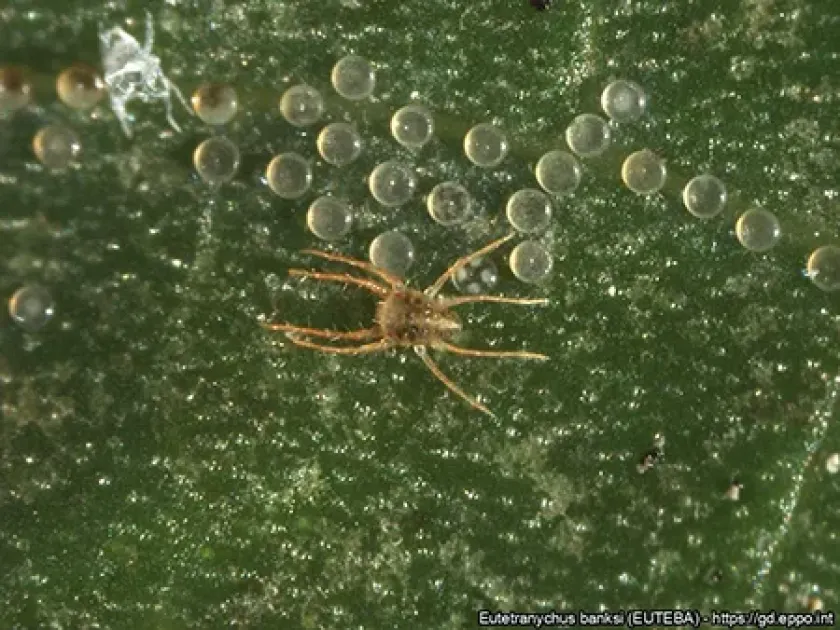
Eutetranychus is a genus of mites belonging to the family Tetranychidae (order Trombidiformes). Unlike many other spider mites, these pests often do not produce extensive webbing on the surfaces of host plants.
Adult mites have an oval, flattened body shape and range in color from yellowish to olive-green or brown, frequently with dark spots on the sides. Females are generally larger and more rounded than males.
The life cycle encompasses the egg, larva, protonymph, deutonymph, and adult stages. Under optimal temperatures, the lifecycle can be completed in as little as 10 to 14 days, leading to multiple generations per season.
They can reproduce both sexually and through parthenogenesis. This high reproductive plasticity allows the population to survive and rebound quickly even under fluctuating environmental conditions.
A key identifying feature is their preference for feeding on the upper surface of the leaves, specifically aligning themselves along the veins, which distinguishes them from many other tetranychid species.
What it damages
The primary hosts for Eutetranychus are citrus species, including lemons, oranges, and mandarins. They can cause severe economic losses in orchards by reducing the plant's photosynthetic capacity.
Beyond citrus, these mites are known to infest various fruit trees, grapevines, and several ornamental plants, especially in warm climates or protected greenhouse environments.
When it appears
Infestations typically peak during hot and dry weather conditions, when temperatures exceed 25°C. Low humidity is a key factor that favors their rapid development and population growth.
In greenhouses or tropical climates, the mite can remain active throughout the year. In temperate orchards, the peak period of activity usually occurs during the summer and early autumn months.
Signs of infestation
Early signs of infestation appear as tiny, pale, speckled stipplings on the upper side of the leaf. As feeding progresses, these spots coalesce, resulting in a general bronze or greyish discoloration of the leaf.
Severe infestations lead to defoliation, which causes significant stress to the tree, resulting in reduced fruit size, quality, and overall orchard productivity in subsequent years.
Because they produce minimal to no webbing, detection is often delayed, as the pests can be difficult to spot without a magnifying lens until the damage is already visible.
Control measures
Chemical control involves the use of specific acaricides. It is critical to rotate active ingredients with different modes of action to prevent the development of resistance within the mite population.
Cultural management practices include improving irrigation systems and misting, as high humidity and direct water contact on leaves create unfavorable conditions for mite proliferation.
Biological control methods are highly encouraged, particularly the release of predatory mites from the Phytoseiidae family, which are efficient in suppressing Eutetranychus numbers in commercial orchards.
Sanitation is essential; removing weeds and infested plant debris reduces potential overwintering sites for the mites and helps keep the local population levels under control.
Regular scouting using magnifying tools is recommended to monitor the leaf surfaces for early signs of activity, allowing for targeted interventions before widespread crop damage occurs.
Taxonomy
- Latin name
- Eutetranychus
- Order
- Mites
- Family
- Tetranychidae
- EPPO code
- EUTESP
Discussion
No discussions yet — be the first.