
Italian scorpion
Euscorpius italicus
Description
How to identify
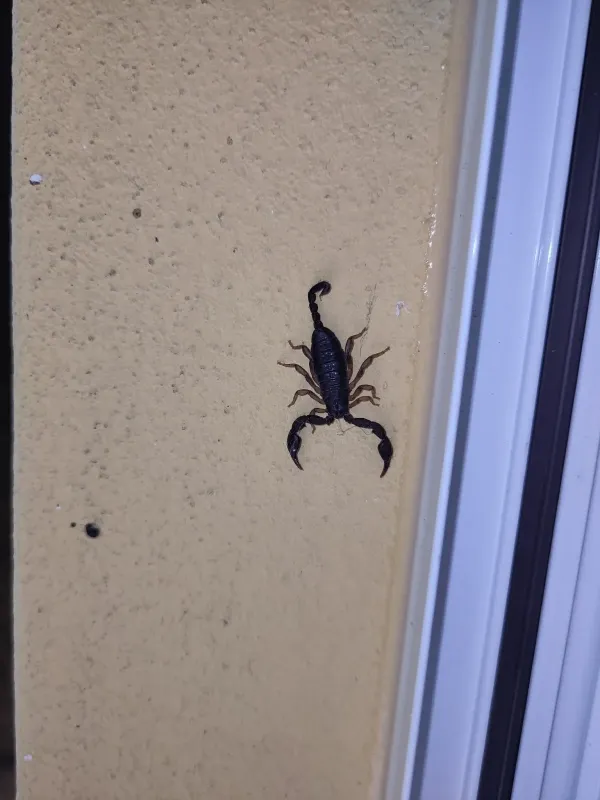
The Italian scorpion (Euscorpius italicus) belongs to the Euscorpiidae family and is a common species in Southern Europe. These arachnids are characterized by a dark body, reaching up to 50 mm, and robust pedipalps (claws).
Their bodies are dorso-ventrally flattened, allowing them to retreat into extremely narrow crevices, rock fissures, or under tree bark, which is typical for their habitat in agricultural gardens.
They are nocturnal predators, hunting for smaller insects and spiders. The development process from nymph to adult is slow, and the species is known for the mother's parental care of her offspring.
While they possess venom, it is generally considered mild, typically causing a reaction similar to a bee or wasp sting. They are not aggressive toward humans unless directly handled or provoked.
In a rural or garden setting, they are usually found in areas with high humidity and limited sunlight, often near foundations or in compost heaps.
What it damages
The Italian scorpion is not a pest to plants. It does not feed on plant tissues, fruits, roots, or seeds, and it performs no destructive agricultural activity on crops.
As a predatory species, it can technically be considered beneficial to some degree, as it consumes various insects, including potential garden pests like small beetles or larvae.
The main concern regarding their presence in agricultural production is the risk of human interaction during manual labor, such as harvesting or pruning in dense vegetation.
Large populations may indicate poor sanitation or excessive debris on the farm, which provides shelters that are not ideal for modern agricultural production standards.
For large-scale agricultural export, the presence of even non-lethal scorpions in packaging can be a phytosanitary issue, although they do not cause damage to the produce itself.
Control measures
Integrated pest management strategies for the Italian scorpion focus on habitat modification rather than chemical extermination, as they are not primary agricultural pests.
The most effective method is to remove their shelters: clear away woodpiles, stones, bricks, and heavy garden debris that allow them to establish nests near work areas.
Maintaining proper drainage and reducing excessive soil moisture around greenhouses and storage units helps limit the attractiveness of the environment to scorpions.
Sealing cracks and crevices in storage buildings and foundation walls is a critical barrier measure to prevent them from entering workspaces and indoor areas.
Workers should be trained to wear appropriate protective clothing, such as heavy-duty gloves, when moving materials in outdoor settings to avoid accidental stings.
Taxonomy
- Latin name
- Euscorpius italicus
- Family
- Chactidae
- EPPO code
- ESCPIT
Discussion
No discussions yet — be the first.