
Boxwood spider mite
Eurytetranychus buxi
Description
How to identify
The boxwood spider mite (Eurytetranychus buxi) is a tiny arthropod belonging to the Tetranychidae family. Adults measure approximately 0.3–0.4 mm in length and display a pale yellowish-green or brownish coloration.
Unlike many other members of its family, the boxwood mite produces very little to no webbing on the host plant. This cryptic behavior makes early detection challenging for many gardeners and landscapers.
The lifecycle follows a standard pattern of egg, larva, two nymphal stages, and adult. The entire development cycle can be completed in a relatively short time, especially during warm, dry summer months.
Eggs are typically deposited on the underside of boxwood leaves. Overwintering occurs primarily at the egg stage, with the eggs tucked away in leaf axils or bark crevices to survive harsh weather conditions.
As temperatures rise in spring, the eggs hatch into larvae. These larvae immediately begin feeding on the sap of the host plant, initiating the cycle of infestation that can last throughout the growing season.
What it damages
The boxwood spider mite exclusively attacks Buxus species, with Buxus sempervirens being the primary host. The mite targets young, succulent leaves, which provide the most accessible source of nutrients.
By piercing leaf cells and extracting sap, the mites cause chlorosis and cell death. This severely reduces the photosynthetic efficiency of the plant, leading to overall weakness and stunted growth.
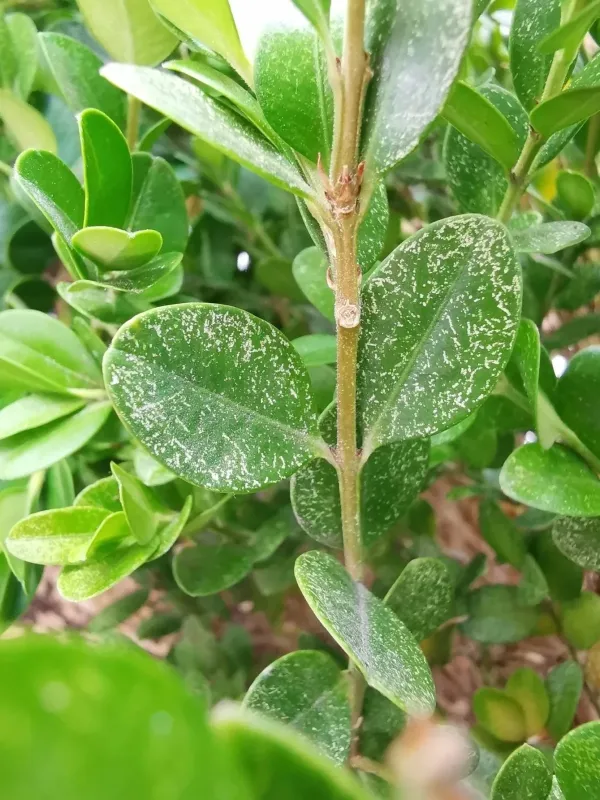
Heavy infestations result in a dull, mottled, or speckled appearance of the foliage. In severe cases, the leaves turn brown or bronze, leading to premature leaf drop and the exposure of bare branches.
The physiological stress caused by persistent feeding makes the plants significantly more susceptible to secondary pathogens, such as fungal leaf spot diseases, further damaging the plant's health.
In landscaping, boxwood spider mites can ruin the visual appeal of hedges and topiary features, as the loss of foliage density is difficult to recover quickly, potentially requiring corrective pruning.
Signs of infestation
The earliest symptom is the presence of tiny, light-colored stippling on the leaves. These spots are caused by the mites feeding on the chlorophyll-rich tissues, leaving behind pale marks.
As the infestation progresses, the stippling becomes more pronounced, causing the leaves to appear pale or "dusty." Eventually, the damage leads to the yellowing and bronzing of entire sections of the shrub.
Deformation of leaves is a common secondary symptom. The edges of the leaves may curl inward or become distorted, disrupting the clean, formal lines usually expected from boxwood topiary.
Growth reduction is another key sign. Infested boxwoods often produce fewer and smaller leaves, which is particularly evident on the new growth during the spring and early summer periods.
To confirm the presence of mites, place a clean white sheet of paper beneath a branch and shake it vigorously. The dislodged mites will appear as tiny, slowly moving specks against the white background.
Control measures
Successful management of the boxwood spider mite requires a combination of horticultural practices and targeted chemical control. The focus must be on breaking the lifecycle of the mite.
- Applying systemic acaricides specifically labeled for spider mite control on woody ornamentals.
- Ensuring thorough coverage of the underside of leaves during application to effectively reach the mites.
- Using high-pressure water sprays to wash mites off the foliage, as they thrive in dry conditions.
- Pruning and removing heavily infested branches to reduce the immediate population count.
- Monitoring plants regularly, especially during hot and dry spells when population growth is at its peak.
Chemical applications should be repeated at 10 to 14-day intervals to target the new generations that hatch from eggs not susceptible to the initial treatment. Always rotate chemicals if possible to avoid resistance.
Good plant health is the best defense. Keeping boxwood well-watered and mulched reduces environmental stress, making the plants more resilient to feeding damage and aiding in faster recovery post-treatment.
Taxonomy
- Latin name
- Eurytetranychus buxi
- Order
- Mites
- Family
- Tetranychidae
- EPPO code
- EURZBU
Discussion
No discussions yet — be the first.