
Sunbittern
Eurypyga
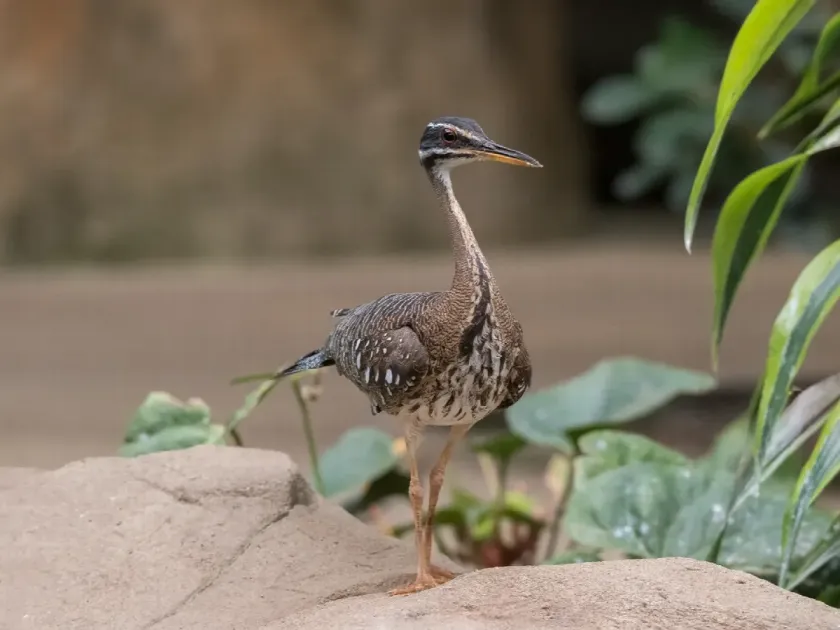
Description
How to identify
The Sunbittern (Eurypyga helias) is a unique bird species representing the monotypic family Eurypygidae within the order Gruiformes. It is widely recognized for its cryptic plumage, which features spectacular, sun-like eye patterns displayed when the wings are fanned out.
This bird species is native to the tropical forests of Central and South America, typically inhabiting the margins of slow-moving streams and rivers. Its behavior is highly elusive, as it relies on camouflage to blend into the dense riparian vegetation.
From an agronomic perspective, it is critical to clarify that the Sunbittern is not a plant pest. Unlike herbivorous insects or vertebrate pests, this species does not consume agricultural crops and does not impact food production.
The bird is a specialized predator. Its diet consists of small fish, crustaceans, frogs, and various insects found in aquatic or muddy environments. It is completely carnivorous and lacks the biology to process plant matter.
Therefore, any label identifying the Sunbittern as a pest is scientifically inaccurate. It plays a role as an insectivore and predator within its native ecosystem rather than an agricultural threat.
What it damages
There is no documented evidence in agricultural literature or entomological archives of the Sunbittern damaging crops. It does not possess the morphology or the dietary necessity to feed on grains, fruits, or vegetables.
The bird does not engage in foraging behaviors that would damage seedlings or mature plants. As a wetland-dependent species, its activity is confined to the water's edge, far removed from standard tillage or crop rows.
Furthermore, the Sunbittern does not act as a vector for plant pathogens or the dispersal of weed seeds. Its ecological footprint in agricultural areas is entirely benign.
Economic injury levels have not been established for this species because the potential for loss is non-existent. There are no physiological symptoms of plant damage associated with this animal.
The bird should be categorized as part of the natural wildlife fauna rather than a nuisance. Farmers and growers do not need to account for this species in their pest management plans.
Control measures
No control measures are required for the Sunbittern. As it is a non-pest species, any intervention intended to limit its population is unnecessary and ecologically counterproductive.
In many regions where the Sunbittern resides, the species is protected under local wildlife legislation. Growers are encouraged to preserve riparian habitats, as this helps maintain a balanced ecosystem that naturally regulates populations of actual agricultural pests.
The application of pesticides or repellents is not warranted for this bird. Such practices are not only ineffective for the intended purpose but may also violate environmental conservation standards.
Modern integrated pest management (IPM) focuses on targeting specific pests while safeguarding non-target species like the Sunbittern. Protecting native predators supports the resilience of the local environment.
In conclusion, the Sunbittern is an environmentally significant bird that should not be targeted or monitored as a pest. It poses zero risk to agricultural productivity and requires no mitigation efforts.
Taxonomy
- Latin name
- Eurypyga
- Family
- Eurypygidae
- EPPO code
- EYPASP
Discussion
No discussions yet — be the first.