
Parallel timber beetle
Euplatypus parallelus
Description
How to identify
The Parallel timber beetle, scientifically known as Euplatypus parallelus, is a wood-boring insect belonging to the Curculionidae family.
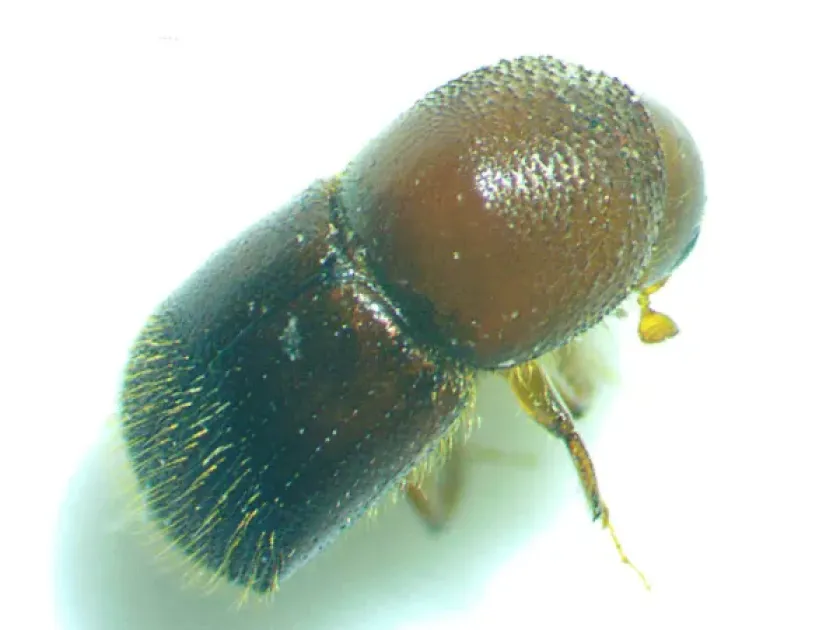
This beetle is characterized by its slender, elongated body, measuring approximately 4.5 to 5.5 millimeters in length, with a cylindrical shape designed for tunneling.
The insects are typically dark brown or black, featuring distinct grooves on the elytra, which allow for efficient movement within narrow galleries.
These beetles are known as ambrosia beetles because they maintain a symbiotic relationship with specific fungi, which they cultivate within their tunnels.
The adult beetles are highly specialized for boring into wood, and their life cycle is strictly dependent on the availability of suitable host tree tissues.
What it damages
Euplatypus parallelus attacks a vast range of tree species, including both native and exotic hardwoods in tropical and temperate regions.
It is a significant pest for timber-producing trees like Eucalyptus, Quercus, and various fruit-bearing species including cacao, coffee, and avocado.
By boring deep into the xylem of the tree, the beetles cause internal structural damage that disrupts the flow of sap and nutrients, leading to decline.
The colonization of the tunnels by ambrosia fungi causes dark staining in the wood, significantly reducing its commercial value and timber quality.
Severe infestations often result in the rapid death of the host tree, especially in cases of drought stress or other underlying physiological issues.
Signs of infestation
The most recognizable symptom is the presence of numerous small, circular entry holes on the bark, often accompanied by fine, granular wood dust.
This "frass" accumulation is usually found at the base of the trunk or caught in the crevices of the bark, indicating active tunneling activity within.
Stained patches on the bark or localized sap flow around the entry holes may also indicate the tree's attempt to defend against the invading beetles.
Crown dieback, wilting, or yellowing of the leaves are common signs that the tree's internal vascular system has been compromised by the beetle's galleries.
An examination of the wood interior reveals intricate, branching tunnels that extend deep into the heartwood, often showing blackish discolouration from fungal growth.
Control measures
Preventive sanitation is the most critical control measure, which involves the removal and destruction of infested trees to eliminate brood sources.
Log storage areas must be managed carefully by avoiding the accumulation of fresh wood debris, which serves as a major attractant for beetle swarms.
Monitoring programs using pheromone-baited traps are essential to detect the arrival of the beetles and time the application of protective measures accurately.
Chemical control is challenging due to the beetle's life cycle inside the tree, but systemic insecticides can be applied to protect high-value individual trees.
Promoting forest health through proper silvicultural practices, such as maintaining appropriate stand density and water management, helps trees resist initial colonization.
Taxonomy
- Latin name
- Euplatypus parallelus
- Order
- Coleoptera (beetles)
- Family
- Curculionidae
- EPPO code
- PLTPPA
Discussion
No discussions yet — be the first.