
Oak ambrosia beetle
Euplatypus compositus
Description
How to identify
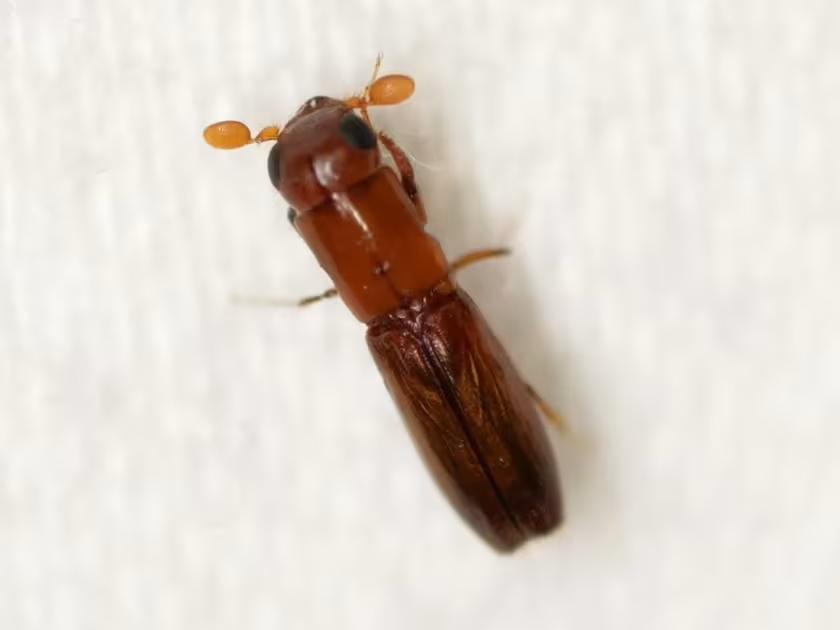
The oak ambrosia beetle (Euplatypus compositus) is a member of the Curculionidae family. These small, cylindrical beetles are typically reddish-brown to black in color.
Adult beetles exhibit distinct sexual dimorphism, with males and females having different morphological traits to facilitate their boring activity in wood.
The insect possesses a specialized body shape adapted for tunneling deep into the wood of host trees, where it creates elaborate galleries for its offspring.
Larvae are white, legless, and C-shaped. They do not feed directly on wood but rely on the ambrosia fungi cultured by the parents within the galleries.
Identification is often difficult because the insect spends the majority of its life cycle hidden within the internal structure of the tree trunk.
What it damages
This species is a destructive borer that attacks a wide variety of deciduous hardwood trees, including oaks, maples, and fruit-bearing tree species.
The primary damage is caused by the construction of tunnels, which physically disrupt the water and nutrient transport systems of the host tree.
As the beetles tunnel, they introduce ambrosia fungi into the sapwood, causing localized discoloration and decay that weakens the tree's internal structure.
Healthy trees can usually defend themselves with sap flow, but stressed or dying trees are highly susceptible to mass attacks, leading to rapid decline.
Infested timber loses its structural integrity and aesthetic value, making it commercially worthless for high-quality woodworking or construction.
When it appears
The activity of the oak ambrosia beetle begins in early spring, as rising temperatures trigger the emergence of adults seeking suitable host trees.
The peak flight and colonization period occur during late spring and throughout the summer months, correlating with high metabolic rates of the insects.
Multiple generations can occur within a single year if environmental conditions are favorable, allowing the population to build up rapidly in neglected areas.
During the winter, the beetles remain within the wood, sheltered from extreme temperatures, until the onset of warmer weather signals the next cycle.
Effective monitoring should be implemented during the peak season using traps to detect new infestations before they cause irreversible damage.
Signs of infestation
The most reliable sign of an infestation is the presence of fine, powdery frass or sawdust collecting in bark crevices or at the base of the tree trunk.
Small, perfectly circular entry holes are visible on the surface of the bark, indicating where the adults have bored into the sapwood.
If the bark is removed or the wood is cut, the tunnels appear as dark, stained galleries due to the growth of the fungi associated with the beetle.
Visible symptoms on the tree include canopy thinning, chlorosis of the foliage, and the gradual dieback of branches throughout the crown.
- Fine sawdust (frass) accumulation at the base.
- Small, round, uniform entry holes in the bark.
- Dark staining of the wood inside the galleries.
- Decline in tree vigor and premature leaf drop.
Control measures
Sanitation is the most effective control strategy, involving the prompt removal and destruction of infested trees to prevent the spread to healthy ones.
Proper forest management, such as removing wind-damaged trees and debris, eliminates potential breeding grounds for the ambrosia beetle population.
For high-value ornamental trees, systemic insecticide treatments can be used under the supervision of a licensed professional to deter further attacks.
Natural biological controls, including predatory insects, play a role in regulating the population density of the beetle within healthy ecosystems.
Ensuring tree health through adequate irrigation and nutrient management creates a stronger natural defense against wood-boring pest infestations.
Taxonomy
- Latin name
- Euplatypus compositus
- Order
- Coleoptera (beetles)
- Family
- Curculionidae
- EPPO code
- PLTPCO
Discussion
No discussions yet — be the first.