
Woodboring weevil
Euophryum
Description
How to identify
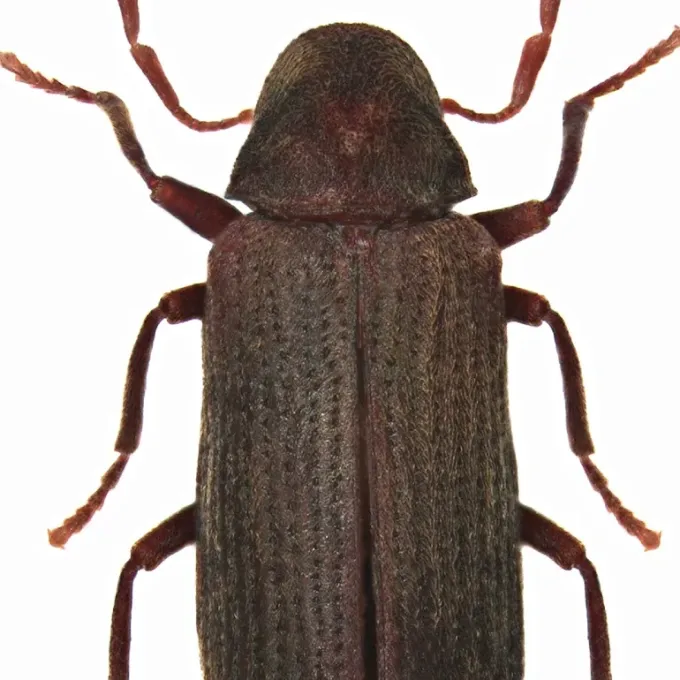
The woodboring weevil (genus Euophryum) belongs to the Curculionidae family. These insects are specifically adapted to colonizing wood that has a high moisture content.
Adult beetles are tiny, typically measuring between 3 and 4 millimeters in length, with a cylindrical body and a characteristic elongated snout (rostrum).
They are generally dark brown or black in color, often blending perfectly with the damp, stained wood they inhabit inside dark storage or building voids.
The larvae are small, legless grubs with a pale, wrinkled body and a prominent brown head, designed for continuous boring through timber fibers.
Unlike some other wood-boring beetles, Euophryum species are closely associated with fungal decay, often thriving in wood that is already softening.
What it damages
These pests primarily target damp softwood and hardwood materials used in construction, including floorboards, joists, and structural timber frames.
They are frequently found in basement areas, cellar beams, and parts of wooden structures that lack adequate damp-proof courses or ventilation.
The infestation is typically localized in areas where wood comes into contact with damp walls or soil, creating the humid conditions required for their life cycle.
Stored timber products and antique furniture kept in unconditioned, high-humidity storage environments are also at significant risk of being colonized.
In natural environments, they serve as decomposers by attacking rotting stumps, logs, and dead branches, accelerating the breakdown of fallen trees.
Signs of infestation
The most visible sign of infestation is the presence of small, circular exit holes, usually 1–2 mm in diameter, left by the emerging adult beetles.
Fine, powdery wood dust, known as frass, accumulates near the entry and exit points, indicating active boring activity by the larvae inside the wood.
Severe infestations result in extensive tunneling that compromises the structural integrity of the timber, turning the inner core into a spongy, fragile mass.
In some cases, the surface of the timber may show slight depressions or cracking, reflecting the massive internal damage caused by several generations of beetles.
The association with wood-rotting fungi often means that the infested areas may have a distinctive musty odor or visible mold growth on the surface.
Control measures
The primary control strategy for Euophryum is the immediate reduction of moisture levels within the building through improved ventilation and drainage.
Replace all structurally compromised wood with new, high-quality timber that has been pre-treated with borate-based wood preservatives.
For minor infestations, the application of specialized liquid insecticides with deep-penetrating properties can effectively eradicate localized pest populations.
Preventive maintenance, such as sealing masonry walls and repairing leaks, is essential to stop the re-infestation of structural timbers by wood-boring weevils.
In cases of widespread infestation, professional fumigation or professional-grade chemical treatment is required to ensure the total elimination of all developmental stages.
Taxonomy
- Latin name
- Euophryum
- Order
- Coleoptera (beetles)
- Family
- Curculionidae
- EPPO code
- ENOPSP
Discussion
No discussions yet — be the first.