
Euglandina rosea
Euglandina rosea
Description
How to identify
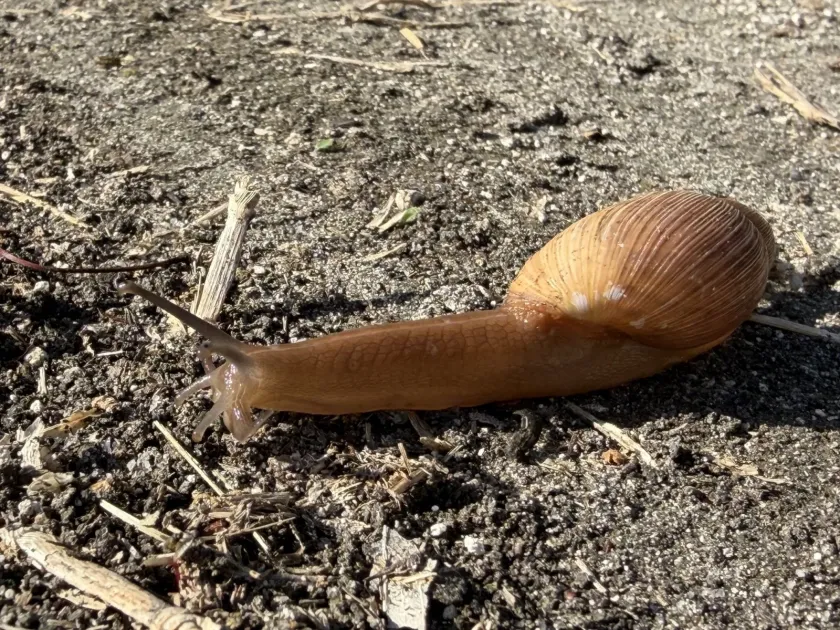
Euglandina rosea, commonly known as the rosy wolfsnail, belongs to the family Spiraxidae. It is a large predatory gastropod featuring an elongated, fusiform shell that can reach lengths of up to 7 cm, typically colored in shades of pinkish-brown.
The snail is distinguished by its prominent, long labial palps, which serve as highly sensitive organs for tracking the mucus trails of its prey.
Unlike common garden snails that feed on foliage, this species is an obligate predator, hunting other terrestrial snails and slugs to sustain its life cycle.
The species is highly invasive and was originally introduced to various parts of the world to control populations of giant African land snails, but it soon became a major threat to native mollusks.
They inhabit a variety of moist environments, including forests, garden beds, and urban landscapes, where high humidity allows for optimal hunting conditions.
What it damages
The damage caused by Euglandina rosea is primarily ecological rather than agricultural, as it is a significant predator of endangered and endemic snail species.
By consuming local mollusks, it disrupts natural food chains and essential nutrient cycling processes, leading to the decline of native biodiversity in the affected areas.
In addition to its predatory nature, the snail can harbor various parasites that may pose risks to other animals within the same habitat.
The presence of this species can lead to a drastic reduction in beneficial invertebrate populations that are necessary for healthy soil aeration and organic decomposition.
Due to its aggressive hunting strategy, it is listed as one of the 100 worst invasive species worldwide, necessitating strict conservation and quarantine measures.
When it appears
The activity of the rosy wolfsnail is strongly correlated with temperature and humidity levels, with the highest levels of activity occurring during rainy or damp seasons.
During drier, unfavorable conditions, the snails may enter a state of dormancy, hiding deep within the soil profile or under layers of decaying leaf litter to conserve moisture.
Reproductive cycles are usually synchronized with environmental conditions that support the development of hatchlings, which are essentially miniature versions of the adults.
Population surges often occur when prey density is high, providing the snail with a constant food supply that facilitates rapid growth and multiplication.
They are primarily nocturnal or crepuscular hunters, meaning they remain hidden in cool, sheltered spots throughout the heat of the day and emerge under cover of darkness.
Signs of infestation
The most reliable sign of a rosy wolfsnail infestation is the localized disappearance of native snail populations that were previously abundant in the area.
Evidence of predation can often be found in the form of empty shells left behind by the wolfsnail, which often show distinct breakage patterns near the shell opening.
Direct sighting is also a key indicator, especially in humid conditions; they are easily recognizable by their streamlined shells and active, searching tentacle movements.
Researchers and gardeners may also look for mucus trails that differ from those of non-predatory snails, although this requires specific expertise.
If you suspect the presence of Euglandina rosea, inspecting sheltered, moist habitats like logs, rocks, and thick vegetation during evening hours is recommended.
Control measures
Management of the rosy wolfsnail is complex because traditional molluscicides are ineffective against a predator that does not graze on treated crops.
- Manual removal and disposal of individuals to reduce local population pressure.
- Establishing physical barriers like copper tape or sharp gravel to impede their movement into sensitive habitats.
- Strict quarantine protocols for imported soil, mulch, and nursery plants to prevent accidental translocation.
- Promoting the health of native predators or maintaining habitat integrity to make the environment less suitable for invasive colonization.
Biological control remains experimental and must be approached with caution to avoid further destabilization of native wildlife populations.
Public awareness and early reporting of sightings are essential components of an effective strategy to contain the spread of this invasive species.
Taxonomy
- Latin name
- Euglandina rosea
- Order
- Molluscs
- Family
- Spiraxidae
- EPPO code
- EUGDRO
Discussion
No discussions yet — be the first.