
Eudemis gyrotis
Eudemis gyrotis
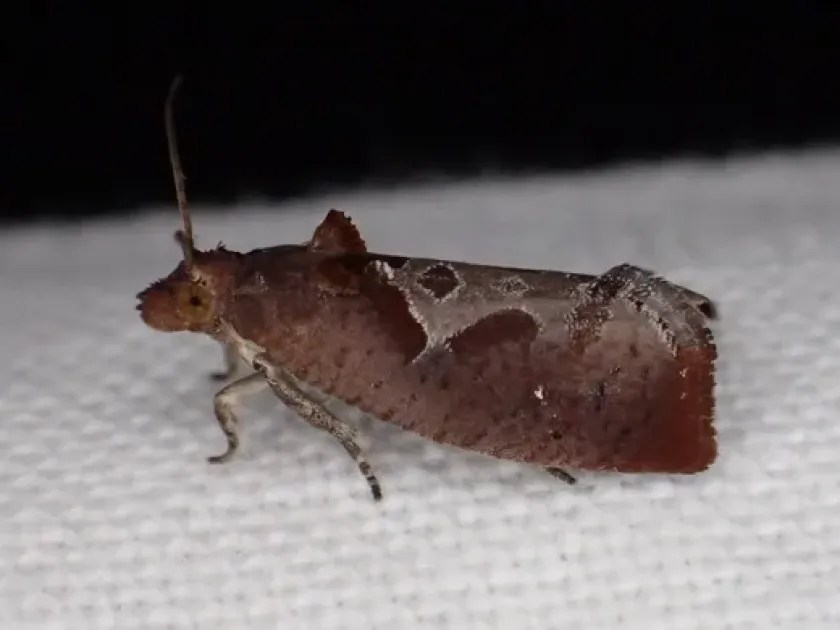
Description
How to identify
Eudemis gyrotis is a moth species belonging to the order Lepidoptera and the family Tortricidae. Known for its small size, this insect is a recognized pest in various agricultural and silvicultural settings.
The adult moth exhibits typical characteristics of the Tortricidae family. Its wings are often camouflaged with patterns that mimic tree bark or leaf surfaces, making it highly inconspicuous during the day.
The life cycle encompasses four distinct stages: egg, larva (caterpillar), pupa, and adult. The larval stage is the primary cause of concern for agronomists, as it is the period during which the organism actively feeds on plant tissues.
Caterpillars are known for their leaf-rolling behavior, which creates protective shelters and complicates early detection. They typically possess chewing mouthparts adapted for consuming foliage and other soft plant parts.
Taxonomic identification usually requires expert analysis of genital morphology, as many species within the Eudemis genus appear morphologically similar to the untrained eye.
What it damages
This pest is a specialized phytophage that primarily targets deciduous trees, as well as several species of fruit-bearing plants in orchards and nurseries.
Damage is inflicted by larvae feeding on developing buds, fresh leaves, flowers, and young fruits. Such feeding can significantly hinder the growth and overall vitality of the host plant.
Destruction of apical meristems and growth points often leads to the malformation of shoots, which can impact the structural development of the tree and its long-term yield potential.
When caterpillars feed on developing fruit, they often breach the epidermis, leading to surface scarring and fruit deformation that renders the produce unmarketable.
In cases of high infestation, the pest can cause extensive defoliation, which severely stresses the plant and leaves it vulnerable to secondary infections or winter damage.
When it appears
Activity typically commences in the spring when temperatures rise above the threshold necessary for larval development, coinciding with the bud-burst stage of host plants.
Depending on the climatic zone, the emergence of adults and the hatching of larvae can occur in multiple waves, leading to several overlapping generations within a single growing season.
The most severe damage is observed during late spring and early summer, as larvae reach later instars and their consumption rate increases significantly.
As the season progresses into autumn, the pest prepares for its overwintering stage, which usually occurs as a pupa or a late-stage larva hidden in protected environments.
Monitoring throughout the entire vegetative period is essential, as the timing of the pest's life cycle is heavily dictated by local weather patterns and regional temperature fluctuations.
Signs of infestation
The most prominent sign of infestation is the presence of leaves that are rolled, folded, or webbed together by silk, serving as a shelter for the larvae.
Frass (larval excrement) found on leaves, branches, or at the base of buds is a strong indicator of recent feeding activity by the caterpillars in the immediate area.
Irregular holes in leaf blades, sometimes referred to as skeletonization, indicate that larvae have been grazing on the chlorophyll-rich tissues of the plant.
Withering or browning of terminal buds early in the spring often suggests that a larva has bored into the center of the bud, destroying the developing tissues from within.
Visible damage to young fruit, such as small entry holes or depressed areas, confirms the presence of the pest and justifies the immediate implementation of control measures.
Control measures
Effective management requires an integrated approach that prioritizes cultural and biological methods before resorting to chemical interventions.
- Maintaining orchard hygiene by removing and destroying leaf litter and pruning debris.
- Mechanical removal of loose bark where larvae or pupae may be overwintering.
- Deployment of pheromone-baited traps to monitor adult flight and determine optimal timing for treatments.
- Application of microbial insecticides, such as Bacillus thuringiensis, when larvae are young and vulnerable.
- Chemical applications should be strictly limited to periods when caterpillars are exposed and before they seek shelter inside leaves.
Integrated Pest Management (IPM) protocols emphasize the importance of preserving natural predators and parasitoids that help maintain the population density of the pest at non-economic levels.
Frequent field scouting is critical, as it allows agronomists to determine the precise moment when the pest population reaches the economic injury level, ensuring the most efficient use of resources.
Taxonomy
- Latin name
- Eudemis gyrotis
- Order
- Lepidoptera (butterflies)
- Family
- Tortricidae
- EPPO code
- EUDEGY
Discussion
No discussions yet — be the first.