
European grapevine moth
Eudemis
Description
How to identify
The European grapevine moth (Lobesia botrana) is a significant insect pest belonging to the Tortricidae family that affects vineyards across many parts of the world.
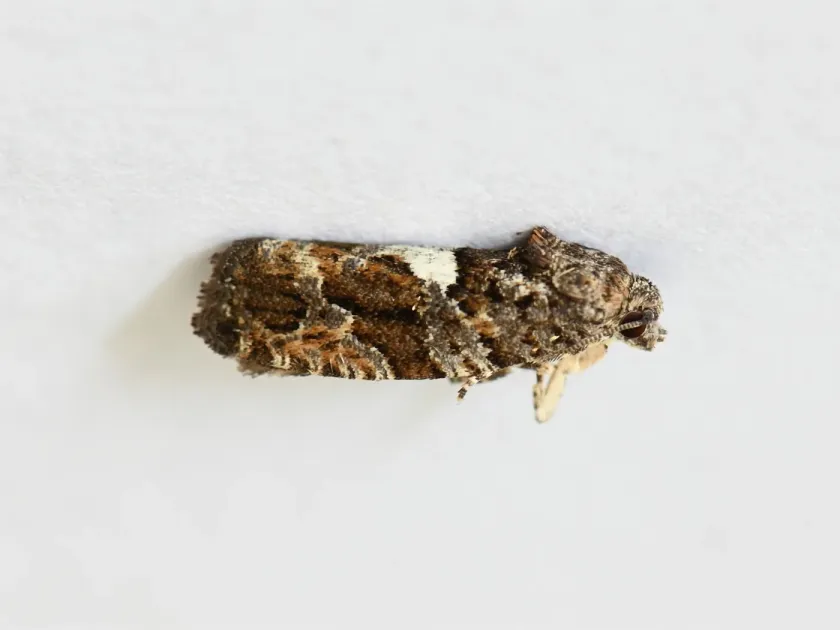
The adult moth is small, with a wingspan of approximately 12–13 mm, characterized by a complex pattern of brown, gray, and cream-colored markings on its forewings.
The larvae, which are the primary cause of damage, progress through several instars, changing color from yellowish-green to darker tones as they mature and grow.
These pests overwinter as pupae, hidden within protective, silken cocoons tucked away in the crevices of old vine bark or protected areas on the vineyard floor.
Understanding their life cycle is crucial for vineyard managers, as the number of generations per year is heavily dependent on the climate and local thermal accumulation.
What it damages
The first generation of larvae feeds mainly on flower buds and blossoms, webbing them together and causing significant flower loss before fruit set occurs.
Second and third-generation larvae are particularly destructive, as they burrow directly into the developing grape berries, causing them to rot and shrivel.
Beyond the direct loss of fruit, the damage caused by larvae creates entry points for secondary infections like Botrytis cinerea, leading to bunch rot.
In cases of severe infestation, entire clusters can be destroyed, resulting in significant yield reductions for both table grapes and wine production.
The larvae are highly mobile once they hatch, capable of moving between multiple berries within a cluster, effectively ruining the quality of the entire harvest.
When it appears
The emergence of adult moths typically occurs in the spring when average daily temperatures reach a threshold that promotes the end of the pupal diapause.
The second generation usually appears during the berry growth phase, mid-summer, when the grapes are expanding and becoming more attractive to the larvae.
The final generation of the season is often the most critical for yield, as the larvae target ripening grapes right before the harvest period.
Environmental factors, particularly humidity and temperature, play a vital role in determining the speed of each life cycle stage throughout the growing season.
As the season draws to a close, the final generation of larvae spins cocoons to survive the winter, waiting for the return of warmer weather to begin the cycle again.
Signs of infestation
Visual identification starts with the presence of fine silk webbing connecting the flower buds or berries, which is a clear indicator of larval activity.
Affected flower clusters will appear withered and distorted, often showing clear signs of being hollowed out by feeding larvae during the early spring.
As the fruit matures, small entry holes on the berry skin become visible, often accompanied by dark discoloration and signs of fungal infection or rotting.
Clusters may display visible excrement (frass) from the larvae, which, combined with the webbing, makes the grapes unsuitable for market or winemaking.
Careful inspection of the vine cordons during the dormant season may reveal white cocoons hidden under the peeling bark of older wood.
Control measures
Mating disruption using pheromone dispensers is a highly effective, environmentally friendly method used to prevent male moths from locating females, thus reducing population levels.
Biological control, including the application of Bacillus thuringiensis, offers a targeted approach to managing younger larvae while preserving beneficial insect populations.
Chemical control measures should be timed based on the data provided by pheromone monitoring traps to ensure applications are made during the most vulnerable life stages.
- Strategic use of systemic or contact insecticides when monitoring thresholds are reached.
- Removal of loose bark to destroy overwintering sites for the pupae.
- Canopy management to ensure good ventilation and better penetration of control agents.
Integrated Pest Management (IPM) strategies, which combine cultural, biological, and chemical methods, are essential for the sustainable management of this grapevine pest.
Taxonomy
- Latin name
- Eudemis
- Order
- Lepidoptera (butterflies)
- Family
- Tortricidae
- EPPO code
- EUDESP
Discussion
No discussions yet — be the first.