
Pine shoot moth
Eucosma gloriola
Description
How to identify
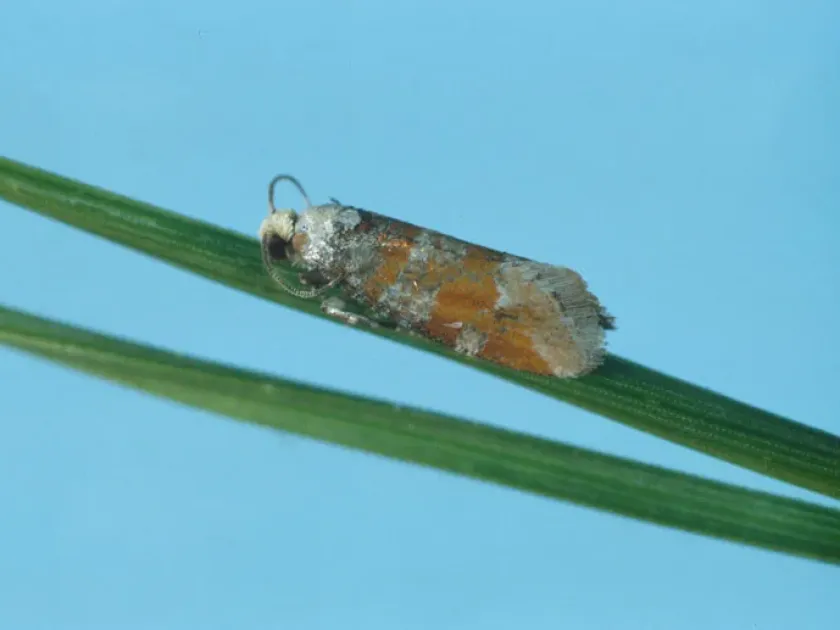
The pine shoot moth Eucosma gloriola is a member of the Lepidoptera order and the Tortricidae family. The adult moth is small, with a wingspan of approximately 15–18 mm, featuring silvery-gray wings marked with distinct brown cross-bands.
The larva, or caterpillar, grows to about 10–12 mm in length. It possesses a creamy-white body with a dark brown head and a thoracic shield, which serves as a key diagnostic feature when examining the pest in the field.
This species completes one generation per year. They overwinter as pupae within the forest floor, sheltered by leaf litter or organic debris, awaiting the warming temperatures of spring to emerge as adults.
Adult emergence typically occurs in late spring. Females lay their eggs singly or in small clusters at the base of needle scales on young, actively growing shoots of various pine species.
Upon hatching, the young larvae immediately bore into the pith of the pine shoot. They tunnel upwards towards the tip of the branch, remaining protected within the woody tissue throughout their development.
What it damages
The pine shoot moth primarily attacks various species of the Pinus genus, including Scots pine, White pine, and Jack pine. It is a significant pest in nurseries, young forest plantations, and urban landscapes.
By tunneling into the succulent new growth, the larvae disrupt the vascular system, causing the leader or lateral shoots to wilt and eventually die. This results in the characteristic browning of the branch tips.
Damage to the terminal leader is particularly destructive, as it can cause the stem to crook or fork, permanently impacting the tree's form and reducing its future commercial timber value.
High infestation rates can lead to stunted growth and a significant loss of the annual height increment. If left unmanaged, the cumulative damage can lead to tree deformity and increased susceptibility to other stressors.
Furthermore, the exit holes and internal tunneling create entry points for various fungal pathogens. These secondary infections often lead to necrosis and limb dieback, exacerbating the overall damage caused by the moth.
Signs of infestation
The most noticeable sign of an infestation is the wilting and browning of current-year shoots, often observed in mid-summer. The affected tips may droop, creating a distinct "shepherd's crook" appearance.
Resin exuding from small holes in the shoot is a common response by the tree to larval entry. These pitch droplets indicate the presence of the larva boring into the wood beneath the bark.
The presence of fine, sawdust-like frass (excrement) around the base of the shoot or near the entry hole is a clear indication of active larval tunneling. This material often accumulates on the needles below.
In late summer, damaged shoots become very apparent due to their dry, brown appearance, which stands out against the healthy green foliage of the rest of the tree.
Monitoring the adult flight period in May and June using pheromone traps can provide early warning of population trends, allowing for timely intervention before the eggs hatch.
Control measures
The primary control strategy involves the application of systemic insecticides. These must be applied during the period of egg-laying or shortly after egg hatch, before the larvae successfully tunnel into the shoots.
Physical removal is an effective management practice for smaller areas or nurseries. By pruning and burning the infested shoots before the larvae emerge, you can drastically reduce the local population for the next season.
Biological control options, such as using Bacillus thuringiensis sprays, can be effective when timed correctly. These biological agents target the larvae while they are still feeding on the needle surfaces.
Maintaining tree vigor through proper site selection, appropriate fertilization, and irrigation helps the trees withstand and recover from pest attacks more effectively.
Promoting a diverse environment that supports natural predators, including parasitic wasps and birds, is an integral component of an integrated pest management (IPM) program for pine forests.
Taxonomy
- Latin name
- Eucosma gloriola
- Order
- Lepidoptera (butterflies)
- Family
- Tortricidae
- EPPO code
- EUCOGL
Discussion
No discussions yet — be the first.