
Pea leaf moth
Eucosma critica
Description
How to identify
The pea leaf moth (Eucosma critica) belongs to the order Lepidoptera, specifically the family Tortricidae, known for their larvae's leaf-rolling behavior.
The adult moth is relatively small, with a wingspan of approximately 12–15 mm, and possesses mottled greyish-brown forewings that aid in camouflage.
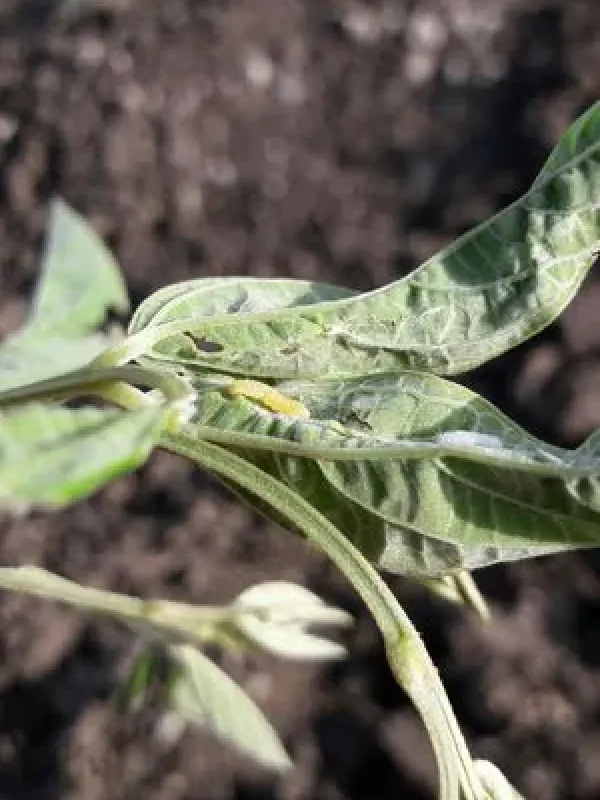
The larvae, which are the main destructive stage, grow up to 12 mm long and are recognized by their pale green bodies and distinct dark-colored head capsules.
Eggs are typically deposited singly or in small clusters on young leaves, buds, or stipules of the host plants, often near the base of the plant structures.
Pupation occurs in a silk-lined cocoon found either within the damaged plant parts or in the soil, depending on environmental moisture levels.
What it damages
This pest primarily attacks leguminous crops, with peas, beans, and lentils being among the most susceptible hosts in various agricultural regions.
Early-stage larvae feed on the tender tissues of young foliage, binding the leaves together with silk threads, which causes typical deformation of the canopy.
As they develop, larvae frequently bore into buds and flowers, consuming the reproductive organs and preventing the formation of pods and seeds.
In cases of severe infestation, the larvae may enter developing pods, directly consuming the seeds and significantly reducing the marketable yield.
The cumulative damage often results in stunted plant growth and overall reduced vigor, leading to substantial economic losses for farmers.
When it appears
The flight period of the adult moths generally begins in late spring, triggered by rising temperatures and the phenological development of host legumes.
The peak period of larval activity coincides with the plant's budding and flowering stages, which are the most critical times for yield determination.
Multiple generations can occur within a single growing season, extending the risk period for the crop and requiring ongoing monitoring efforts.
The insect typically overwinters in the pupal stage, buried within the soil or protected by accumulated crop residues until the next spring.
Weather conditions significantly influence the population dynamics; warm and dry springs often lead to more rapid development cycles.
Signs of infestation
The most characteristic sign of infestation is the presence of webbed or tightly rolled leaves, which provide a protected environment for the feeding larvae.
Frass (larval excrement) found near the webs or on the surface of buds is a clear indicator of active feeding activity by the pests.
Premature yellowing, browning, or shedding of flower buds without clear pathological symptoms often points to internal damage caused by larval feeding.
Visible boreholes on the exterior of developing pods indicate that larvae have successfully penetrated the pod walls to consume the seeds inside.
Plants affected by significant infestations often display uneven maturity and stunted growth patterns compared to the rest of the field.
Control measures
Effective management begins with deep autumn ploughing, which disturbs the soil, exposes pupae to predators, and buries them too deeply to survive.
Crop rotation is vital to reduce the local population density by avoiding successive cultivation of host plants on the same field plots.
Chemical control should be timed based on pheromone trap monitoring, targeting the larvae while they are still in their early, vulnerable stages.
Biological control, including the release of egg parasitoids like Trichogramma, has shown promising results in maintaining pest populations below thresholds.
- Deep tillage in autumn.
- Strict adherence to crop rotation.
- Pheromone trap monitoring.
- Timed application of selective insecticides.
Taxonomy
- Latin name
- Eucosma critica
- Order
- Lepidoptera (butterflies)
- Family
- Tortricidae
- EPPO code
- EUCOCR
Discussion
No discussions yet — be the first.