
Lettuce leafroller
Eucosma conterminana
Description
How to identify
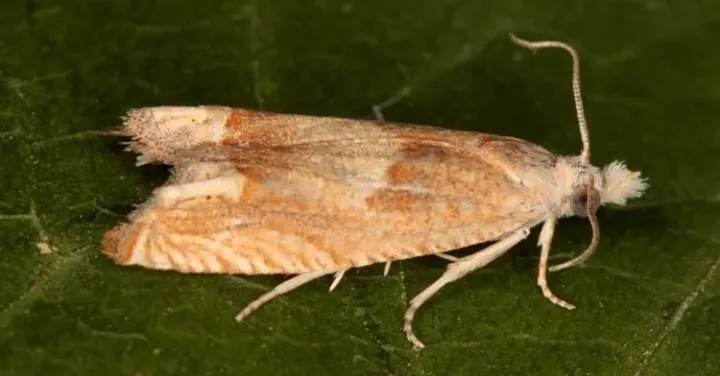
The lettuce leafroller, scientifically known as Eucosma conterminana, is a moth species belonging to the family Tortricidae. The adult moth has a wingspan of approximately 15–18 mm, featuring pale yellowish to greenish forewings that provide excellent camouflage on host plants.
The body of the adult moth is covered with fine scales, which aid in blending into the foliage. Larvae undergo several developmental stages, reaching a length of about 12–14 mm in the final instar, typically displaying a pale body with a darker head capsule.
Females deposit eggs primarily near the base of the plant or on the underside of leaves. This species is primarily nocturnal or crepuscular, making them difficult to spot during daylight hours in agricultural fields.
The systematic placement of this insect reflects its specific adaptation to host plants within the Asteraceae family. Its biological cycle is finely tuned to seasonal changes, allowing the pupae to overwinter successfully in the upper soil layers.
Environmental conditions, particularly temperature, significantly influence the developmental speed of the moth. Under favorable conditions, the species may complete two generations per season, increasing the risk of infestation.
What it damages
The primary host plant for the larvae is cultivated lettuce, though they can also infest certain wild composites. The pest exhibits high host specificity, focusing its feeding activity on the most vulnerable parts of the plant.
Economic damage is most severe when larvae attack young plants, as they frequently damage the growth point. This results in significant deformation of the leaf rosette, rendering the product unmarketable for commercial purposes.
Larvae often bore into the head or the petioles, where they feed in a concealed manner. This internal feeding makes it challenging for contact insecticides to reach the pest, often resulting in undetected internal damage until harvest.
Feeding sites serve as entry points for secondary bacterial and fungal pathogens, leading to rot and rapid tissue breakdown. Affected plants often become entirely unconsumable due to the combined damage from larvae and decay.
Mass outbreaks can lead to substantial yield losses on large scales, especially in warm and dry climates that accelerate the life cycle. Effective management is essential to maintain high-quality crop production.
Signs of infestation
Early signs of infestation include small, irregular holes in the leaves that gradually expand over time. The presence of dark, granular frass on the leaf surface is a reliable indicator of larval feeding activity.
Close inspection often reveals silken webbing, which larvae use to bind leaf edges together or cover their entry points. This protective behavior is a characteristic sign of their presence within the lettuce head.
Wilting or yellowing of the central leaves indicates damage to the plant's core. In many cases, these damaged areas quickly succumb to secondary rot, emitting a distinct odor that signals an advanced state of infestation.
Adult moth presence can be monitored using light or pheromone traps placed at canopy level. Tracking the flight activity of adults allows growers to time their intervention strategies effectively before egg-laying reaches its peak.
During field scouting, particular attention should be paid to the base of the plant and the internal leaves of the head, where larvae frequently reside and feed during the day.
Control measures
Cultural control practices, such as deep plowing after harvest, are vital for destroying overwintering pupae in the soil. This practice significantly reduces the overwintering population and lowers the pressure for the following season.
Crop rotation is a critical component of integrated pest management. Growing lettuce in the same field repeatedly allows pest populations to build up, so rotating with non-host crops is highly recommended for long-term sustainability.
Biological control options include the release of egg parasitoids like Trichogramma, which can effectively reduce the population. Bio-rational insecticides containing specific bacteria are also used to target larvae without harming beneficial insects.
Chemical control should be employed only when monitoring thresholds are exceeded, using selective products with short pre-harvest intervals. Rotation of active ingredients is necessary to prevent the development of insecticide resistance.
- Deploy pheromone traps for population monitoring.
- Maintain field hygiene by removing crop debris and wild weeds.
- Use row covers to exclude moths from egg-laying.
- Apply systemic insecticides according to local regulations.
Taxonomy
- Latin name
- Eucosma conterminana
- Order
- Lepidoptera (butterflies)
- Family
- Tortricidae
- EPPO code
- EUCOCO
Discussion
No discussions yet — be the first.