
Eucosma cocana
Eucosma cocana
Description
How to identify
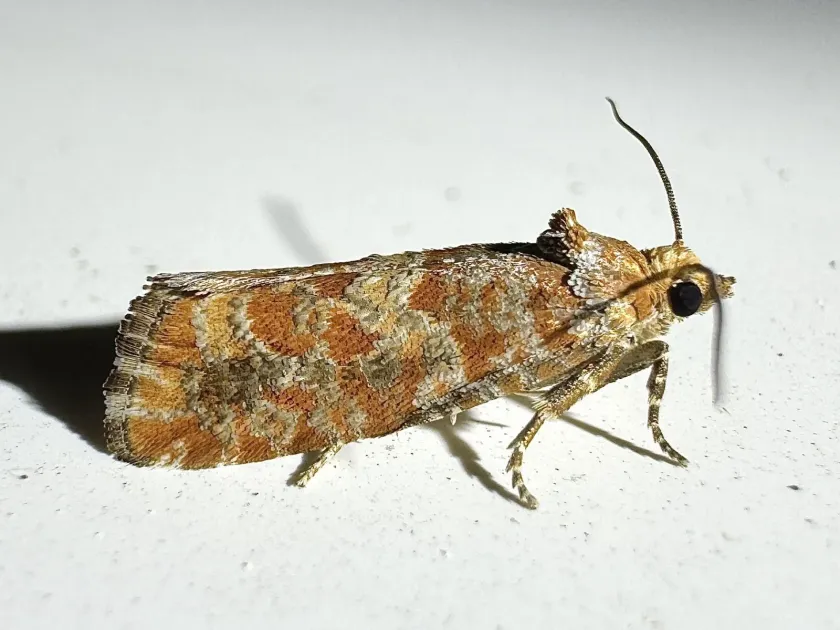
Eucosma cocana is a species of moth belonging to the family Tortricidae. The adult moth has a wingspan of approximately 15–18 mm and features cryptic greyish-brown forewings that help it blend into the bark of coniferous trees.
The larvae are typical of the family, growing up to 15 mm in length. They are characterized by a cream-to-reddish body with a distinct dark head capsule, which is a key diagnostic feature for field identification.
The species is primarily associated with various pine species, where it spends its larval stage feeding on developing cones, making it a significant pest in seed orchards.
The life cycle is tightly synchronized with the phenology of cone development, ensuring the larvae have a food source available as soon as they emerge from the egg.
Pupation occurs either within the infested cone or in the leaf litter beneath the host tree, where the pupa remains in diapause until the following season.
What it damages
The primary damage is caused by the larvae, which bore into the cones of pine trees to consume both the developing seeds and the internal scale tissues.
This feeding behavior leads to the destruction of seeds, resulting in severe losses for forestry operations that rely on high-quality seed production for reforestation.
Infested cones often exhibit stunted growth, deformation, and premature ripening or drying, which ultimately causes them to drop from the tree before maturity.
Beyond direct consumption, the tunnels created by the larvae provide entry points for secondary pathogens and fungal spores, which can lead to further decay of the cone.
High levels of infestation significantly reduce the reproductive capacity of pine stands, making this moth a subject of concern for forest managers and nursery owners.
When it appears
The flight period for adult moths typically begins in late spring, coinciding with the pollination of pine trees and the onset of cone formation.
After mating, females lay eggs on the surface of young cones. Larvae emerge after about 7 to 12 days and begin to bore into the cone tissue.
Larval development takes approximately 4 to 6 weeks, during which the larvae feed voraciously on the seeds within the cone.
As summer progresses, the mature larvae exit the cones to seek pupation sites in the soil or protected areas under the tree bark.
The species completes its cycle in one generation per year, with the pupal stage serving as the overwintering life stage in the soil or forest litter.
Signs of infestation
Early identification of an infestation involves observing small entry holes on the exterior of the cone, which are usually plugged with brown larval frass (excrement).
- Resin droplets forming around entry holes on the cone surface.
- Yellowing and premature death of infested cones.
- Distortion or bending of the cone shape, making them look unnatural.
- Discovery of larval galleries and insect remnants when dissecting a cone.
Monitoring the canopy during mid-summer often reveals clusters of damaged cones, which is the most reliable sign of a high population density.
Pheromone traps are highly effective in early detection of adult flight, allowing foresters to assess the potential risk for the current season.
Control measures
Mechanical control involves the prompt collection and destruction of infested cones to prevent larvae from completing their life cycle and entering the soil.
Chemical control is often employed in seed orchards using systemic insecticides applied during the critical windows of egg-laying and larval emergence.
Biological controls, such as the application of Bacillus thuringiensis, offer a targeted approach that minimizes impact on non-target species in the ecosystem.
Integrated Pest Management (IPM) strategies, which combine pheromone monitoring with targeted treatments, are recommended for long-term control.
Promoting a healthy population of natural predators and parasitoids is essential for maintaining sustainable control of the pest in managed forest landscapes.
Taxonomy
- Latin name
- Eucosma cocana
- Order
- Lepidoptera (butterflies)
- Family
- Tortricidae
- EPPO code
- EUCOCA
Discussion
No discussions yet — be the first.