
Eucosma
Eucosma
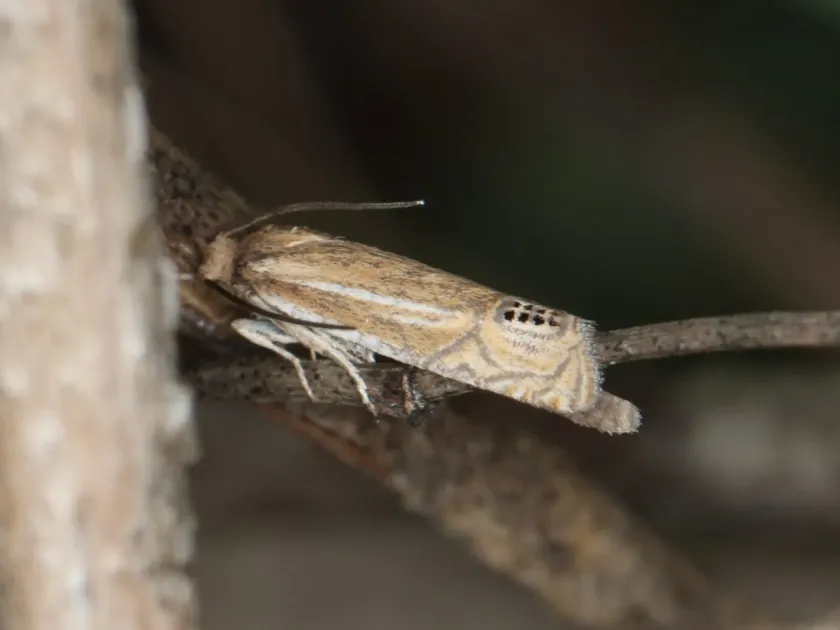
Description
How to identify
Eucosma is a genus of moths belonging to the Tortricidae family, order Lepidoptera. These are small moths with a distinct morphology characteristic of the Olethreutinae subfamily: narrow wings when at rest and cryptic coloration that mimics bark or leaf texture for effective camouflage.
The adults are primarily nocturnal or crepuscular. Wing coloration typically ranges from grayish to brownish, often featuring silvery or dark transverse bands. The wingspan of most species within this genus ranges between 15 and 25 millimeters.
The larvae are typical caterpillars with well-developed thoracic legs and five pairs of abdominal prolegs. Their body color is generally dull, ranging from off-white to yellowish, sometimes marked with dark spots on the segments. The head capsule is well-defined and usually dark or brown.
Development involves complete metamorphosis: egg, larva (caterpillar), pupa, and adult. Due to the high similarity between species, accurate identification often requires microscopic examination of the genitalia.
Females usually lay their eggs singly or in small groups on leaf surfaces or flower buds. This timing is strictly synchronized with the phenological growth stages of their host plants, which are crucial for larval survival.
What it damages
Eucosma species infest a wide range of crops, including sunflowers, various Asteraceae, and other weeds that act as reservoir hosts. Some species are highly specialized, targeting specific fruit crops or woody plants.
The primary damage is caused by the caterpillars. They feed on leaf tissues, chewing holes or creating mines within the leaf blade. Early-instar larvae often attack the reproductive organs, including flower buds and inflorescences.
Under heavy infestation, larvae may bore into stems, creating tunnels that disrupt water and nutrient transport. This leads to weakened plants, reduced vigor, and, in severe cases, the wilting of affected branches or the entire plant.
Damaged inflorescences often fail to produce viable seeds, which directly reduces the yield of oilseed or grain crops. Damage during the early stages of seed head development is particularly detrimental.
Secondary damage occurs when the wounds created by the larvae serve as entry points for phytopathogenic fungi and bacteria, leading to rot and further degrading the crop quality.
When it appears
The life cycle is closely tied to regional climatic conditions. Adult moth emergence typically begins in late spring, once mean daily temperatures consistently exceed 15 degrees Celsius.
The peak feeding period for larvae usually occurs during the first half of summer. Depending on the species and latitude, Eucosma can produce one or two generations per season, prolonging the threat period.
Most species overwinter as mature larvae in cocoons, buried in the soil, hidden under plant debris, or inside the stems of host plants, which provides excellent protection against harsh winter conditions.
Pupation occurs in early spring as temperatures rise. The development rate of the pupa is highly dependent on soil moisture and ambient temperature, which dictates the intensity and duration of the moth flight.
Monitoring the flight of adults using pheromone or light traps is a critical step for agronomists to determine the precise timing for control measures before egg-laying reaches its peak.
Signs of infestation
A primary indicator of infestation is the presence of silk webbing on leaves or flower heads. Caterpillars often roll leaves together using silk threads, making their presence visible upon field inspection.
The presence of larval frass (excrement) on leaf surfaces or within inflorescences is a clear sign of active feeding. Stems infested by boring larvae may show localized swellings or structural deformities.
Wilting of terminal shoots or misshapen leaves are common symptoms. In many cases, the caterpillars can be found by carefully unrolling the infested leaf edges or inspecting the interior of the flower head.
In crops like sunflowers, damaged seed heads show gaps and destroyed seeds. Tunnels filled with brownish debris and larval waste inside the plant structure are classic diagnostic features of Eucosma activity.
- Leaf curling and deformation.
- Silk webbing on flowers and leaves.
- Accumulation of larval frass.
- Premature wilting of shoots or plants.
- Destruction of seeds in developing heads.
Control measures
Agronomic control practices, such as deep autumn plowing, are highly effective as they destroy the overwintering sites of the larvae. Weed management is equally critical to eliminate alternative host plants.
Chemical control focuses on applying systemic or contact insecticides during the period when larvae are emerging from eggs but before they bore into the protected plant tissues.
Biological control includes the release of egg parasitoids like Trichogramma. Timing these releases to coincide with the peak egg-laying period of the moth can significantly reduce the population of the next generation.
Crop rotation serves as a fundamental preventative measure. By avoiding host-plant sequences, the population density of the pest can be kept below the economic injury level.
Utilizing pheromone traps for monitoring allows agronomists to make informed decisions regarding insecticide use, ensuring targeted applications and reducing the overall environmental impact.
Taxonomy
- Latin name
- Eucosma
- Order
- Lepidoptera (butterflies)
- Family
- Tortricidae
- EPPO code
- EUCOSP
Discussion
No discussions yet — be the first.