
Euconulus
Euconulus
Description
How to identify
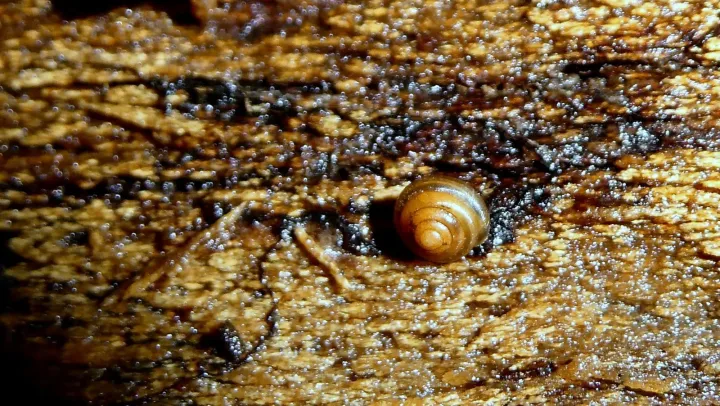
Euconulus is a genus within the Euconulidae family, representing tiny terrestrial land snails. These organisms are characterized by their minute shells, which are typically conical or globular in shape and light brown in color.
The body of the snail is soft and sensitive to desiccation, necessitating a moist environment for survival. Their shells are remarkably small, often measuring only a few millimeters in diameter, making them easy to overlook in dense vegetation.
Systematically, they are classified under the order Stylommatophora. They are known to inhabit humid environments, particularly those with high levels of leaf litter and organic material that provide shelter and consistent moisture.
The shell texture is often glossy and smooth, which serves as a diagnostic feature when observed under magnification. These mollusks thrive in slightly acidic soils which are common in many agricultural garden settings.
Their life cycle is strictly regulated by environmental variables such as humidity and temperature. They possess a high reliance on microhabitats that protect them from direct UV radiation and dehydration during the day.
What it damages
Euconulus snails are recognized as polyphagous pests capable of causing significant damage to various crops, particularly during the early stages of growth. Seedlings are especially vulnerable to their feeding habits.
These snails feed on the delicate tissues of leaves, resulting in small, irregular holes or ragged edges on the foliage. Under high population density, they can completely defoliate young plants and destroy growing tips.
Greenhouse environments are particularly prone to infestations due to high humidity and controlled climates. In these settings, they can cause widespread damage to vegetables and ornamental plants by grazing on stems and roots.
A secondary issue caused by these pests is the production of mucus trails across the surface of the plants. This slime creates a breeding ground for various fungal pathogens, leading to secondary plant infections.
The total agricultural impact is manifested as stunted growth, reduced photosynthetic capability, and, in severe cases, the complete loss of plant stands, affecting overall yield and quality.
When it appears
The activity level of Euconulus is tightly linked to seasonal moisture patterns. Periods of prolonged rainfall or high atmospheric humidity trigger their most active feeding phases during the agricultural season.
Spring is a critical window for crop protection, as the synchronization between snail activity and the emergence of vulnerable seedlings occurs. This is the period when damage is most likely to be economic.
During dry summer months, these mollusks seek refuge deep within the soil profile, under dense organic debris, or in shaded crevices to avoid dehydration. Their activity decreases significantly during this time.
Autumn brings a second wave of activity if conditions are favorable, specifically when cooler temperatures coincide with moisture. This feeding period is essential for their preparation for the winter cycle.
The winter months are spent in dormant states, buried deep within soil or protected organic layers, waiting for the return of favorable temperatures to initiate their life cycle once again.
Signs of infestation
The earliest signs of Euconulus infestation are small, irregular perforations on the foliage of low-lying plants. Unlike insect damage, the edges of these holes appear uneven and often show evidence of rasped tissue.
A definitive indicator of their presence is the appearance of silvery, dried mucus trails on leaves or the surrounding soil surface. These trails are unique markers of their path of travel.
In cases where seedlings suddenly wilt or collapse, it is often indicative of feeding damage near the root crown. This area is a preferred feeding site during humid nights or early morning hours.
Observational inspections performed at night or immediately after irrigation can reveal the snails themselves. They are usually found congregating in groups in the coolest and most humid micro-locations available.
The presence of darkened, rotting areas on leaves that follow a trail of slime indicates that the plants have been exposed to both mechanical injury and subsequent microbial colonization by pathogens.
Control measures
Integrated control starts with field sanitation, including the removal of debris and excessive weed cover that provides shelter for the snails. Reducing these habitats is fundamental to population management.
Physical barriers such as wood ash, lime, or coarse grit applied around the base of plants can create a hostile environment for snails, hindering their movement across the soil surface.
Chemical control involving molluscicides, such as metaldehyde-based baits or iron phosphate products, can be applied according to local regulations. These should be placed strategically in high-activity zones.
- Utilizing moisture-wicking traps (damp burlap or boards) to collect and remove snails manually.
- Adjusting irrigation schedules to reduce surface soil moisture and prevent constant wetness around the base.
- Encouraging natural predators such as ground beetles, birds, and amphibians in the garden ecosystem.
Deep tillage at the end of the season is highly recommended as it physically disrupts the overwintering sites, exposes eggs to adverse temperatures, and significantly reduces the population for the following year.
Taxonomy
- Latin name
- Euconulus
- Order
- Molluscs
- Family
- Euconulidae
- EPPO code
- EWCOSP
Discussion
No discussions yet — be the first.