
Eubulus weevil
Eubulus
Description
How to identify
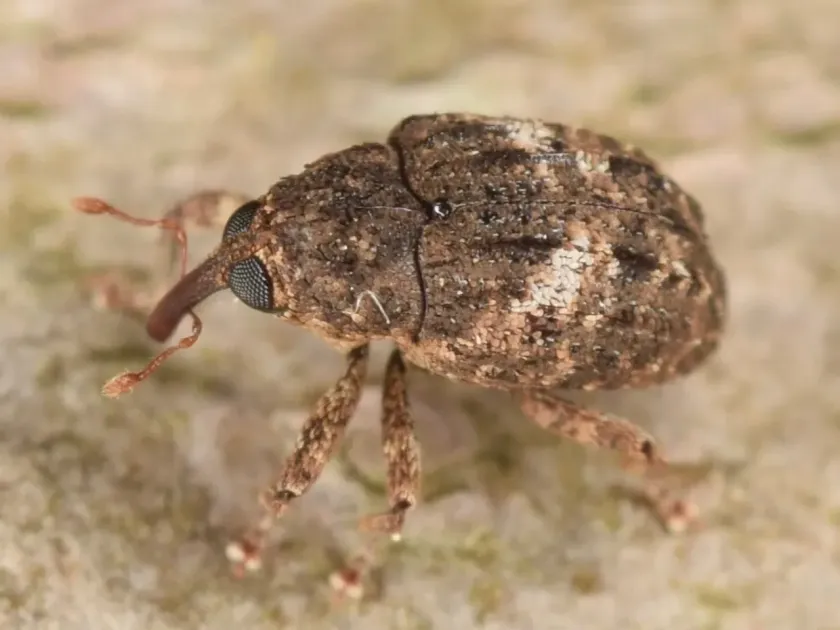
The Eubulus weevil (genus Eubulus) is a member of the diverse Curculionidae family within the order Coleoptera. Like other weevils, they are easily recognized by their distinct snout, or rostrum, which is adapted for feeding and oviposition in plant tissues.
Adult weevils are typically small with a hard, chitinous exoskeleton, often colored in shades of brown, gray, or black to mimic the texture and color of tree bark. Their bodies are designed for clinging to surfaces and moving through narrow crevices.
The larvae are legless, C-shaped, and creamy-white, featuring a robust head capsule equipped with powerful mandibles. These mouthparts are specifically adapted for tunneling through wood, stems, or fleshy fruit tissue.
The life cycle involves complete metamorphosis, consisting of four distinct stages: egg, larva, pupa, and adult. Development is highly dependent on environmental conditions, with warmer climates typically accelerating the generation cycle.
Systematically, the genus includes various species, many of which have evolved to be specialized borers. They are significant components of the ecosystem but pose serious risks when their host plants are economically important crops.
What it damages
The primary damage is caused by the larval stage, which bores into the plant's structural tissues, such as stems, trunks, or fruits. This destruction compromises the plant's vascular system, hindering water and nutrient transport.
Adults contribute to damage by feeding on young foliage, buds, or surface bark. While adult feeding is generally less lethal than larval boring, it can weaken the plant and create entry points for secondary bacterial or fungal infections.
These pests affect a wide range of fruit and ornamental trees. In high-density populations, the Eubulus weevil can lead to severe crop loss, stunted growth, or even the death of young saplings.
The internal nature of the damage makes it particularly insidious, as plants may appear healthy on the outside until the infestation reaches a critical stage and structural integrity fails.
Persistent infestations can lead to long-term decline in tree vigor, making the host plant more susceptible to environmental stressors and other pest pressures.
Signs of infestation
One of the earliest signs of infestation is the presence of small, circular exit or entry holes on the bark of trunks or branches. These are clear indicators of weevil activity.
Frass, which resembles sawdust or wood shavings, often accumulates around the base of the tree or near feeding sites, indicating that larvae are actively excavating the interior of the plant.
Wilting, yellowing of leaves, or premature dieback of specific branches often signal that the vascular pathway has been damaged by tunneling larvae, limiting the tree's supply of resources.
Visual inspection of fruits may reveal deformities, soft spots, or early rot, which occurs as a direct result of larval feeding within the fleshy pulp of the fruit.
In cases of severe infestation, bark may show longitudinal cracking or swelling over the areas where larvae are concentrated, often followed by localized necrosis of the tissues.
Control measures
Sanitation is a cornerstone of management; pruning and destroying infested branches prevents the spread of the population to healthy parts of the tree or orchard.
Mechanical control includes the use of sticky barriers on trunks, which can trap emerging adults or prevent them from migrating to higher parts of the plant canopy during their active season.
Chemical control strategies often utilize systemic insecticides. These are applied to be absorbed by the plant, targeting larvae hidden deep within the stems where contact sprays cannot reach.
Biological control, involving the introduction or encouragement of natural predators and parasitoids, can help suppress weevil populations to below economic threshold levels in sustainable orchards.
- Regular removal and burning of infested wood or fallen fruits.
- Monitoring with pheromone traps to time chemical treatments correctly.
- Maintaining tree health through proper fertilization and irrigation.
- Inspection of new nursery stock to prevent introducing the pest.
Taxonomy
- Latin name
- Eubulus
- Order
- Coleoptera (beetles)
- Family
- Curculionidae
- EPPO code
- EUBUSP
Discussion
No discussions yet — be the first.