
Lima bean pod borer
Etiella
Description
How to identify
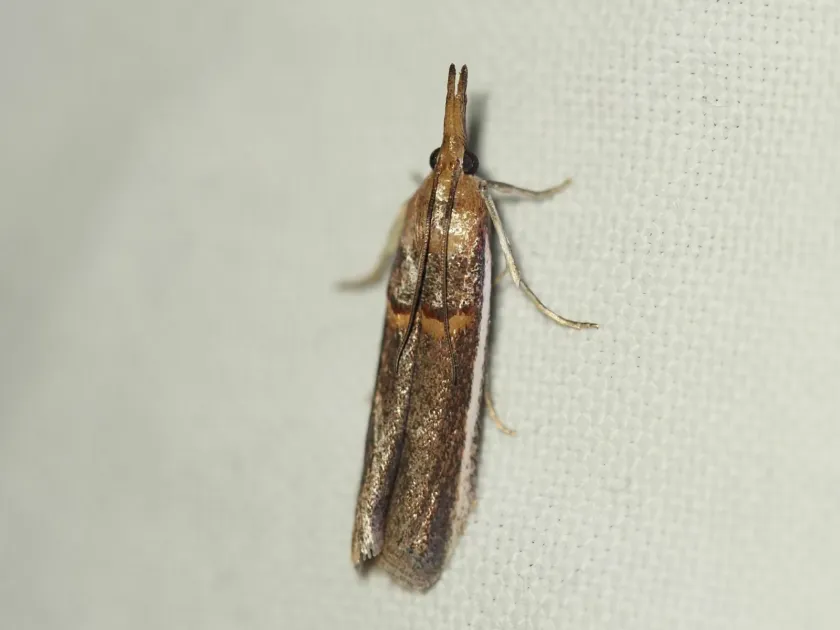
The Lima bean pod borer (Etiella zinckenella) is a significant pest of the family Pyralidae. The adult moth has a wingspan of 22–30 mm and is characterized by greyish-brown forewings with a distinctive white streak along the costal margin.
The larva is the destructive stage of the insect. It can grow up to 18 mm in length. Its body color shifts from pale green to reddish-brown as it matures, with a noticeable dark stripe running along the dorsal side.
The pupa, typically 10–12 mm long, is protected within a tough silken cocoon situated in the soil. This underground protection provides resilience against environmental fluctuations and some surface-level treatments.
Adult moths are nocturnal or crepuscular, meaning they are primarily active during the night and dusk. They hide in soil crevices or dense foliage during the bright daylight hours to avoid predators.
The reproductive cycle is highly dependent on climate. Females prefer to lay eggs singly or in small clusters directly onto the surface of young pods or flowers of the host legume plants.
What it damages
The larvae are responsible for the crop loss. Upon hatching, they bore through the pod wall and consume the developing seeds. Often, a single larva can destroy all seeds within a single pod.
Host crops include a wide range of legumes, specifically soybeans, peas, lentils, beans, chickpeas, and lupins. In nature, it also infests various wild legumes like acacia, which serves as a secondary host.
Infestation leads to severe yield reduction, both in quantity and quality. The damaged seeds are often hollowed out and contain larval excrement, rendering them unfit for human consumption or commercial sale.
Pod damage often serves as an entry point for secondary infections, such as fungi and bacteria, which can cause rotting of the entire pod, further diminishing the value of the harvest.
Economic damage is most severe when pest populations surge during the pod-filling stage, as the larvae move from pod to pod, devastating the crop in a short period.
When it appears
The insect typically overwinters in the pupal stage buried in the soil. As the spring temperatures rise, the first generation of adult moths emerges to begin the seasonal cycle.
The life cycle is closely synchronized with the phenology of the host crops. Moths emerge and lay eggs primarily during the flowering and initial pod-set stages of legumes.
Depending on the geographic region, the borer may undergo one to three generations per year. Warmer climates allow for faster developmental cycles and, consequently, higher population pressure.
A full generation takes approximately 30 to 50 days to complete, influenced by local thermal conditions. The final generation of larvae eventually descends into the soil to pupate for the winter.
Effective management requires monitoring the thermal units in the field to predict peak flight times and larval emergence accurately.
Signs of infestation
One of the first signs of an infestation is the presence of fine webbing covering the pods. Larvae use this silk to anchor themselves and protect the entry hole into the pod.
Visible boreholes on the surface of the pods are clear indicators of larvae activity. Often, small granular mounds of waste (frass) are visible near these holes, showing where the larvae have been feeding.
Infected pods frequently show premature yellowing or necrosis. The affected pods may look shriveled or deformed compared to the healthy pods on the same plant.
Opening the pods reveals the internal damage, where seeds are partially or completely consumed. The presence of the larvae themselves or their shed skins inside the pod is a diagnostic feature.
In fields with high pest pressure, overall canopy health may decline, and the uneven maturity of pods serves as a secondary sign of extensive internal feeding.
Control measures
Cultural control is a primary line of defense. Deep autumn plowing is highly effective as it disrupts the soil and destroys overwintering pupae, significantly reducing the next season's population.
Crop rotation and the use of resistant or early-maturing varieties are encouraged to minimize the window of opportunity for the larvae to infest the vulnerable pod stage.
Chemical control involves applying insecticides during the peak flight period and before the larvae enter the pods. Timing is critical because larvae are protected once they are inside.
Biological controls such as the release of Trichogramma wasps can be used to parasitize the pest's eggs, offering a sustainable and eco-friendly way to manage population levels.
Integrated Pest Management (IPM) strategies emphasize monitoring fields with pheromone traps to make informed decisions about when to apply treatments, preventing unnecessary chemical use.
Taxonomy
- Latin name
- Etiella
- Order
- Lepidoptera (butterflies)
- Family
- Pyralidae
- EPPO code
- ETIESP
Discussion
No discussions yet — be the first.