
Linden bark beetle
Ernoporus tiliae
Description
How to identify
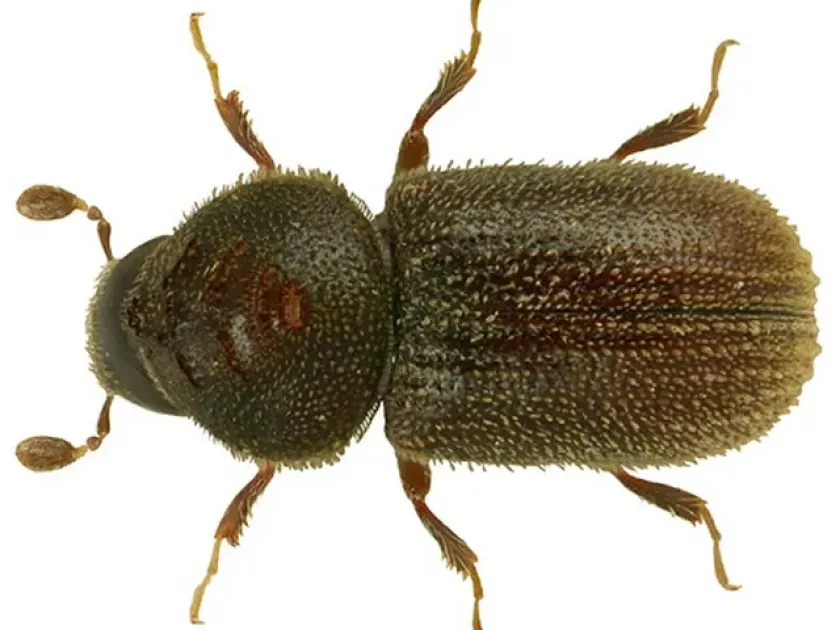
The linden bark beetle (Ernoporus tiliae) is a small species of beetle belonging to the family Curculionidae and subfamily Scolytinae. These insects are typically 1.5 to 2 mm in length with a dark, cylindrical body.
Their bodies are covered with dense, short hairs, which gives them a dull, matte appearance when viewed under magnification. The larvae are legless, white, and inhabit the space directly beneath the bark.
Classified under the order Coleoptera, these beetles have a specialized lifecycle centered around their host plant. They primarily target the thinner bark of branches and younger trunks of linden trees.
The activity of the linden bark beetle is highly dependent on climate conditions. Warmer temperatures accelerate their reproductive cycle, allowing for multiple generations per year in favorable environments.
Adult beetles are capable of active flight, enabling them to search for vulnerable trees that are suitable for egg-laying and larval development.
What it damages
The primary host for this pest is the lime tree (Tilia species). They are most commonly found on stressed or weakened trees that are unable to mount an effective defense.
Healthy, vigorous trees often produce sap or resin that repels the beetles, preventing them from establishing galleries beneath the bark. However, trees suffering from drought, soil compaction, or pollution are highly susceptible.
In urban settings, where trees face constant environmental pressure, the linden bark beetle can cause significant damage to the branch structure of affected lime trees.
The feeding activities of the larvae disrupt the cambium layer, which inhibits the transport of nutrients and water, eventually leading to branch dieback.
If left unmanaged, a localized infestation can spread throughout the canopy, significantly reducing the tree's health and increasing the risk of secondary pathogen attacks.
Signs of infestation
The most visible signs of an infestation are small, circular entry holes in the bark, typically surrounded by fine, powdery wood dust known as frass.
Beneath the bark, the beetles create complex galleries consisting of a central mating chamber with radiating larval tunnels, which are easily identifiable upon closer inspection.
Premature yellowing of leaves or the sudden wilting of specific branches during the growing season often indicates that the vascular system is being damaged.
Patches of dead or brittle bark that easily detach from the tree are common in areas where the linden bark beetle has been active for an extended period.
In severe infestations, the presence of woodpeckers on the trunk can sometimes serve as an indirect indicator, as they hunt for the larvae hidden beneath the bark.
Control measures
The first line of defense is ensuring the tree's overall vigor through proper watering, fertilization, and protecting the root zone from mechanical damage.
Sanitation is crucial; any branches showing signs of infestation should be pruned and destroyed immediately to prevent the spread of the next beetle generation.
Insecticidal sprays targeting the trunk and branches during the beetle's flight and mating season can help reduce their population significantly.
Monitoring the trees for signs of frass in the spring and early summer allows for early intervention before the infestation becomes critical.
- Prune and burn infested wood.
- Maintain tree health to boost resistance.
- Apply systemic insecticides during flight periods.
- Conduct regular inspections for entrance holes.
Taxonomy
- Latin name
- Ernoporus tiliae
- Order
- Coleoptera (beetles)
- Family
- Curculionidae
- EPPO code
- CRPHTI
Discussion
No discussions yet — be the first.