
North American porcupine
Erethizon dorsatum
Description
How to identify
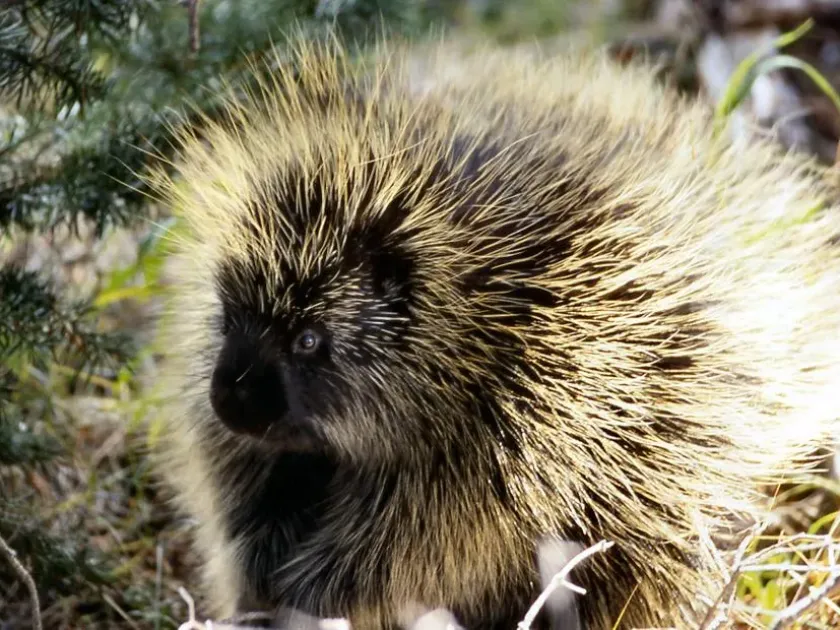
The North American porcupine (Erethizon dorsatum) is a large rodent known for its distinctive defensive coat of quills hidden beneath thick fur. The animal has a stocky body with short limbs adapted for climbing trees effectively.
Adult individuals weigh between 5 and 12 kilograms, with coloration ranging from dark brown to almost black. A unique feature is the presence of sharp, barbed quills that easily detach from the skin when the animal comes into contact with a threat.
These animals are primarily nocturnal and prefer forest habitats with dense undergrowth. Due to their sharp claws, they spend a significant portion of their time in the canopy, which directly links their activity to the destruction of forest and fruit trees.
While the North American porcupine is an excellent climber, it moves relatively slowly and clumsily on the ground. Its activity does not cease in winter, making it a serious threat to tree bark during the cold season.
Reproduction occurs once a year, usually in late autumn or early winter. Low fecundity is partially offset by the high survival rate of offspring, which begin to show an interest in plant-based food from an early age.
What it damages
The primary damage is inflicted on forest stands, ornamental plantings, and fruit orchards. These rodents feed on the cambium, the inner layer of bark, which leads to the death of individual branches or the entire tree.
Preferred targets for their attacks include coniferous species such as pine, spruce, and hemlock. Among deciduous trees, the pest actively damages maple, birch, poplar, and aspen, often selecting young specimens with delicate bark.
In gardening, porcupines can cause significant harm to fruit trees by gnawing bark around the trunk, which disrupts the plant's nutrient flow and leads to gradual drying. Damaged areas become entry points for infections and secondary pests.
Extensive damage to the circumference of the trunk almost always leads to the tree's death by interrupting the flow of nutrients. Even partial girdling weakens the plant's immune system, making it vulnerable to drought or frost.
The activity of these rodents causes significant economic damage to forestry by lowering wood quality and slowing the growth of young stands. In some regions, their activity is considered a factor that hinders coniferous forest regeneration.
When it appears
The peak activity of the rodent occurs in the winter period when access to herbaceous plants is restricted by snow cover. During this time, they shift their diet to tree bark, needles, and buds.
The spring season is also dangerous, as porcupines descend from trees to consume fresh shoots, young grass, and flowers. During this season, they can damage young plantings in nurseries and vegetable gardens.
The summer diet is more diverse, including succulent leaves, aquatic plants, and even agricultural crops such as corn. During this time, they are less prone to large-scale bark damage compared to winter.
In autumn, they prepare for winter by actively building up fat reserves. During this period, they can cause mechanical damage to trees by intensively feeding on cambium before the onset of permanent snow cover.
Porcupines remain active throughout the year and do not hibernate. However, the intensity of damage depends directly on the severity of the winter and the availability of the food base in a specific habitat.
Signs of infestation
The most obvious signs of a pest's presence are specific tooth marks on tree bark. The grooves from the porcupine's incisors are usually wide and arranged in parallel lines.
The presence of fresh bark shavings at the base of a tree indicates a recent feeding activity. Often, characteristic droppings in the form of oval pellets can be found beneath the damaged tree.
Exposed areas of wood where the bark has been completely stripped are critical signals. If the damage circles the entire trunk, the tree is highly unlikely to survive.
Loss of needles or premature yellowing of individual branches in the upper crown may indicate that a porcupine has been feeding intensively in that area. Damage often begins at the top or on large limbs.
Finding quills stuck in the bark or on the ground around a tree is irrefutable evidence of this species. Porcupines may also leave claw marks on trunks while moving up and down the trees.
Control measures
An effective mechanical protection method is the installation of metal collars (barriers) on tree trunks. This prevents the rodent from climbing up the trunk.
The use of wire mesh fencing around young saplings helps protect bark from being gnawed. The mesh must be strong enough to withstand the animal's powerful teeth.
The application of repellents with a scent or taste unpleasant to rodents can deter them from valuable plantings. However, such products require frequent reapplication after precipitation.
In cases of high population density, the use of special traps allowed by local regulations is permitted to control their numbers. It is important to adhere to humane animal treatment guidelines.
Timely sanitary clearing of the area from fallen trees and brushwood reduces the site's attractiveness to porcupines. The fewer ground-level shelters available, the less comfortable the rodent feels on the premises.
Taxonomy
- Latin name
- Erethizon dorsatum
- Order
- Rodents
- Family
- Erethizontidae
- EPPO code
- ERTZDO
Discussion
No discussions yet — be the first.