
North American porcupine
Erethizon
Description
How to identify
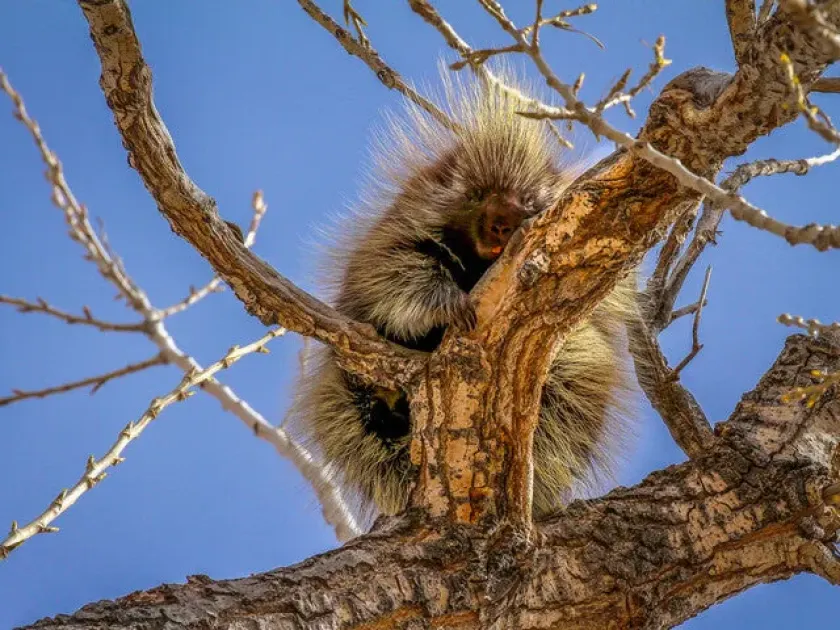
The North American porcupine (Erethizon dorsatum) is a large rodent belonging to the family Erethizontidae. It is widely recognized by its coat of up to 30,000 sharp, barbed quills used for defense.
Adult porcupines can weigh between 5 and 14 kilograms. They possess exceptionally strong, ever-growing incisors designed for gnawing through tough woody plant materials.
They are primarily nocturnal, though they may forage during the day in winter. These rodents are highly skilled climbers, allowing them to access food sources in the upper forest canopy.
The species has a low reproductive rate, producing only one offspring per year. Despite this, their habit of congregating in specific forest areas can cause concentrated damage to local vegetation.
They typically inhabit coniferous and mixed forests, often sheltering in tree hollows, rocky caves, or underground burrows during inactive periods.
What it damages
The primary damage caused by porcupines involves stripping bark from coniferous trees like pine, spruce, and fir, as well as deciduous species such as maple and birch.
When porcupines girdle a tree by removing bark in a complete circle, they disrupt the transport of nutrients, which leads to the death of the tree, particularly in young stands.
Feeding on terminal leaders or tops of saplings causes significant deformation, leading to "crooked" stems that reduce the commercial timber value of the tree.
Beyond bark, these rodents consume buds, needles, and tender twigs, which significantly slows the growth rates of reforestation plots and nursery plantations.
Repeated wounding of the same tree makes it increasingly susceptible to secondary infestations by bark beetles and various fungal pathogens that can destroy entire stands.
Signs of infestation
The most distinctive sign of a porcupine is the presence of parallel tooth marks on the bark, usually found in vertical or diagonal patterns on the trunk or branches.
The ground beneath a favored feeding tree will often be littered with fresh bark flakes, discarded twigs, and branch fragments that have been cut down by the animal.
In winter, track patterns in the snow—typically showing the five-toed feet and the drag mark of the heavy, quill-covered tail—are clear indicators of a porcupine's presence.
Quills frequently become dislodged and embedded in the bark of feeding trees or found on the forest floor, serving as undeniable evidence of the culprit.
Small, oval-shaped droppings accumulated at the base of trees or near den entrances serve as a reliable visual marker of a well-established porcupine territory.
Control measures
The most effective physical protection for valuable saplings is the installation of wire mesh or aluminum sheeting around the base of the trunk to prevent climbing.
Repellents based on substances like capsaicin or other taste-deterrents can be applied to the bark, although their efficacy is limited by weather conditions and growth.
Live-trapping is recommended in areas where porcupines are causing economic damage, allowing for the relocation of individuals away from high-value timber stands.
Maintaining a healthy population of natural predators, such as fishers, bobcats, or mountain lions, can help naturally regulate porcupine density within a forest ecosystem.
Good silvicultural practices, such as removing severely damaged "cull" trees and managing stand density, help reduce the overall attractiveness of the area to porcupine feeding.
Taxonomy
- Latin name
- Erethizon
- Order
- Rodents
- Family
- Erethizontidae
- EPPO code
- ERTZSP
Discussion
No discussions yet — be the first.