
Cereal weevil
Eremnus cerealis
Description
How to identify
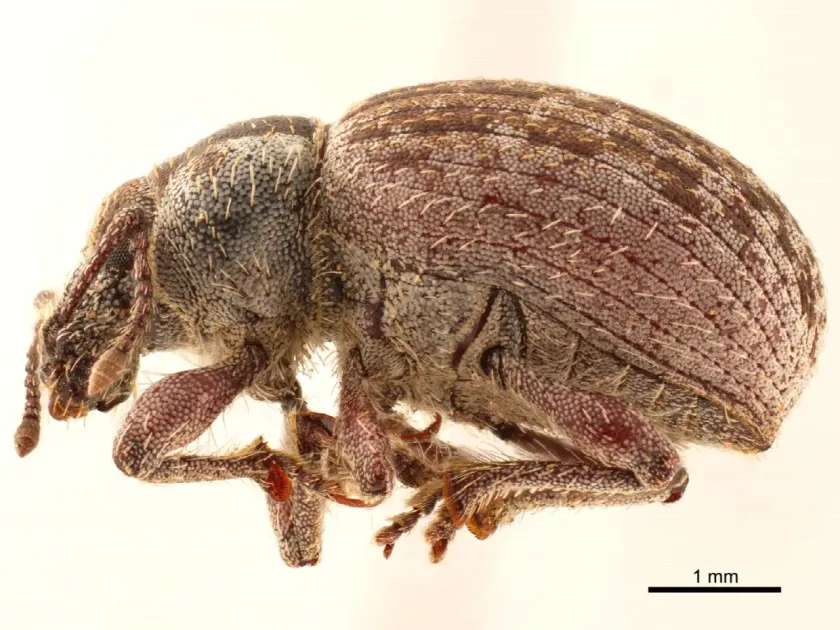
The cereal weevil (Latin: Eremnus cerealis) belongs to the order Coleoptera and the Curculionidae family. It is characterized by its elongated snout and a tough, dark-colored shell, which serves as a highly effective camouflage in agricultural soils.
Adult weevils usually measure between 5 and 7 millimeters in length. Their bodies are covered in dense scales or hairs, which can vary in color, allowing the insect to blend perfectly into the soil or the base of the crop plants they infest.
The larvae are white to cream-colored with a distinct, curved, C-shaped body and a well-developed head capsule. They live exclusively in the soil, focusing their activity on the rhizosphere of their host plants, which makes them particularly difficult to detect.
Precise taxonomic identification of Eremnus cerealis requires a close examination of morphological traits, such as the structure of the antennae, the shape of the pronotum, and the characteristics of the elytra. These features are vital for distinguishing this species from other related soil-dwelling weevils.
This pest undergoes complete metamorphosis, passing through egg, larval, pupal, and adult stages. Its lifecycle is highly dependent on environmental variables like soil moisture and temperature, which dictate the timing of adult emergence and egg-laying cycles.
What it damages
Damage is caused by both adults and larvae, although they impact the crop differently. The larvae act as root feeders, significantly impacting the plant's ability to absorb water and essential nutrients, which often leads to the stunted development or death of young grain crops.
Adult weevils feed on the foliage, creating characteristic notched or serrated edges on leaves. This feeding behavior reduces the plant's photosynthetic capacity, which, in high-pressure infestations, can lead to overall yield reduction and physiological stress.
The primary hosts for this pest include wheat, barley, rye, and various wild grass species. The cereal weevil can affect crops during their most vulnerable developmental phases, particularly during the seedling and tillering stages.
Larval damage is often underestimated because it occurs underground and is not immediately visible to farmers. By the time visual symptoms appear above ground, the root systems may have already suffered substantial structural failure.
Economic damage is directly linked to the population density per square meter. In cases of severe outbreaks, the cumulative effect of root destruction and leaf feeding can cause significant economic losses, necessitating prompt action.
When it appears
Activity typically begins in early spring as soil temperatures rise, prompting adult weevils to emerge from overwintering sites in the soil profile. This emergence coincides with the growth of early-season cereal crops.
Egg-laying takes place shortly after the adults emerge, with eggs being deposited in the soil in close proximity to the root zone of the crops. This provides immediate access to food sources for the newly hatched larvae.
During the summer months, the larvae continue their development in the soil. Their behavior is highly adaptive; they may burrow deeper into the soil profile to avoid extreme heat or desiccation, making control during this phase challenging.
By autumn, pupation occurs, and the insects transition into the adult stage. The adults then remain in the soil to overwinter, protected from winter conditions, and the cycle repeats the following spring.
Regular field scouting is essential for identifying the presence of this pest. Farmers and agronomists should prioritize early-season monitoring, especially in fields with a history of cereal weevil infestation or in areas with high weed pressure.
Signs of infestation
The most reliable sign of an infestation is uneven plant growth and the appearance of patches where crops look stunted, yellowed, or weakened compared to the rest of the field. Pulling up affected plants often reveals damaged root systems.
Notched or jagged leaf margins are the classic visual indicator of adult feeding. These symptoms are often most prominent on the edges of fields near hedgerows or grassy borders where the pest population can aggregate.
Plants wilting or turning yellow despite sufficient moisture is a key sign of severe root injury. This physiological response suggests that the larvae have compromised the plant's vascular integrity, preventing proper nutrient transport.
- Jagged or notched leaf edges.
- Patchy, stunted growth throughout the field.
- Presence of larvae upon inspecting soil monoliths.
- Increased adult weevil sightings during morning or evening hours.
- Reduced tillering and lower stand density in young wheat or barley.
To confirm a diagnosis, it is recommended to perform detailed soil sampling in affected areas. Digging up the root zone allows for the identification of larvae and helps assess the density of the pest population to guide management decisions.
Control measures
Effective control of the cereal weevil relies on Integrated Pest Management (IPM) practices. Crop rotation, specifically avoiding continuous cereal cultivation, is the most effective cultural method to break the pest's reproductive cycle.
Deep autumn plowing serves as an effective mechanical control. This practice disrupts the soil environment, exposing larvae and pupae to natural predators such as birds and beneficial insects, while also reducing their overall survival rate.
Optimizing planting dates helps crops establish strong root systems and reach maturity faster. Healthy, vigorous plants are more resilient to pest pressure and can better withstand the damage caused by larvae and adults.
Chemical control should be employed strategically and only when population thresholds are exceeded. Selecting appropriate insecticides and rotating active ingredients is crucial to preventing the development of insecticide resistance in weevil populations.
Biological control options, such as the application of entomopathogenic fungi like Beauveria bassiana, can be integrated into the protection program. These biological agents offer a sustainable way to target soil-dwelling stages without disrupting beneficial insect populations.
Taxonomy
- Latin name
- Eremnus cerealis
- Order
- Coleoptera (beetles)
- Family
- Curculionidae
- EPPO code
- ERENCE
Discussion
No discussions yet — be the first.