
Eremnus
Eremnus
Description
How to identify
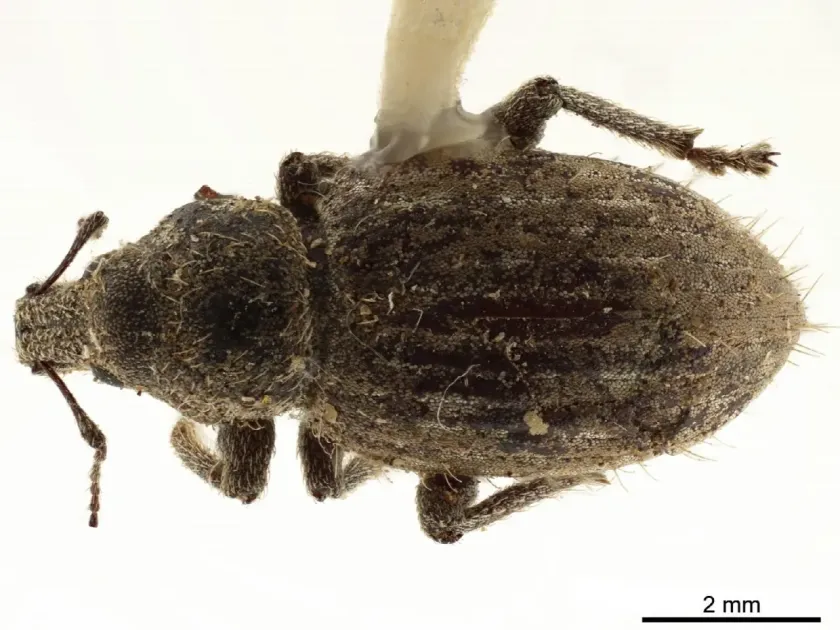
Eremnus is a genus of weevils (family Curculionidae) within the order Coleoptera. These insects are easily recognized by their compact bodies, typically ranging from 5 to 10 mm in length, and their characteristic snout.
The body is often covered in small scales that can be grey, brown, or mottled, providing effective camouflage against soil surfaces and plant stems. The antennae are elbowed, which is a key morphological feature of the Curculionidae family.
The larvae of Eremnus are legless, fleshy, and C-shaped, usually creamy-white with a dark, sclerotized head capsule. They reside exclusively in the soil, where they are cryptic and difficult to detect without digging.
These insects undergo complete metamorphosis, passing through egg, larval, pupal, and adult stages. Each stage is adapted to specific environmental conditions, allowing the species to persist in various agricultural landscapes.
Identification of specific Eremnus species often requires taxonomic expertise, as many species within the genus share similar morphological traits but may differ in their host preferences and life cycles.
What it damages
Eremnus acts as a polyphagous pest, causing significant damage to a wide range of crops, including cereals, legumes, various vegetables, and sometimes nursery seedlings.
Adult beetles damage the aerial parts of plants by feeding on leaf edges, creating notched or scalloped patterns. This feeding reduces the plant's photosynthetic capacity, which can hinder initial development.
The primary economic damage is caused by the larvae, which live in the soil and feed on roots. They chew off small root hairs and bark on the primary roots, severely stressing the plant's nutrient and water uptake.
Heavily infested plants often exhibit stunted growth, yellowing (chlorosis), and may eventually wilt and die, especially under drought conditions where damaged roots cannot support the plant's water needs.
Furthermore, root damage caused by larvae often creates entry points for soil-borne pathogens, leading to secondary fungal or bacterial infections that complicate the recovery of the plants.
When it appears
Adult Eremnus beetles typically emerge from the soil in late spring and early summer when temperatures become warm enough to trigger their activation from overwintering sites.
Peak activity for adults often occurs during June and July, when they are found on foliage for supplemental feeding and mating before the females begin oviposition.
Larval activity continues throughout the growing season, with their feeding intensity often tied to soil moisture levels. Larvae may persist deep in the soil profile during dry or cold spells.
The life cycle length can be influenced by regional climate, with some populations having a prolonged developmental period that spans multiple seasons.
Regular field scouting is essential during the early stages of crop development, as this is when the most vulnerable young plants are at risk from both adult and larval feeding.
Signs of infestation
The most noticeable sign of adult activity is the irregular, scalloped leaf margins found on the plants. This type of damage is often a precursor to more severe infestations.
Visible yellowing, lack of vigor, or patchy wilting in a field, particularly during midday, can be an indicator of root system destruction caused by the larvae.
Confirmed presence of larvae is usually obtained by digging into the soil around the base of affected plants. Finding C-shaped larvae in the root zone is a definitive sign of infestation.
Adult beetles may be difficult to spot during the day, as many species are nocturnal or hide under debris and soil clods. Searching at dusk can often reveal the beetles actively feeding.
In cases of severe root damage, affected plants become very easy to pull out of the soil because their root systems have been pruned by larval grazing, often leaving only a small stump.
Control measures
Effective management begins with robust cultural practices, such as crop rotation, which breaks the pest's life cycle and prevents the buildup of larval populations in the soil.
Deep autumn tillage is a recommended strategy to expose soil-dwelling larvae and pupae to predators and adverse weather, significantly reducing their overwintering success.
- Application of insecticide seed treatments to protect young seedlings.
- Use of soil-applied insecticides in fields with known history of infestations.
- Foliar insecticide sprays targeting adults before they lay eggs.
- Rigorous weed control in and around field edges to eliminate alternate host sites.
Integrated Pest Management (IPM) also encourages the use of biological control agents, such as entomopathogenic nematodes or fungi, which can target larvae within the soil environment.
Economic threshold monitoring is vital; farmers should only apply chemical treatments when pest populations are likely to cause damage exceeding the cost of the control measures applied.
Taxonomy
- Latin name
- Eremnus
- Order
- Coleoptera (beetles)
- Family
- Curculionidae
- EPPO code
- ERENSP
Discussion
No discussions yet — be the first.