
Sumac leafroller
Episimus argutanus
Description
How to identify
The Sumac leafroller (Episimus argutanus) belongs to the Tortricidae family of moths. These small insects are known for their ability to feed on specific host plants, primarily those in the Rhus genus.
Adult moths typically have a wingspan of approximately 12 to 15 mm. Their forewings are mottled with shades of gray, brown, and sometimes reddish-brown, allowing them to blend perfectly with tree bark.
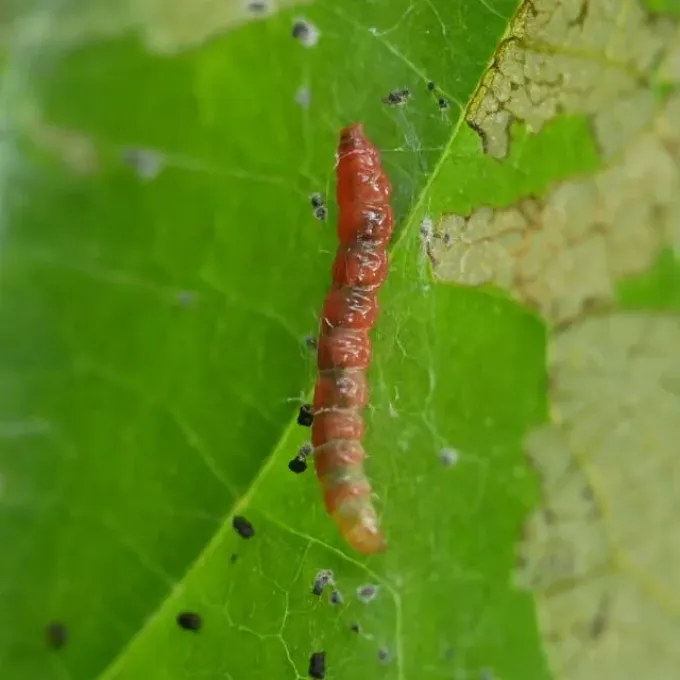
The larvae are typical leafroller caterpillars, characterized by a smooth, cylindrical body that is usually pale green or light yellow. They possess a distinct, darker-colored head capsule.
This species typically undergoes several generations per year depending on the climate. The life cycle consists of the egg, larval, pupal, and adult stages, with rapid development during warmer months.
Overwintering usually occurs in the pupal stage. These pupae are often found protected within leaf litter, bark crevices, or tightly rolled leaves attached to the host plant or nearby debris.
What it damages
The primary host for this pest is the sumac tree, but it can also be found on a variety of other shrubs and small trees. Its presence can lead to significant aesthetic and physiological stress.
Caterpillars act as leafrollers, using silk threads to fold, roll, or tie leaves together. They live inside these structures, feeding on the leaf tissue and causing significant defoliation.
Damage is often most noticeable in young nursery stock or newly planted trees, where severe feeding can cause the stunted growth of terminal shoots and disruption of the plant's natural canopy structure.
As larvae consume the leaf tissue, they reduce the surface area available for photosynthesis. This weakens the tree, making it more susceptible to environmental stressors and secondary disease pathogens.
In cases of high infestation, the foliage may look scorched or withered due to widespread leaf rolling and skeletonization, which significantly reduces the ornamental value of the plants.
Signs of infestation
The most distinctive symptom of infestation is the presence of rolled or folded leaves held together by fine, silken webbing. These structures serve as protective hideouts for the larvae.
Inside the rolled leaves, one can often find frass, which appears as small dark pellets. The accumulation of this waste is a clear indicator that the leafroller larvae are currently active.
Terminal growth may appear distorted or damaged, with webs connecting leaf tips or flower clusters, which is a common sign during the early stages of a seasonal outbreak.
Early leaf drop in mid-summer is another indicator, as damaged leaves may lose their structural integrity and become prone to dropping prematurely from the plant.
Monitoring for adults can be done using pheromone traps or light traps at night. Observing the activity of small, brownish moths hovering around the host plant is a key diagnostic step.
Control measures
Effective management begins with regular monitoring of host plants. Early detection allows for physical removal of the rolled leaves, which can significantly reduce the local population of the pest.
Biological control using formulations of Bacillus thuringiensis (Bt) is highly effective against young larvae. These treatments are best applied when the caterpillars are active and feeding.
Chemical control may be necessary in severe infestations. Contact or systemic insecticides should be applied during the period when larvae are emerging and before they successfully roll their host leaves.
Sanitation is a vital cultural practice. Raking and removing fallen leaves and debris around the base of the trees in late autumn helps destroy pupation sites and reduces overwintering success.
- Use sticky traps for population monitoring.
- Maintain tree health through proper watering and fertilization.
- Encourage beneficial predatory insects and birds.
- Prune and destroy heavily infested branches in early spring.
Taxonomy
- Latin name
- Episimus argutanus
- Order
- Lepidoptera (butterflies)
- Family
- Tortricidae
- EPPO code
- EPIIAR
Discussion
No discussions yet — be the first.