
Light brown apple moth
Epiphyas postvittana
Description
How to identify
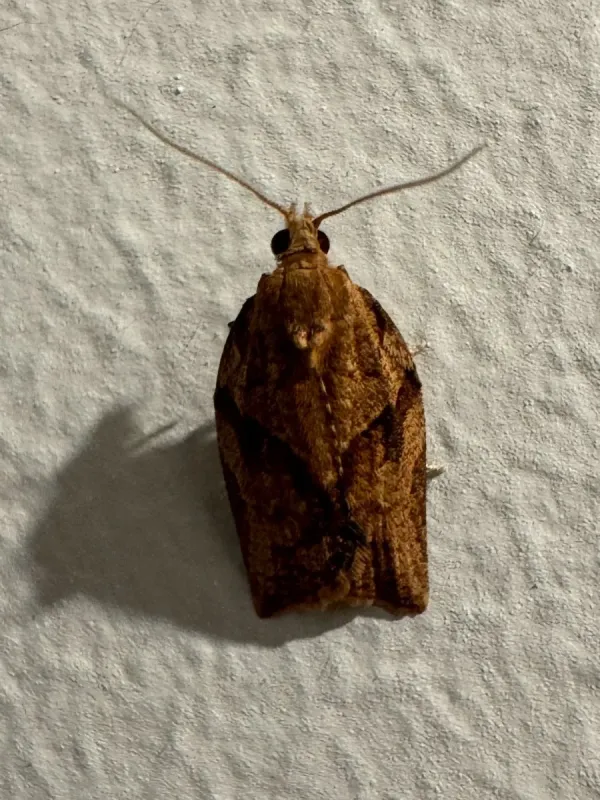
The Light brown apple moth (LBAM), scientifically known as Epiphyas postvittana, belongs to the Tortricidae family. It is a small moth with a wingspan typically ranging from 16 to 25 millimeters.
The forewings exhibit a variable color pattern, usually light brown to ochre, often featuring darker patches or markings. The hindwings are generally plain, ranging from greyish to light brown.
Larvae pass through several developmental stages. Initially pale green, they become a deeper olive green as they mature, typically possessing a dark head capsule.
The body of the caterpillar is sparsely covered with light-colored hairs. They are notorious for their cryptic behavior, spinning silk threads to fold or roll leaves for protection.
LBAM is an highly adaptable polyphagous insect. Its ability to feed on a massive variety of plant species makes it a significant quarantine pest in many parts of the world.
What it damages
LBAM is a generalist feeder that can attack over 300 plant species. It causes substantial damage to pome and stone fruits, including apples, pears, peaches, and various berries.
In nurseries and young orchards, larvae feed on the foliage, causing leaf skeletonization and growth retardation. They often tie leaves together, which disrupts photosynthesis.
Fruit damage is the most severe economic impact. Larvae bore into the fruit, creating shallow or deep tunnels, which ruins the marketability of the crop and invites rot.
Ornamental plants are also heavily affected, particularly in greenhouses. The larvae damage flower buds and blooms, leading to cosmetic loss and rejection of nursery stock.
The presence of silk webbing is a hallmark of this pest, which not only protects the larvae but also interferes with the plant's normal physiological development.
When it appears
The life cycle of the Light brown apple moth is highly dependent on climate. In warmer regions, it can complete multiple generations throughout a single year.
The species usually overwinters as larvae of various stages, hiding within leaf rolls, under tree bark, or in other debris within the orchard environment.
Larval activity resumes in early spring as temperatures rise, with individuals feeding on buds and new shoots before moving to foliage and eventually fruits.
Adult moths are primarily nocturnal and crepuscular, with flight activity occurring during the dusk and evening hours throughout the warmer months.
Generations often overlap, meaning that multiple life stages can be found simultaneously, which significantly complicates management and monitoring efforts.
Signs of infestation
The most diagnostic sign of infestation is the presence of curled or webbed leaves. Larvae hide inside these structures, feeding on the leaf tissue from within.
Fruit surfaces may show shallow, irregular chewing marks or holes. These wounds are often surrounded by silk threads and frass (larval droppings).
Egg masses are laid in clusters that look like overlapping fish scales. These are typically deposited on the upper surface of leaves or smooth, clean stems.
Stunted growth or wilting of the terminal shoots, combined with the presence of fine webbing, is a strong indicator of active larval feeding in the canopy.
Premature fruit drop and the presence of rotting fruit still attached to the tree often point to internal larval damage that was not initially visible.
Control measures
Monitoring using pheromone-baited traps is essential for detecting the presence of adults and determining the optimal timing for management interventions.
Sanitation practices are crucial. This includes pruning infested foliage, removing fallen fruit, and keeping the orchard free of weeds that serve as alternate hosts.
Biological control agents, such as Bacillus thuringiensis or native parasitoids, can be used to manage populations without disrupting the orchard ecosystem.
Chemical control should be targeted at the larval stage before they tunnel into fruits. Selective insecticides should be used to minimize impact on beneficial insects.
- Deploying pheromone traps for monitoring
- Removing and destroying infested plant material
- Applying selective insecticides at critical timing
- Encouraging natural predator populations
Taxonomy
- Latin name
- Epiphyas postvittana
- Order
- Lepidoptera (butterflies)
- Family
- Tortricidae
- EPPO code
- TORTPO
Discussion
No discussions yet — be the first.