
Light brown apple moth
Epiphyas
Description
How to identify
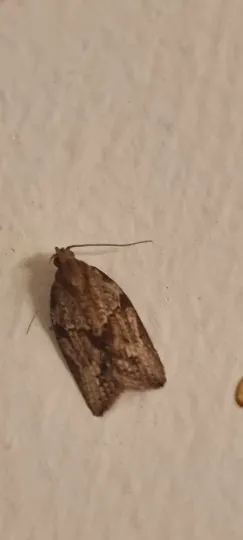
The light brown apple moth (Epiphyas postvittana) is a lepidopteran insect belonging to the Tortricidae family. Adult moths typically have a wingspan ranging from 18 to 25 millimeters.
The forewings are generally tan or light brown with a complex pattern of darker brown markings, which provides excellent camouflage against bark and leaves. The hindwings are usually a paler grayish-brown.
Larvae, or caterpillars, progress through several instars. Their color changes from a pale yellow to a distinct green as they mature, typically featuring a prominent brown head capsule.
Pupae are found within rolled leaves or bark crevices, encased in a silken cocoon. The eggs are laid in flat, overlapping masses on the upper surfaces of leaves, resembling small translucent patches.
The species is highly adaptable and can complete multiple generations in a single year, which makes it a significant pest in both orchards and ornamental plant nurseries.
What it damages
This moth is a polyphagous pest, meaning it attacks a wide variety of host plants. Major economic hosts include pome fruits like apples and pears, as well as stone fruits like peaches and plums.
In addition to orchard crops, it affects small fruit such as grapes, berries, and various broad-leaved trees. It is also known to damage various greenhouse ornamental plants and flowers.
The larvae are responsible for the damage, as they feed on buds, young foliage, and flower clusters during the early stages of plant development.
As fruit develops, the larvae often burrow into the fruit skin, creating holes and tunnels. This feeding damage provides an entry point for various fungal pathogens, leading to fruit rot.
Heavy infestations result in significant crop losses, reduced fruit quality, and the potential rejection of produce during harvest due to the presence of larvae or feeding damage.
When it appears
Overwintering occurs mainly in the larval stage, tucked away in rolled leaves or beneath protective layers of bark. Larval activity resumes as temperatures rise during the early spring.
The first generation of adult moths usually emerges in late spring, signaling the start of the egg-laying period. Subsequent generations overlap as the season progresses into summer.
The most severe damage often occurs during mid-summer when the second and third larval generations are actively feeding on fruit and foliage.
Depending on the climate, activity can continue late into the autumn until lower temperatures inhibit development and induce the larvae to find overwintering sites.
Optimal environmental conditions for the moth include mild temperatures and high humidity, which support both survival and rapid reproduction rates across different generations.
Signs of infestation
The most characteristic sign of infestation is the presence of leaves tied together with silk threads. Larvae use these rolled leaves as protective shelters for feeding.
Infested fruit displays superficial feeding damage, often characterized by irregular, shallow pits on the surface of the skin that eventually turn brown or corky.
Excrement, or frass, is often visible near the feeding sites on leaves and fruit, which is a clear indicator of active larval presence within the canopy.
Young shoots may appear stunted or curled where larvae have fed on the apical buds, and flowers may be webbed together, preventing proper fruit set.
- Rolled or webbed leaves on branches.
- Shallow, scarred pits on fruit skin.
- Presence of frass on leaves and fruit surfaces.
- Webbed flower clusters and stunted growth.
Control measures
Cultural control methods involve strict sanitation, including the removal and destruction of fallen leaves and infested fruit to reduce the overwintering population.
Pheromone traps are essential for monitoring adult flights, which helps growers time their intervention strategies effectively to target the most vulnerable larval stages.
Biological control agents, such as specialized parasitic wasps (e.g., Trichogramma species), are used to parasitize moth eggs and significantly suppress population levels.
Chemical control focuses on the use of selective insecticides applied during the peak egg-hatch periods, ensuring that larvae are targeted before they burrow deep into the fruit.
Integrated Pest Management (IPM) is the most sustainable approach, combining regular monitoring, biological control, and judicious insecticide use to keep damage below economic thresholds.
Taxonomy
- Latin name
- Epiphyas
- Order
- Lepidoptera (butterflies)
- Family
- Tortricidae
- EPPO code
- EPPHSP
Discussion
No discussions yet — be the first.