
Epinotia subviridis
Epinotia subviridis
Description
How to identify
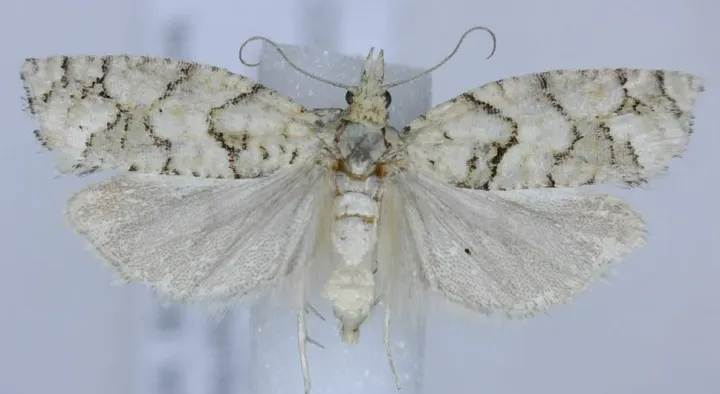
Epinotia subviridis belongs to the Tortricidae family within the order Lepidoptera. These are small moths with a wing span typically ranging from 12 to 15 mm.
The adult moth features a protective coloration, usually blending shades of green, gray, and olive, which serves as camouflage against the needles of host trees.
The larvae progress through several instars, varying from light yellow to greenish in color, often possessing a darker, chitinized head capsule.
Eggs are deposited individually or in small batches on needles and twigs, often positioned to remain hidden from predators.
Pupation occurs within the feeding area, often inside webbed needle clusters, providing a secure environment for the moth's metamorphosis.
What it damages
The primary hosts for this species include various coniferous trees, particularly spruce (Picea) and fir (Abies) species found in gardens and forests.
Larvae feed on needles, often boring into them or webbing them together, which leads to chlorosis, premature needle drop, and overall loss of foliage density.
Young seedlings are particularly vulnerable, as significant damage to needles or terminal buds can severely stunt growth and compromise structural integrity.
In mature trees, the damage is often localized but can expand rapidly if population densities remain unchecked throughout the growing season.
Defoliation reduces the tree's photosynthetic capacity, causing long-term stress and increasing susceptibility to opportunistic fungal pathogens and secondary borers.
When it appears
Adult moth activity typically spans from early summer, starting in June, and can persist through late August depending on the local climate.
Larval emergence occurs shortly after egg incubation, with peak feeding activity usually observed during mid-to-late summer.
Overwintering typically takes place in the larval or pupal stage, hidden within the litter layer or deep inside crevices of the tree bark.
Spring activity coincides with the onset of bud break, when over-wintering individuals resume feeding on succulent new growth.
Generation turnover is influenced by temperature, with warmer summers potentially leading to more intense population surges.
Signs of infestation
The most prominent sign of an infestation is the presence of silk webbing between needles, which is used by the larvae for protection and food anchorage.
Discoloration, specifically yellowing or browning of needles, is a diagnostic symptom caused by larval feeding inside the needle tissues.
Accumulation of frass (small dark pellets) within the webbed clusters is a clear indicator of an active and feeding larval colony.
Visible surface damage, such as mines or irregularly gnawed edges on the needles, confirms the presence of Epinotia subviridis.
Distorted shoot tips or reduced crown density are late-stage symptoms that indicate a high level of infestation necessitating immediate action.
Control measures
Chemical control involving systemic insecticides is effective when applied during the period of early larval emergence.
Biological control using Bacillus thuringiensis or other microbial agents is recommended for environmentally sensitive or organic garden settings.
Cultural management, including the pruning and disposal of heavily infested branches, helps physically reduce the localized pest population.
Monitoring with pheromone traps allows for precise timing of chemical applications, ensuring maximum efficiency with minimal environmental impact.
- Encouraging natural predators such as parasitic wasps and predatory beetles.
- Maintaining tree vigor through proper irrigation and soil management.
- Regular inspections of nursery stock to prevent the spread of the pest.
Taxonomy
- Latin name
- Epinotia subviridis
- Order
- Lepidoptera (butterflies)
- Family
- Tortricidae
- EPPO code
- EPINSV
Discussion
No discussions yet — be the first.