
Fir needle moth
Epinotia subsequana
Description
How to identify
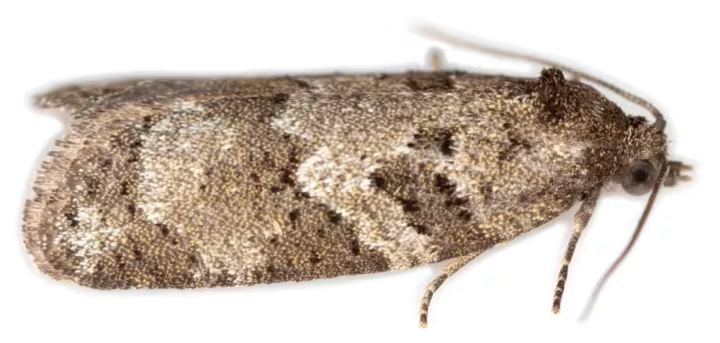
The fir needle moth, Epinotia subsequana, belongs to the Tortricidae family. Adult moths have a wingspan of approximately 12–15 mm and display a grayish-brown pattern that provides excellent camouflage against tree bark and foliage.
The larvae are small, pale green caterpillars with dark heads. They undergo several developmental stages, feeding intensely on young needles, which allows them to grow rapidly to a length of about 1 cm.
Eggs are typically laid singly on the needles or buds of host trees. The species thrives in moderate climates, where stable temperatures during late spring and summer support high larval survival rates.
Identification is often complicated by the larvae's secretive behavior. They weave small silken webs between needles, creating shelters that protect them from both environmental factors and natural predators.
The life cycle is generally univoltine, meaning there is one generation per year. They overwinter as pupae or larvae, often sheltered within the soil layer or crevices in the tree bark until spring.
What it damages
The primary hosts are fir trees (Abies species). Larval feeding results in the destruction of needles, which leads to thinning of the crown and a significant reduction in the tree's ornamental value.
Caterpillars feed by mining or grazing the interior tissue of the needles. Damaged needles turn yellow and then brown, eventually falling off the tree, leaving the branches bare and unsightly.
Severe infestations cause stunted growth of young firs. Because the larvae frequently target the new seasonal growth, the tree's ability to develop healthy, dense foliage is compromised over time.
Weakened trees become highly susceptible to secondary attacks from bark beetles and wood-boring insects. This makes the fir needle moth a significant threat to forest nurseries and decorative plantings.
Long-term damage can lead to crown deformation and decreased vigor, making the trees more susceptible to environmental stress and fungal pathogens that affect needle integrity.
When it appears
Adult moths emerge in late spring, aligning their life cycle with the flush of new growth on fir trees. This synchrony is crucial for the survival of the offspring.
Larval activity reaches its peak during June and July. During this period, the caterpillars are most destructive as they feed on the young, tender needles that are essential for the tree's photosynthesis.
By late summer, the larvae finish feeding and undergo pupation. This transition often occurs in the litter beneath the tree or on the branches, where they prepare for the upcoming winter.
The winter months are spent in a dormant state. This diapause allows the population to survive harsh temperatures and emerge as adults once the spring climate triggers the next reproductive cycle.
Monitoring for the presence of adult moths using pheromone traps is the most effective way to determine the timing for intervention before the egg-laying process begins.
Signs of infestation
The most distinctive sign of infestation is the presence of silk webbing among the needles on the tips of shoots. This webbing often binds several needles together into a small bundle.
Small, dark, pellet-like frass (excrement) caught within the silken web is a clear indicator that a caterpillar is currently feeding on that specific branch segment.
Needle discoloration, ranging from yellow to brown, on the upper part of the branches often marks the area where larvae have been actively mining the internal tissues.
Deformed or twisted shoots are often observed after larvae have damaged the developing buds, affecting the overall symmetry and growth pattern of the affected branch.
Excessive needle drop, especially during mid-summer, is an indirect sign of a high population density of the moth, as the canopy begins to lose its foliage due to caterpillar feeding.
Control measures
Mechanical control involves the removal and destruction of infested twigs and webbing. This method is highly effective for small-scale gardens and decorative trees when done early in the season.
Biological controls, specifically products containing Bacillus thuringiensis, provide an effective and environmentally friendly way to manage larvae while preserving beneficial insects.
Chemical control, such as systemic insecticides, may be necessary during heavy outbreaks. These applications ensure the protection of new growth by making the foliage toxic to the feeding larvae.
Maintaining optimal tree health through proper irrigation and balanced fertilization helps trees recover from minor infestations more quickly and improves their overall resistance to pests.
Integrated Pest Management (IPM) strategies, which include encouraging natural parasitoids and predators, play a vital role in keeping populations of Epinotia subsequana below damaging thresholds.
Taxonomy
- Latin name
- Epinotia subsequana
- Order
- Lepidoptera (butterflies)
- Family
- Tortricidae
- EPPO code
- EPINSS
Discussion
No discussions yet — be the first.