
Willow leaf roller
Epinotia solicilana
Description
How to identify
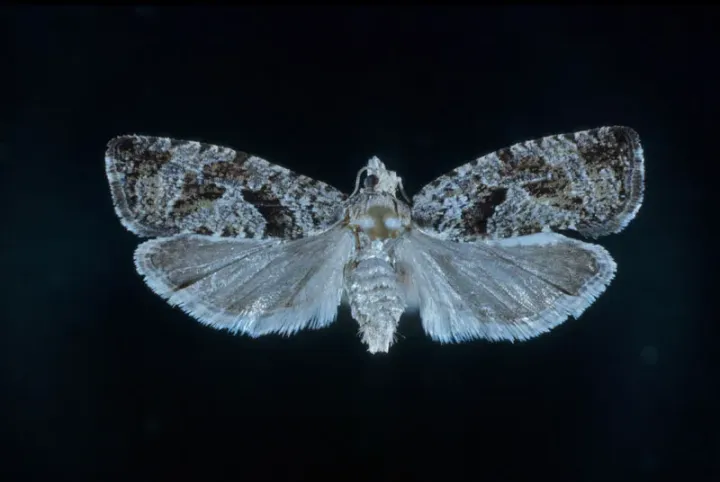
The willow leaf roller (Epinotia solicilana) belongs to the Tortricidae family within the order Lepidoptera. Adult moths are relatively small, with cryptic coloration that allows them to blend into the bark of host trees.
The larvae, or caterpillars, typically possess a well-defined head and a body color that matches the foliage of their host plant, ranging from light green to brownish tones, providing effective camouflage.
This species completes its life cycle through complete metamorphosis. The development timing is closely synchronized with the phenology of willow trees, ensuring larvae have access to young, succulent foliage.
Adult moths are largely nocturnal, showing peak activity after sunset, which makes them difficult to observe during standard daylight inspections of tree crowns.
The species is identified by its specific behavior of rolling or tying leaves together using silk, creating a protective shelter where the larva feeds safely away from external predators.
What it damages
The primary host for this pest is the genus Salix (willow). It is commonly found on various willow species, including ornamental trees and shrubs in parks and landscaping projects.
Larvae feed on the leaf tissue, causing visible skeletonization and deformities. As they grow, their feeding habits can lead to the destruction of significant portions of the tree's photosynthetic foliage.
Severe infestations result in early defoliation, which causes significant stress to the host plant, particularly during hot and dry weather conditions when the tree requires full leaf mass for transpiration.
While the pest rarely kills mature trees, repeated annual defoliation can lead to a decline in tree vigor, branch dieback, and an increased susceptibility to secondary pests and diseases.
In nursery environments, the willow leaf roller can cause aesthetic damage that renders the plants unsalable, leading to direct economic losses for the nursery industry.
Signs of infestation
The most reliable sign of an infestation is the presence of rolled or folded leaves, bound together by fine silken threads, which are clearly visible upon inspection.
Inside these rolled leaves, one can find the larvae or their frass (excrement), which confirms active feeding. The internal leaf tissue often shows irregular holes or chewed edges.
In late spring and early summer, the presence of damaged, unsightly leaf clusters in the canopy is a strong indicator of the larval stage activity.
Reduced vigor of the tree and premature leaf drop are common symptoms when the infestation level is high across the crown of the willow tree.
Using light traps in the vicinity of host trees during the flight period can help professionals determine the presence and population density of the adult moths.
Control measures
Chemical control is effective when using systemic insecticides applied during the early larval development stages, ensuring the toxin reaches the hidden caterpillars inside the leaf rolls.
Mechanical control, such as pruning and disposing of infested leaf clusters, is highly recommended for individual trees or small areas to reduce the pest population without chemicals.
Biological control options, including the application of Bacillus thuringiensis, offer a targeted approach that reduces the pest population while sparing beneficial insect predators.
Maintaining high tree health through adequate irrigation and balanced fertilization can significantly improve the tree's resilience and its ability to recover from damage.
- Timed insecticide applications based on monitoring.
- Removal and destruction of infested foliage.
- Encouraging natural bird and predatory insect populations.
Taxonomy
- Latin name
- Epinotia solicilana
- Order
- Lepidoptera (butterflies)
- Family
- Tortricidae
- EPPO code
- EPINSO
Discussion
No discussions yet — be the first.