
Grey aspen moth
Epinotia nisella
Description
How to identify
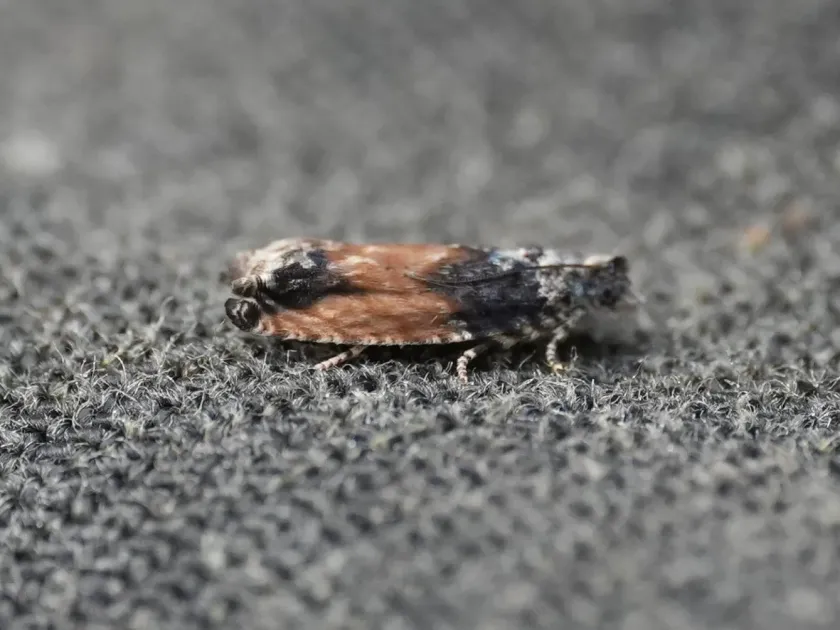
The grey aspen moth (Epinotia nisella) is a moth belonging to the family Tortricidae, order Lepidoptera. Adult moths typically have a wingspan ranging from 14 to 18 mm.
The forewings exhibit a variable color pattern, often showing shades of grey, brown, or yellowish-grey, which provides excellent camouflage against tree bark.
The larvae are typically pale with a dark-colored head, which is a diagnostic feature used to distinguish them from other leaf-rolling caterpillars.
As a holometabolous insect, it undergoes four distinct life stages: egg, larva, pupa, and adult, with each stage adapted to specific host plant conditions.
The species is commonly found in damp woodland environments, thriving near willow and poplar stands where its primary food sources are abundant.
What it damages
The primary host plants for this pest belong to the Salicaceae family, specifically focusing on trees in the genus Populus and Salix.
Aspen (Populus tremula) is the most frequently attacked host, where the larvae cause significant damage during their developmental phases.
The larvae primarily feed on the reproductive organs of the tree, hollowing out the catkins, which disrupts the tree's natural seed production.
In addition to catkins, the larvae feed on buds, young leaves, and succulent shoot tips, leading to growth stunting and tissue deformation.
Heavy infestations can lead to significant loss of photosynthetic surface area and weaken the overall vigor of young trees in plantations or nurseries.
When it appears
Adult moths are typically active during the summer months, with the primary flight period occurring between June and August.
Eggs are deposited on the bark or near the buds of host trees, where they enter a state of diapause throughout the winter months.
Larval emergence occurs in early spring, precisely timed with the swelling of buds and the initiation of seasonal sap flow in the host trees.
Feeding activity is most intense during the flowering stage of the tree, as the developing catkins provide a high-energy food source for the larvae.
Pupation generally occurs within the host plant, often inside rolled or tied leaves, before the next generation of adults emerges.
Signs of infestation
Visible signs of infestation include the presence of fine frass and silk webbing located at the base of the tree's catkins and buds.
Affected catkins typically show signs of premature drying, discoloration, and disintegration due to the larvae feeding internally.
Leaves inhabited by the larvae are often found rolled into tight tubes or clumps, secured with silky threads, which are easily spotted upon close inspection.
Entry holes in buds, often surrounded by small amounts of sawdust-like excrement, are a classic indicator of early-season larval activity.
In cases of severe infestation, patches of premature browning and stunted shoots become apparent, affecting the tree's architectural integrity.
Control measures
Chemical control is most effective when applied as a systemic insecticide early in the spring, just before the larvae have the chance to bore into the catkins.
Biological control methods include the encouragement of natural predators such as insectivorous birds, which can significantly reduce larval populations.
Sanitary practices, including the targeted pruning and removal of heavily infested branches, help prevent the spread of the moth in garden settings.
Feminine-based pheromone traps can be utilized during the adult flight period to monitor population levels and determine optimal treatment windows.
- Use of microbial insecticides containing Bacillus thuringiensis during the early larval stage.
- Enhancing tree health through proper irrigation and nutrition to improve resilience.
- Regular canopy inspections to identify and manage outbreaks at the initial stage.
Taxonomy
- Latin name
- Epinotia nisella
- Order
- Lepidoptera (butterflies)
- Family
- Tortricidae
- EPPO code
- EPINNI
Discussion
No discussions yet — be the first.