
Fir shoot moth
Epinotia nigricana
Description
How to identify
The Fir shoot moth, scientifically known as Epinotia nigricana, is a species of moth belonging to the Tortricidae family, known for its specific host preference for fir trees.
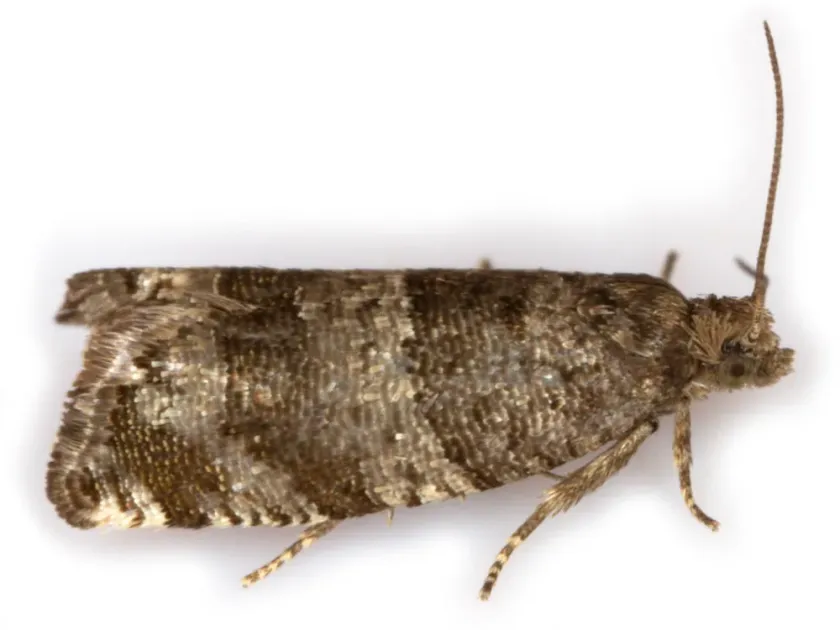
Adult moths are relatively small, with a wingspan ranging between 15 and 18 millimeters. Their forewings feature a mottled brown and gray pattern, providing excellent camouflage against tree bark.
The life cycle encompasses four main stages: egg, larva, pupa, and adult. The larval stage is the most significant in terms of forest impact and agricultural damage.
The species overwinters as a larva in small, silk-lined cocoons, typically tucked away under bark scales or near the base of buds, ensuring survival during colder months.
Given their small size and cryptic behavior, identifying them often requires pheromone traps or a careful inspection of the tree crown by an experienced agronomist.
What it damages
The primary host for Epinotia nigricana is the fir tree, although it can occasionally be found on related coniferous species in the Pinaceae family.
Larvae primarily feed on the developing buds during the early spring period, directly impacting the shoot's development and the tree's growth potential.
By boring into the inner tissues of the bud, the larva destroys the meristematic tissue, which often causes the shoot to wither, deform, or die completely.
Continuous feeding over several years results in stunted growth, distorted branching, and a significant reduction in the overall aesthetic value of ornamental firs.
Extensive damage to the terminal buds can significantly impact the tree's height growth, making it a critical concern for nurseries and forest management.
When it appears
The activity of the Fir shoot moth begins in early spring, as rising temperatures trigger the emergence of larvae from their overwintering sites.
Larval emergence is highly synchronized with the phenological stage of the fir tree, specifically when buds begin to swell and break dormancy.
The adult moth flight period generally occurs during the summer months, specifically June and July, when mating and egg-laying activities take place.
The species produces one generation per year, making the timing of intervention crucial for effective population control in the affected areas.
As autumn approaches, the larvae settle down to prepare for winter, completing the annual biological cycle of this pest.
Signs of infestation
One of the most diagnostic signs of infestation is the presence of silk webbing, which larvae spin to bind bud scales together while they feed.
Small amounts of larval frass, appearing as tiny dark pellets, can often be found near the entry points of damaged buds or on the needles below.
Affected buds often appear dried, shriveled, or fail to open normally, contrasting sharply with the healthy, green growth on the rest of the branch.
Resin flow at the entry site is a common defense mechanism displayed by fir trees in response to larval feeding, often signaling the presence of the pest.
Deformed or stunted terminal growth patterns on new shoots provide clear evidence that an infestation has occurred during the critical spring period.
Control measures
Managing the Fir shoot moth requires an integrated approach, focusing on early detection and targeted treatments to prevent extensive damage.
Chemical applications should be timed precisely to coincide with the period when larvae emerge but have not yet fully burrowed into the protected tissue of the bud.
Biological control options, such as using specialized sprays containing Bacillus thuringiensis, offer a more sustainable way to reduce populations.
Good silvicultural practices, including maintaining tree vigor through adequate nutrition and irrigation, help trees withstand and recover from light infestations.
- Monitor adult flight using pheromone traps.
- Inspect branches for silk webs in early spring.
- Prune and destroy heavily infested branches.
- Apply contact insecticides during the larval emergence phase.
- Encourage natural predators like birds and parasitic wasps.
Taxonomy
- Latin name
- Epinotia nigricana
- Order
- Lepidoptera (butterflies)
- Family
- Tortricidae
- EPPO code
- EPIBNI
Discussion
No discussions yet — be the first.